The Batecs method
How we work: one team, one person responsible, one fixed price
Six phases, what you get in writing at each one, and what happens when something turns up behind a wall. Written for people who have never had building work done in Spain and would rather not have it explained to them in Spanish.
Get a fixed written quoteCall · +34 632 224 555Ask anyone who has renovated in Spain what went wrong and you tend to get the same answer: the price moved. Rarely because somebody set out to cheat them. Usually because almost nothing was written down. So this page is mostly about paper — what you receive, when you receive it, and what each document commits us to.
A renovation goes well when one person is accountable for it from the first visit to the last snag. That is why we don’t split your house between separate trades who come and go: we build it with our own in-house team, under a single site manager who coordinates every trade and keeps you informed. Before anything starts we both sign a fixed written quote, itemised, so you know exactly what will be done, when, and for how much.
We are not a catalogue company. The people who draw your project are the people who build it, so every design decision reaches the site already carrying its cost, its timescale and its technical answer. That is what we call the Batecs Method, and it comes down to six phases we walk through with you.
Most people reading this live ten minutes from our office in La Eliana — La Cañada, Rocafort, Bétera, San Antonio — and have been putting the work off because running a Spanish building site in a language you only half speak is nobody’s idea of a good year. Others are still abroad, buying. The method below does not change between the two.
The six phases
The process, phase by phase
Each phase has a clear goal and a clear close: we do not move to the next one until the last one is resolved and agreed with you. That is how the stoppages, the surprises and the improvised decisions halfway through get designed out.
The site visit
We come to the house with no obligation, look at the state of the building, take measurements and listen to what you actually want out of it. Everything after this is built on that hour, so we would rather spend a second one there than guess later.
Design and proposal
We set the layout, the finishes and the interior design, and put the proposal in front of you before a single thing is ordered. Concept, plans, material palette and lighting, on the table while changing your mind is still free.
The fixed written quote
After the site visit you get a quote, itemised trade by trade, that says what is included and — just as important — what is not. No small print. The figure you sign is the figure you pay, and anything you add later is priced and agreed in writing before anyone lifts a tool. Ask for yours here.
The schedule
We order materials and book trades well ahead, then set out a calendar with real dates on it and a milestone that closes each phase. Planning before the first hammer is precisely what lets us commit to a finishing date instead of hoping for one.
Coordinated build
We do the work ourselves, with our own people: builders, plumbers, electricians, tilers and joiners. One site manager sequences every trade, keeps the house tidy and tells you where the job stands, week by week.
Checks and handover
We go over the finishes, the joints and every installation, then you walk the house with us and we write down anything that is not right. We correct that list, and only then do the keys go back, clean and finished. Because the team is ours, later adjustments are ours as well.
On paper
What you get in writing, and when
Four documents. Between them they answer the four questions that keep people awake before a renovation: what am I paying for, when will it be finished, what exactly is going into my house, and how do I know it is actually done.
| Document | What it should tell you | When you get it |
|---|---|---|
| The itemised quote | Every trade priced on its own line, with quantities and materials named, plus a plain list of what is excluded. If you cannot see where the money goes, it is not an itemised quote. | After the site visit, before anything is signed. |
| The works schedule | The order the trades come in, the dates that matter and the milestone that closes each phase. It is also the document that tells you which weeks your kitchen will be out of use. | With the quote, confirmed before the first day on site. |
| The specification sheet | The actual make, model, size and finish of tiles, taps, sanitaryware, doors and worktops — not “quality tiling”. What you choose on paper cannot be reinterpreted on site. | Before we order, attached to the quote. |
| The snagging list and sign-off | Everything picked up on the final walk-round, written down, with who puts right what and by when. Once the list is clear the work is signed off and the completion paperwork is closed. | At handover, after we have walked the house together. |
None of this is special treatment, and none of it is unique to us. It is what you should ask of any builder in Spain: an itemised quote, a schedule with dates on it, a written specification and a final walk-round. A company that will not put those four things on paper is telling you something useful.
Want to see what that paperwork looks like for your house?
Send us the size, the condition and what you want to end up with. We come and look at it, and we reply to every enquiry within 24–48 hours. No obligation, at any point.
Book a site visitStraight answers
The three questions everyone asks before they sign
They arrive in the same order every time, whether the call comes from Rocafort or from Richmond. Here they are, without the sales voice.
Will the price move?
Only if you move it. The quote you sign is itemised and fixed, and we hold it. If you decide halfway through that the wall should come down after all, that change is priced and you approve it in writing before it happens. What does not happen is an extra appearing at the end, on the final invoice, for something nobody warned you about.
Who handles the town hall?
We do, and we explain it in English. Depending on the work, your town hall wants either a building licence (licencia de obra) or a responsible declaration (declaración responsable). We prepare the documents, submit them and tell you what each one is for. Timings vary from one town hall to the next, so we confirm yours before we put a date in your schedule. There is more on all of this on our page for English-speaking builders in Valencia.
Will you still be here afterwards?
We have been building in this area for more than 35 years, from an office in La Eliana, with our own team rather than a rotating cast of subcontractors. The site manager who opens your job is the one who hands it over. If something wants looking at two winters later, the people who come back are the people who did it.
Your language, our trade
Working with Batecs in English
Batecs is a Spanish building company first, and that is rather the point of us. The language is how your job is run, not the thing we are selling: the person who writes your quote and the site manager who runs your house both speak it, so nothing about your own home reaches you second-hand.
- One point of contact. The same English-speaking person from the first site visit to the final sign-off. Not a switchboard, and not a different name every fortnight.
- Your quote in English. Itemised, and read through with you line by line so you know what is in it and what is not, before you sign anything.
- Paperwork explained. Building licence, responsible declaration, town hall and utility connections: we deal with them, and we tell you what each step is for while it is happening.
- Updates you can follow. Progress, decisions and changes come to you as the work runs, and in writing whenever they carry a cost.
You will still see Spanish on the official documents: a licence issued by a Spanish town hall is written in Spanish, and no builder can change that. What we can do is make sure you understand every line of it before your name goes on the bottom.
The difference
An in-house team versus juggling separate trades
Most renovation problems do not come from the craft itself. They come from the coordination. When each trade works on its own account, the gaps between one and the next turn into stoppages, delays and arguments about who is responsible for what.
In that model you end up running the site without ever having asked to: chasing the plumber to finish before the tiler arrives, refereeing when one blames the other for a mismatch, and discovering that nobody is accountable for the whole. The price drifts, the timescale stretches, and the finish depends on how lucky you were with each subcontractor.
You are the site manager
- Each trade prices only its own part, so the total is never on one page.
- You sequence them yourself, and a day lost by one is a week lost by the next.
- When something does not line up, each one points at the one before.
- Separate invoices, separate guarantees, separate phone numbers.
- Whoever is cheapest today may not be reachable next winter.
We carry the whole job
- One itemised quote for the entire scope, agreed before we start.
- One site manager sequencing every trade, so the order is our problem.
- One name accountable for the finish, not for one line of the quote.
- One invoice trail and one company answering for the work.
- More than 35 years in the same towns, and the same people come back.
The Batecs Method inverts that logic. We carry out the work with our own staff and coordinate our trusted trades from the inside rather than through outside firms. You have a single site manager to deal with, someone who knows the project in detail because they were standing in your hallway at the first visit. And because the people who design it are the people who build it, what is drawn is what gets built, with its cost and its timescale already committed.
It is the difference between being handed a finished house and having someone actually direct the work. If you want to see how that shows up in practice, get to know us on about us, or look at how it runs on a whole house in full home renovations and on a detached house in villa renovations.
If you are not here
Renovating while you’re abroad
Part of the year in England, part of it here? That is a common enough arrangement around the Camp de Túria, and it changes nothing at all about how a house is built. It changes a great deal about how the work is reported back to you.
Photographs go out as the job moves: what closed this week, what starts next, and anything we have uncovered behind a wall that you need to hear about early rather than late. The decisions that genuinely need your eye — a tile, a tap, a wall that could come down — happen on a video call, with the room on screen instead of a paragraph trying to describe it.
Somebody has to be at the house to open up, sign for deliveries and keep the trades moving. That is our job, and it falls to the same person from the first skip to the last coat of paint. At handover the finished work is photographed and written up, so you know precisely what you are taking on before you land.
Would you rather hand over the whole thing — design, licences, build and handover under one contract and one price? That is our turnkey service, and it works the same way from three thousand kilometres away as it does from three streets away.
Frequently asked questions
What you ask us most about the method
The nine questions that come up most often, and the money ones first, because that is the order people actually ask them in.
What’s the difference between a fixed-price quote and an estimate?
In the UK those two words mean very different things, and the difference is worth holding on to over here. An estimate is an informed guess: it can move, and it usually does. A quote is a firm offer for a defined scope of work — once both sides sign it, the figure holds. What you get from us after the site visit is the second kind: a fixed written quote, itemised trade by trade, with the exclusions written down as well as the inclusions. If the scope changes because you want something different, we price that change and you approve it before it happens. If we simply measured badly, that is our problem, not yours.
Does a fixed quote mean the price won’t change?
The quote you sign is fixed and itemised line by line, delivered in writing after the site visit. The aim is plain: no surprises on the invoice. You know what will be done and what it costs before we begin. If you decide to add or change something during the work, we price it and agree it with you in advance, also in writing, so control over the cost stays in your hands throughout. The only thing that moves a fixed price is a change you asked for.
Should I ask for an itemised quote?
Always, and from everyone you speak to, not only from us. An itemised quote (in Spanish, a presupuesto desglosado) prices each trade on its own line — strip-out and skips, plumbing, electrics, waterproofing, tiling, joinery, painting — with quantities and the materials named. It lets you compare two companies properly instead of comparing two round numbers, and it shows you which of them has actually measured your house. Be wary of a single lump sum with no breakdown: it cannot be audited, and it is where the extras hide. Ours is itemised as standard, and we will sit down and read it through with you.
How much deposit should I pay upfront?
There is no legal figure in Spain, and anyone quoting you a standard percentage is guessing. What matters is the shape of the payments rather than the first number: money should be tied to work that has actually happened. On our projects the payment points are written into the quote and linked to phases of the job — materials ordered, first fix completed, that kind of milestone — so at any moment you have paid for what is on site and standing up. Two things to be careful of with any builder here: a large sum asked for before anyone has set foot on the property, and payments that leave no paper trail behind them.
Can I hold money back until the snagging is done?
A retention is money the client keeps back from the final payment for a period after handover, so that anything picked up on the last walk-round gets put right. It is normal practice on larger jobs in the UK and it is not unusual here either. Whether your project has one, and how much, is something agreed before you sign rather than invented at the end. What we can tell you is how the close of the work runs: we walk the house with you, we write down every snag, we correct them, and only then is the job signed off. A retention exists to make sure that happens. Our process exists so that you should not need one to get it.
How long does a renovation take with the Batecs Method?
It depends on the scope, and honestly on how quickly the decisions get made. As a rough orientation, a single bathroom or a kitchen is a matter of weeks; a full home renovation, or a villa where the layout changes and the services are renewed, runs to months rather than weeks. Two things stretch a programme more than the building work itself: waiting on a licence, and choosing materials late. You get a schedule with real dates in phase four, once the scope is closed — and we would rather hand you that date a week later than hand you a date we cannot hold.
Why does building work stop in August in Spain?
Because a good part of the country does. July and August are when the trades take their holidays, many suppliers close for a fortnight, and factory lead times on kitchens, joinery and glazing stretch out. Town halls run lighter too, so paperwork submitted in late July typically sits longer than it would in March. None of that is a secret and none of it is an excuse: we plan around it. If your job runs through the summer we order the long-lead items well before June and schedule the trades that can work through the heat. If you want to be finished for Christmas, the sensible moment to have the quote signed is spring.
Who runs my project and who do I talk to?
You have one site manager as your point of contact from start to finish. It is the person who was there at the first visit, who knows the project in detail and who coordinates every trade in our own team. You will not be chasing several subcontractors or refereeing between them: one person is accountable for all of it, and that person speaks your language.
What guarantee do I have on the renovation?
Under current Spanish law we stand behind both the work we carry out and the materials we install, and the quote says which is which. The practical part matters more day to day: because your house was built by our own team and not subcontracted out, anything that wants adjusting afterwards is dealt with by us. You are not chasing three companies to find out whose tiling it was.
In short
The Batecs Method is six phases, one site manager and four documents: an itemised quote, a schedule with dates, a written specification and a signed-off snagging list. The price is fixed before the first hammer, and it only moves if you move it.
From the first site visit to the day the keys go back, the job is run by people who speak your language — town hall paperwork included, which we prepare, submit and explain. Ask us for a fixed written quote or simply get in touch.
Related projects
The method, in three finished houses
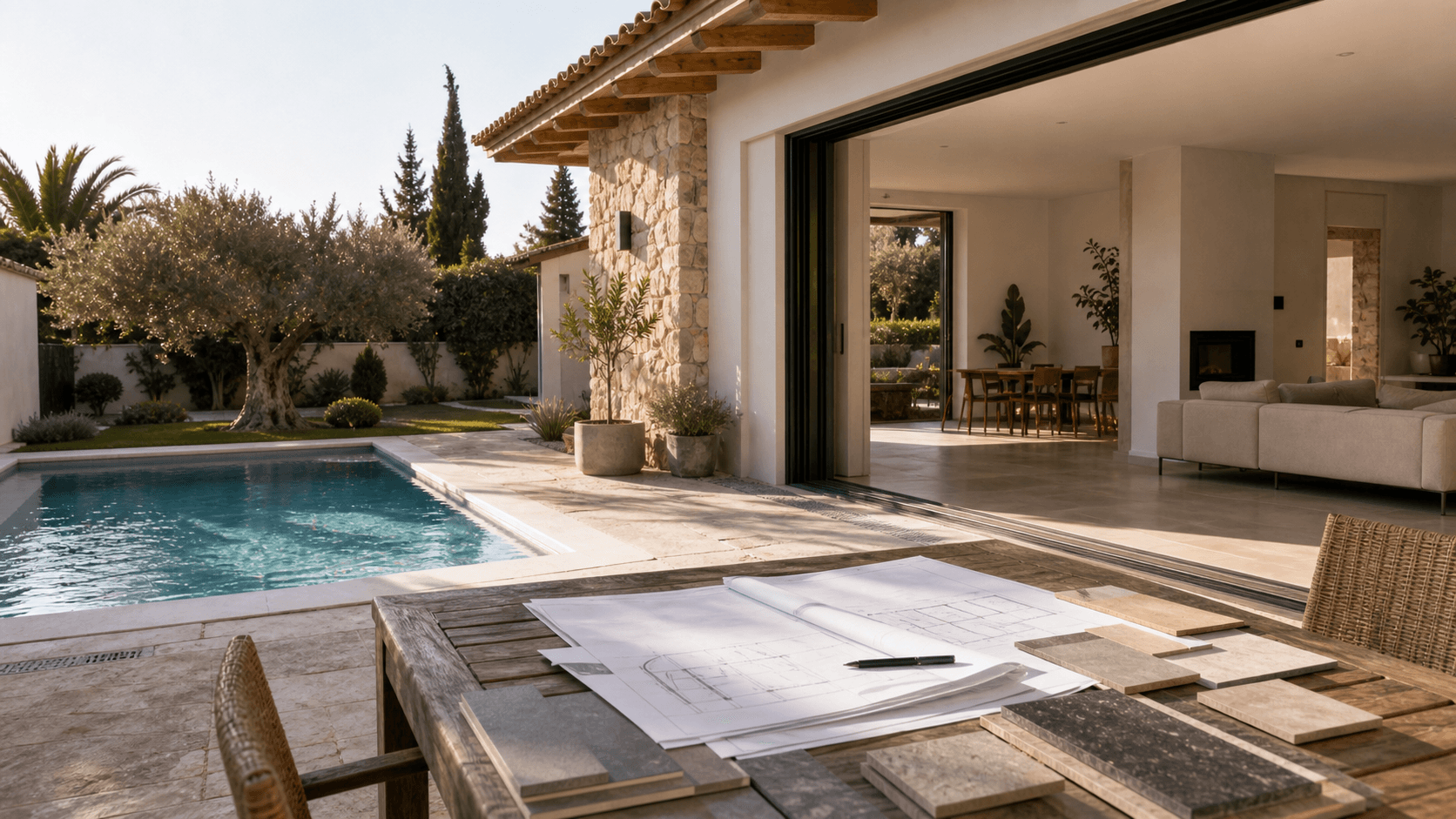
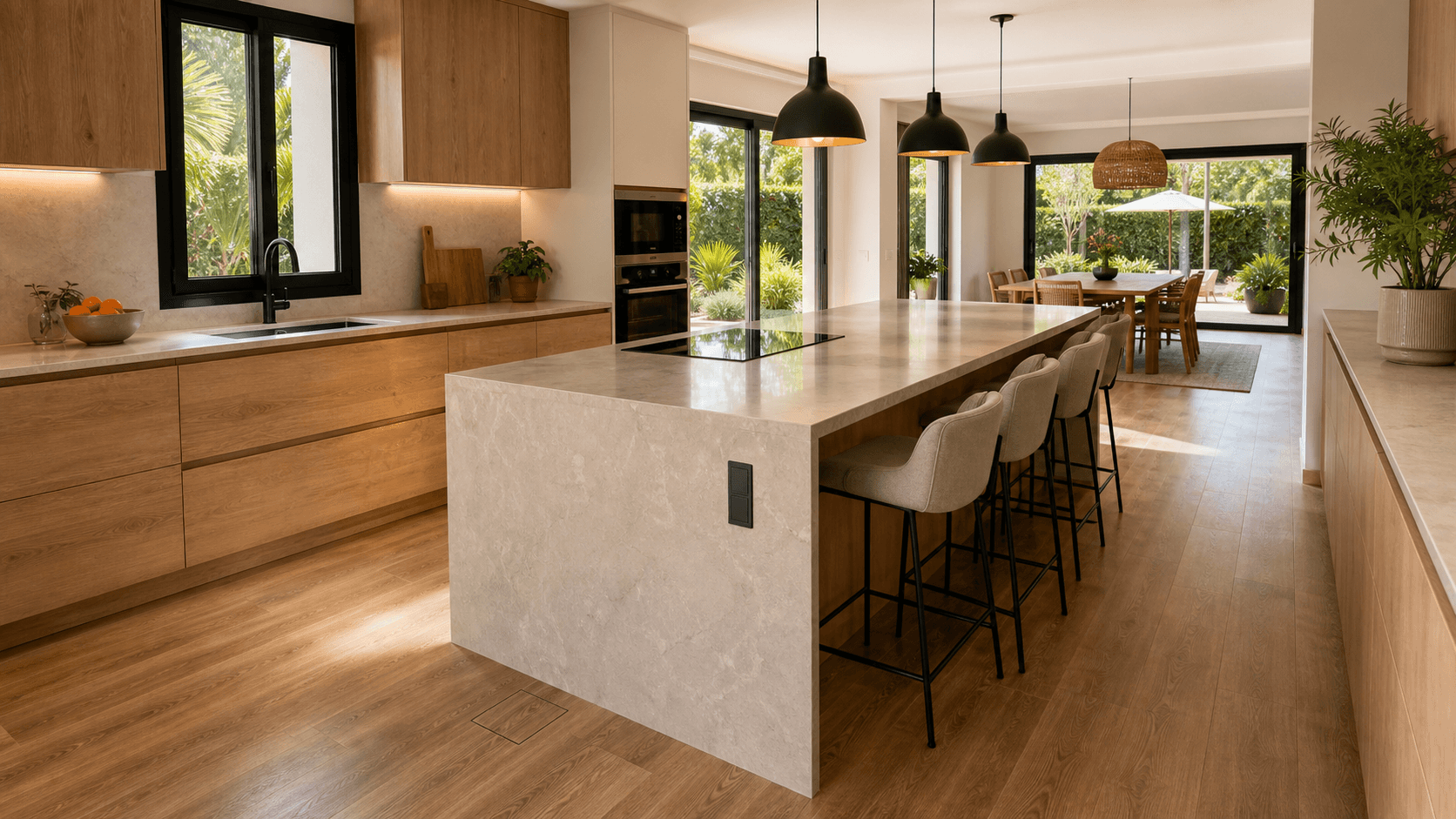
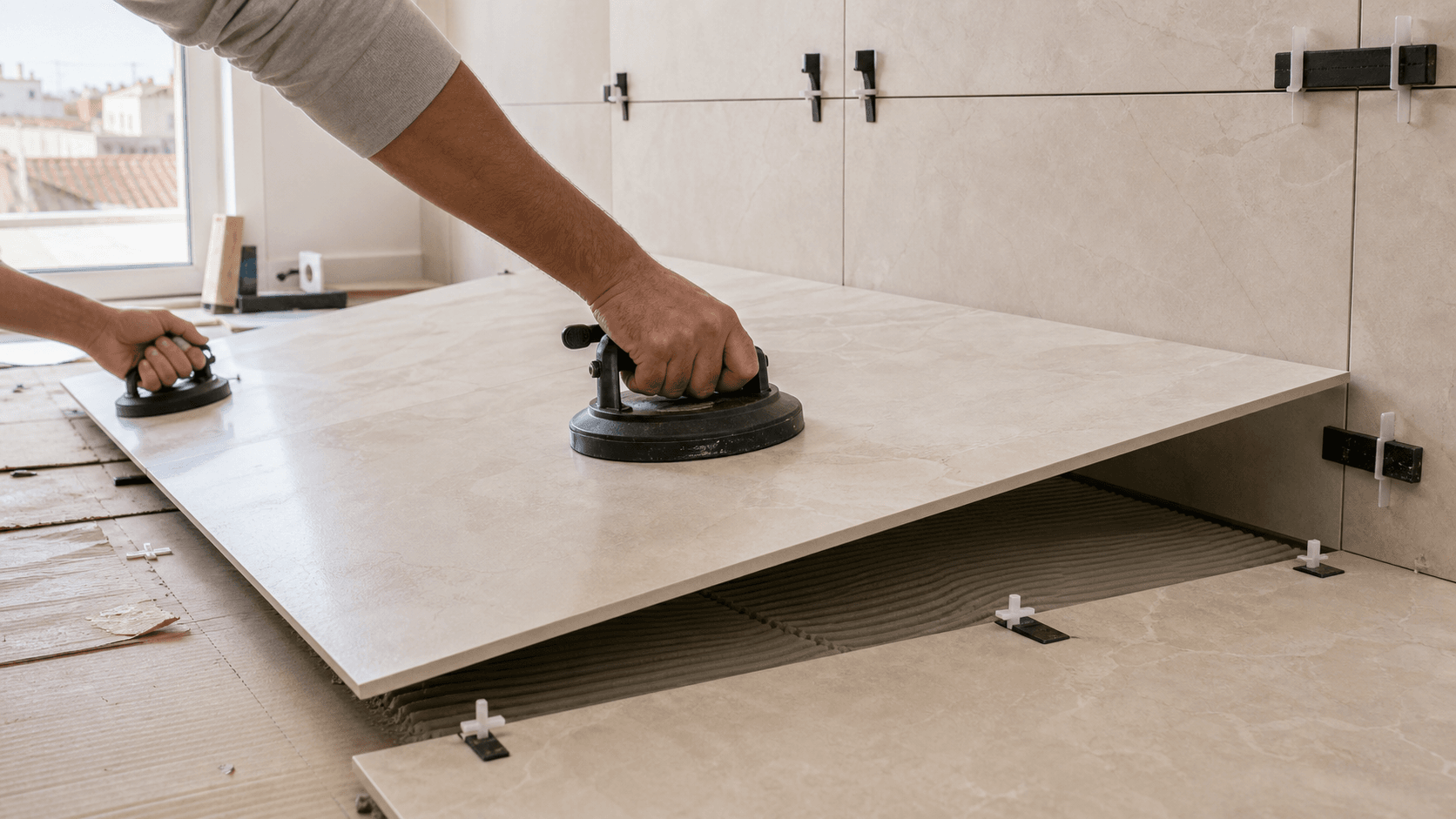
Three finished jobs, each one run through the same six phases. Open them for the detail.
Let’s talk about your house
Start with a site visit and a written quote
Tell us what the house is now and what you want it to become. We will come and look at it, and you will get an itemised quote with the exclusions listed, not a round number. We answer every enquiry within 24–48 hours and there is no obligation at any point.
+34 632 224 555+34 962 742 447info@batecs.es
Get my written quoteThe same method sits behind everything we build: full home renovations, villa renovations, kitchens, bathrooms, concrete pools and partial renovations. You can also read about who we are or get in touch. We work across Valencia, the Camp de Túria and l’Horta from our base in La Eliana, and most of our international clients are ten minutes away in La Cañada, Rocafort and Bétera.