Swimming pools · Camp de Túria
Concrete swimming pool construction in Valencia, at a fixed price
Concrete pools for villas in La Eliana, La Cañada, Bétera and across the Camp de Túria: shell, plant, coping and surround built as one project, at one fixed price, with one English-speaking contact from the first site visit to your first swim.
Get a free pool quoteCall · +34 632 224 555A concrete pool is one of those decisions you either enjoy for twenty years or regret from the very first summer. The difference isn’t the finish you can see. It’s what stays buried: the shell, the waterproofing and the plant. Rush any of those and you get leaks, staining and water that never quite looks right.
We have been building and repairing pools in La Eliana, La Cañada, Bétera and the rest of the Camp de Túria for more than 35 years, and almost nothing ever goes wrong because of the mosaic. It goes wrong underneath it — normally because nobody was coordinating the digger, the concrete and the filtration.
So we work the other way round from most of the trade. Instead of you chasing three separate trades who never speak to each other, one site manager plans the phases, books every trade and tells you where the job has got to. You choose the pool. We make sure the shell holds, that it doesn’t lose water, and that it is handed over on the date and at the price we signed.
Most of the people we build for already live here. Some have just taken on a 1970s villa with a tired mosaic pool; others have had the garden for years and finally want to use it properly. Either way, this is the service that puts the job in order — design, building licence, excavation, shell, services, finish and surround — with one person accountable for all of it. If the work reaches past the pool, we fold it into a full villa renovation.
01 What is included
What your pool construction includes
From the first cut of the digger to the day you swim in it, every trade booked and checked by one site manager — not a patchwork of separate trades you have to chase yourself.
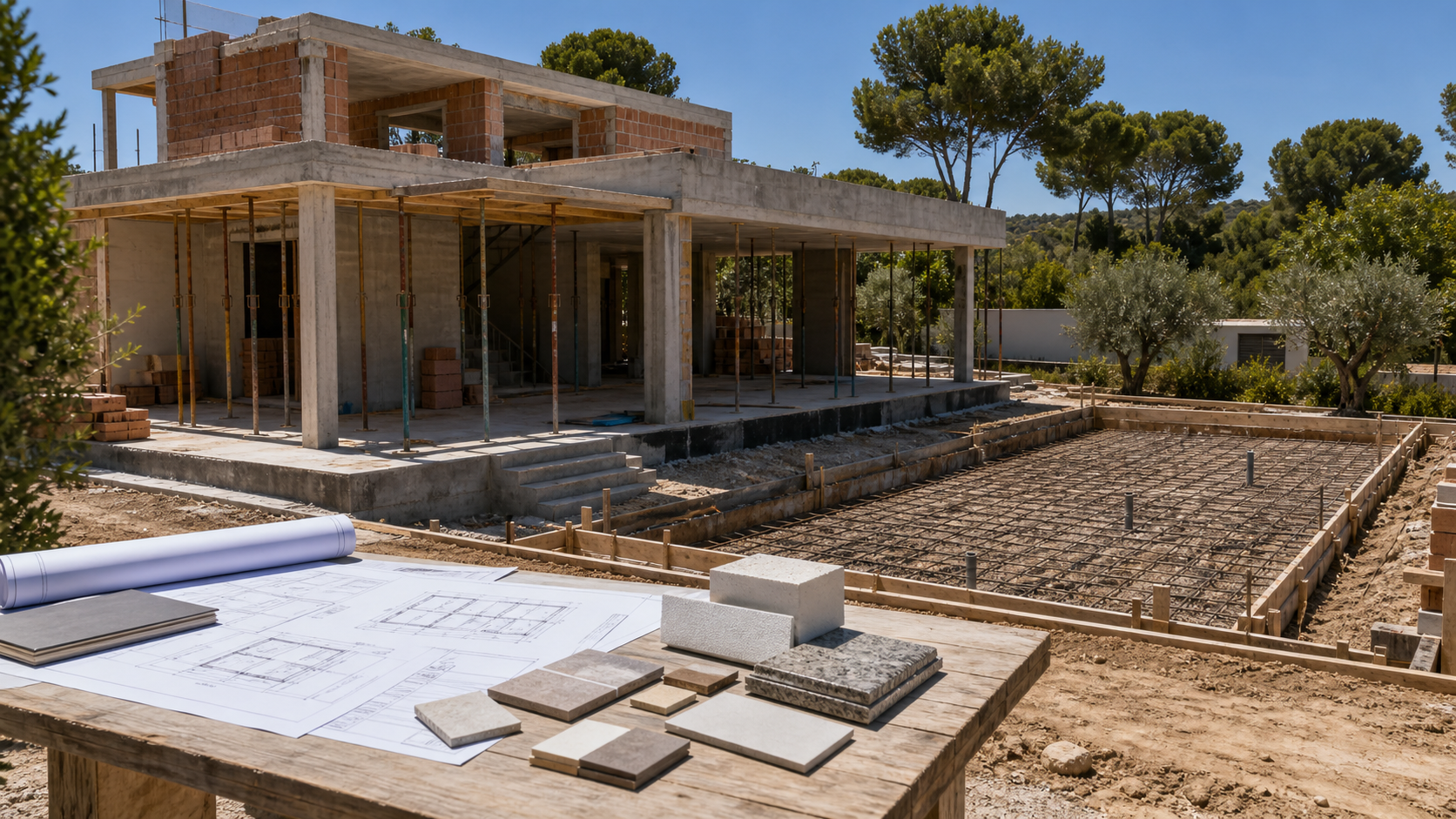
Concrete shell
Earthworks and a gunite or reinforced-concrete shell, sized for your plot and engineered to take the pressure of the ground around it.
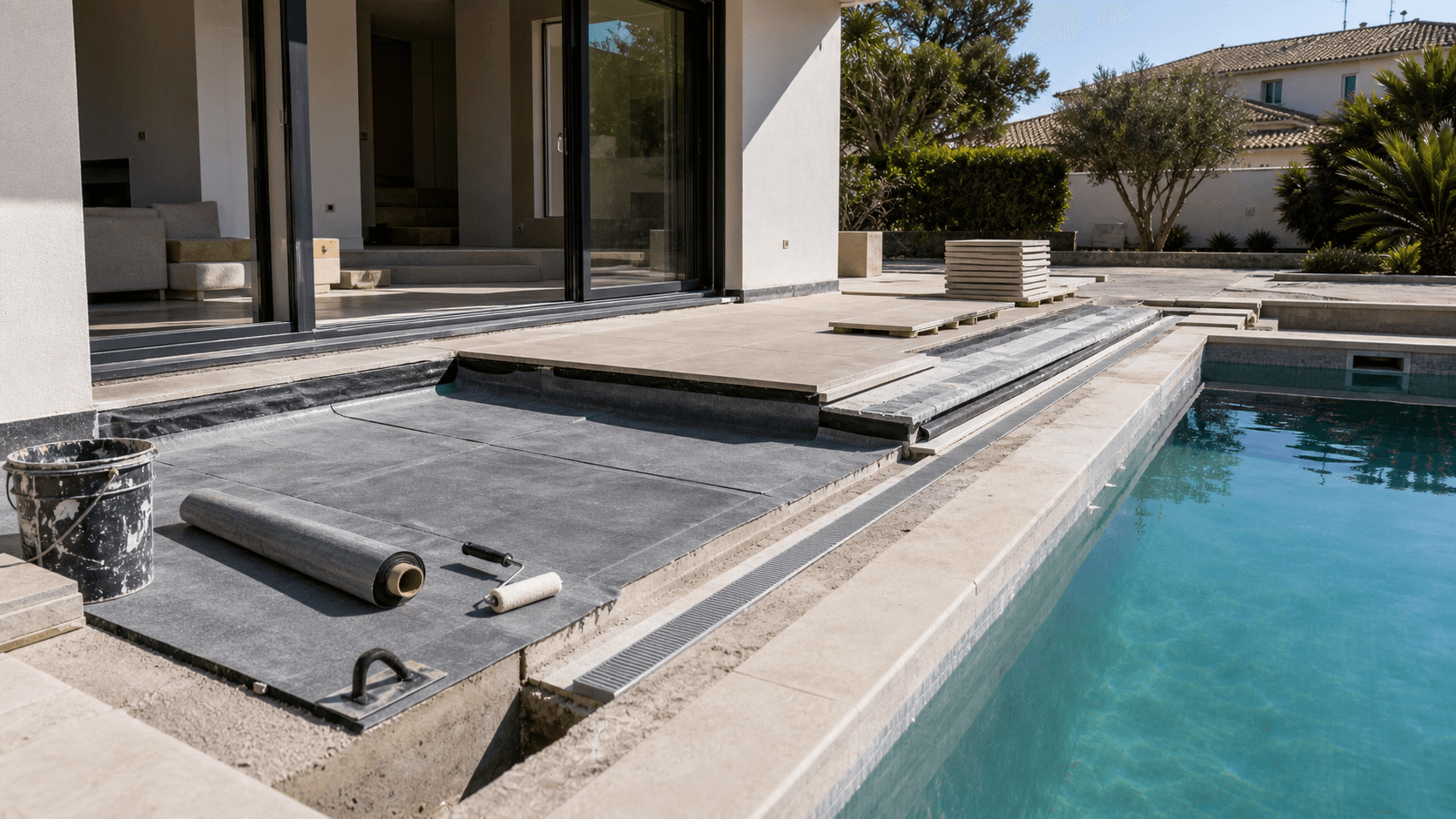
Waterproofing
The phase that decides whether you ever see a leak: shell, wall fittings and joints treated with dedicated systems before anything is tiled.
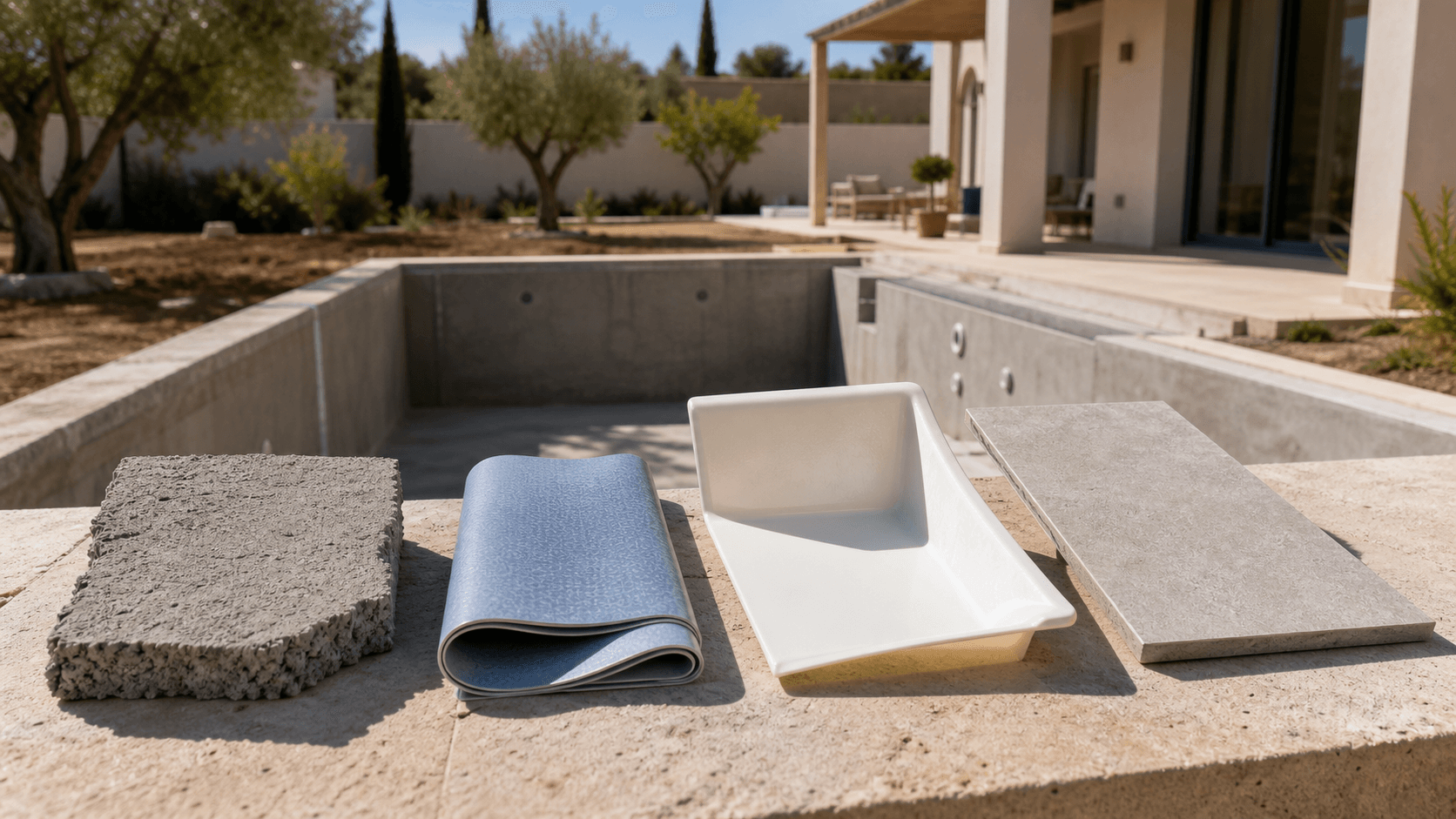
Finishes
Mosaic, porcelain, microcement or liner. We pick the finish for how it looks, how long it lasts and how much cleaning it costs you — not for the photograph.
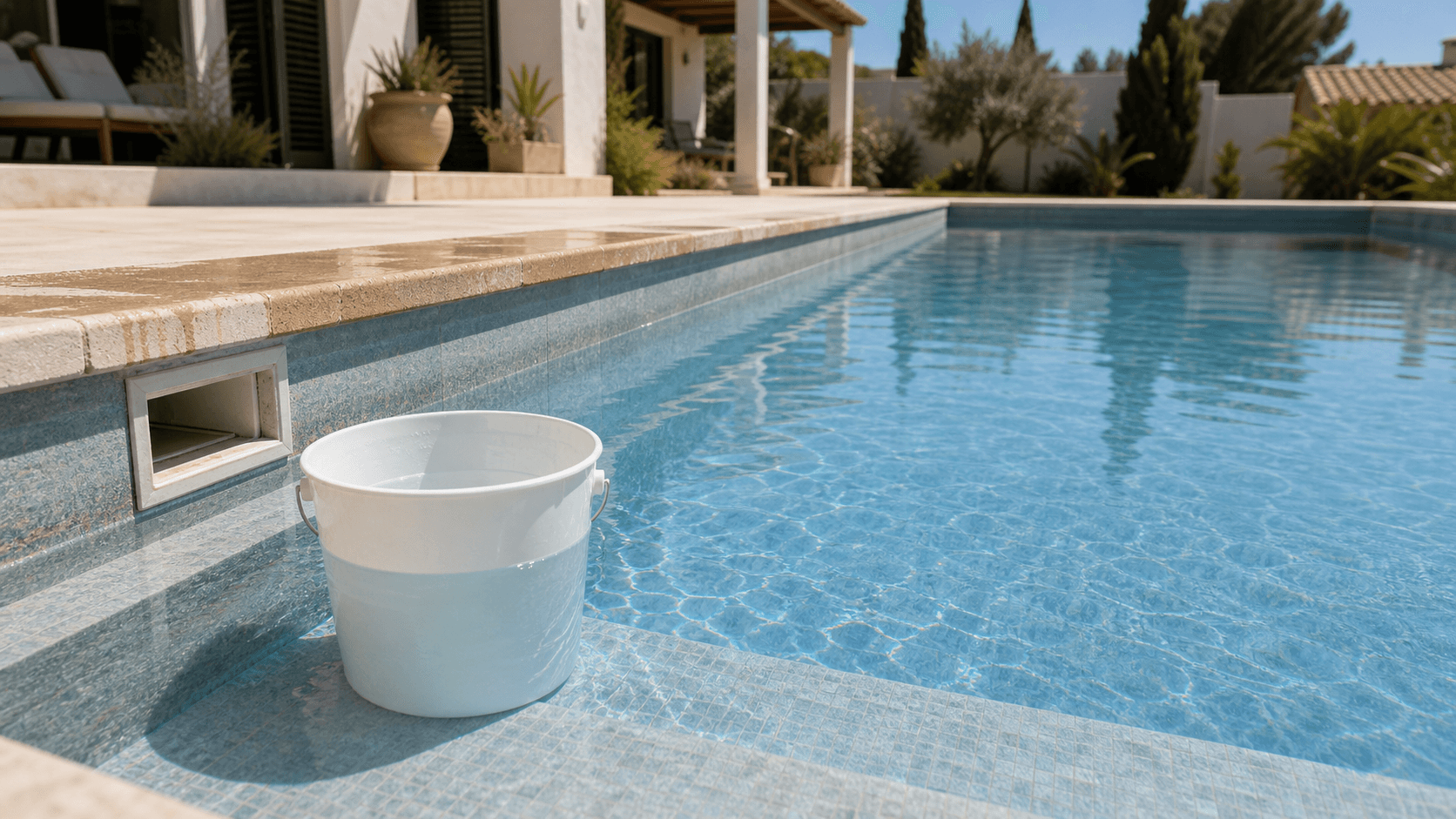
Filtration and plant
Filter, pump, skimmers and LED lighting, plus heating, salt chlorination or app controls if you want them. Sized to the volume of water, not to a catalogue.
Coping and surround
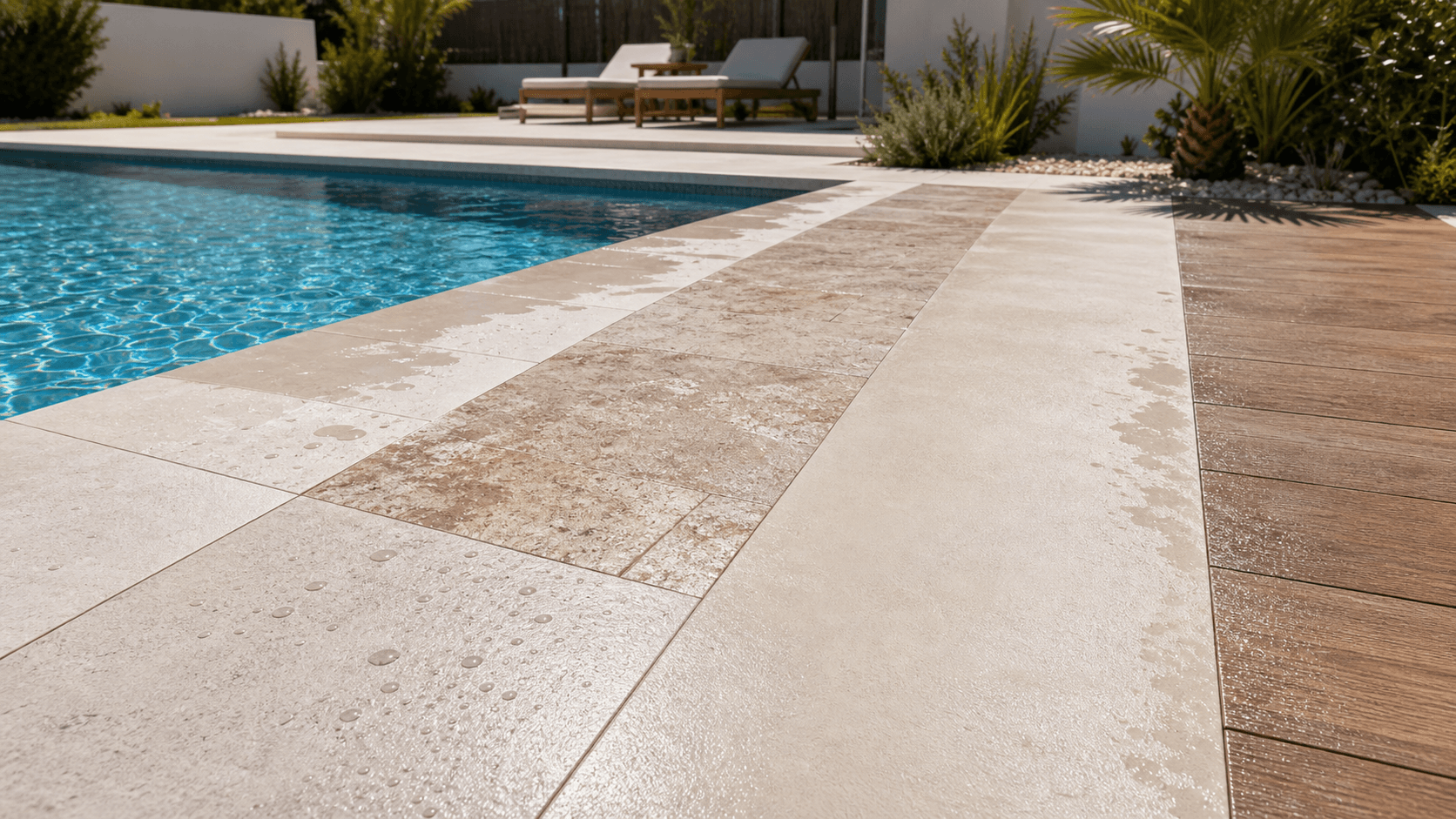
Edges, coping and a non-slip surround that carries on into the terrace, so the outdoor space reads as one piece of work rather than three.
Licence and paperwork
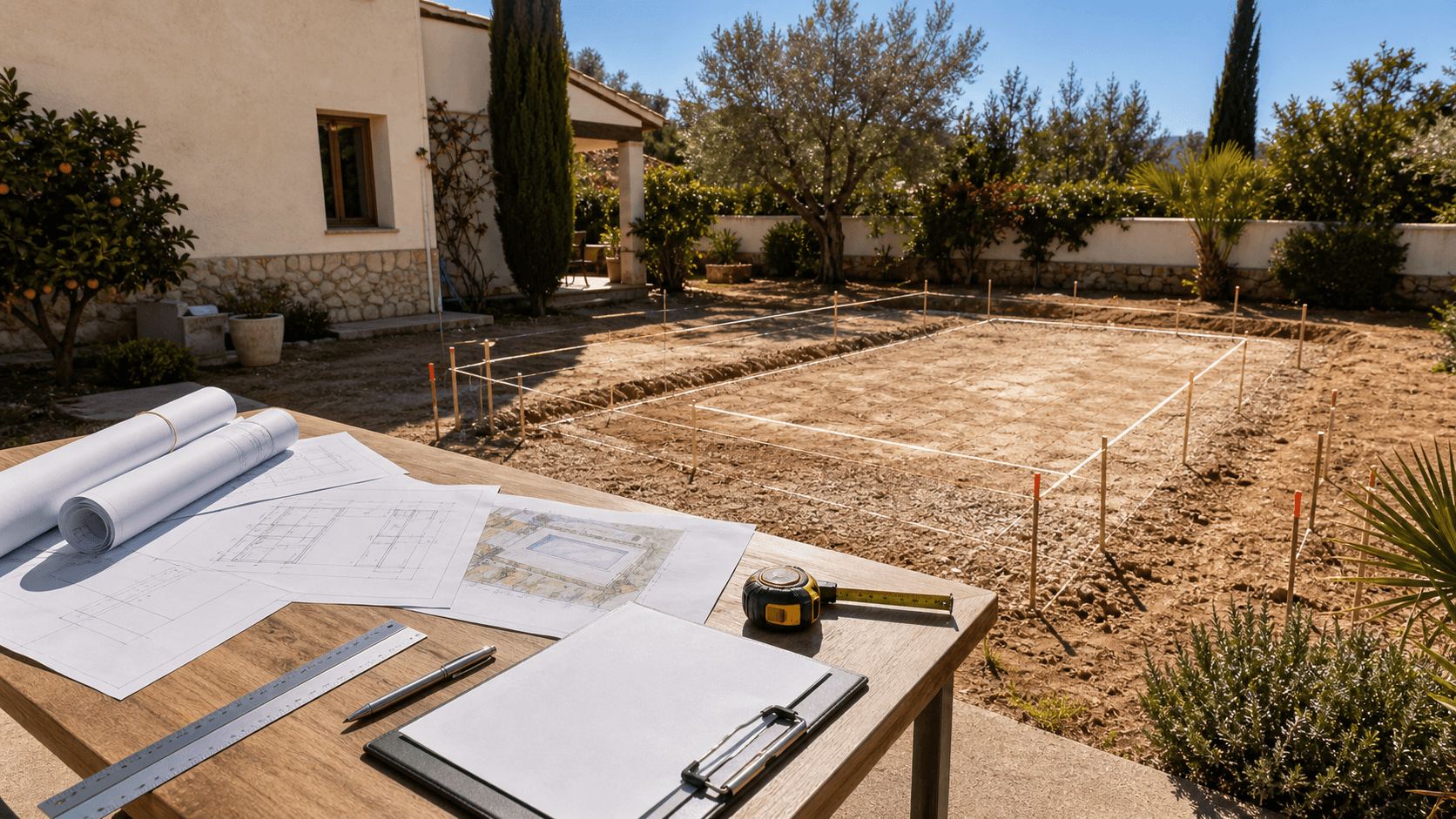
We tell you which consent your town hall wants for your plot, prepare the file and submit it ourselves, so the pool is above board from the first day of digging.
Is the pool part of something bigger? Look at our full home renovations and, if you are starting from bare land, at our new-build homes. And for the house and the garden handled as a single job, start with our villa renovations.
02 By construction type
Types of pool: gunite, concrete, liner, fibreglass and porcelain
There is no single best type for every plot. It depends on the ground, on the shape you want, on what you are prepared to spend now and on how many years you expect to leave it alone.
Gunite / concrete
A sprayed, reinforced concrete shell. The most robust option and the only one that allows any shape, depth or infinity edge. It takes whatever finish you like — mosaic, porcelain, microcement — and lasts decades.
Fibreglass
A prefabricated shell that arrives finished and is set on a prepared base. Quick to install, smooth and easy to clean. The trade-off: catalogue sizes and shapes, and a lorry and crane that have to reach the plot.
Liner
A reinforced membrane lining a lightweight block or panel shell. The cheapest way in, and it still allows varied shapes. The membrane is replaced every so many years, so the long-term upkeep weighs more.
Porcelain
Not a type of shell but a high-end finish laid over a concrete pool. Elegant, non-slip and very hard-wearing. It is what we usually recommend when an old mosaic pool is being brought up to date.
Torn between gunite and fibreglass or liner? We set the two side by side further down. As a rule, in the villas around here — where the pool is the whole point of the garden — gunite finished in porcelain is what ages best.
03 Your plot
Choose your situation
Every pool starts from a different point. These are the four we are called about most around Valencia. Pick the one that looks like your garden and it will take you to the part of this page that answers it.
A new pool at your villa
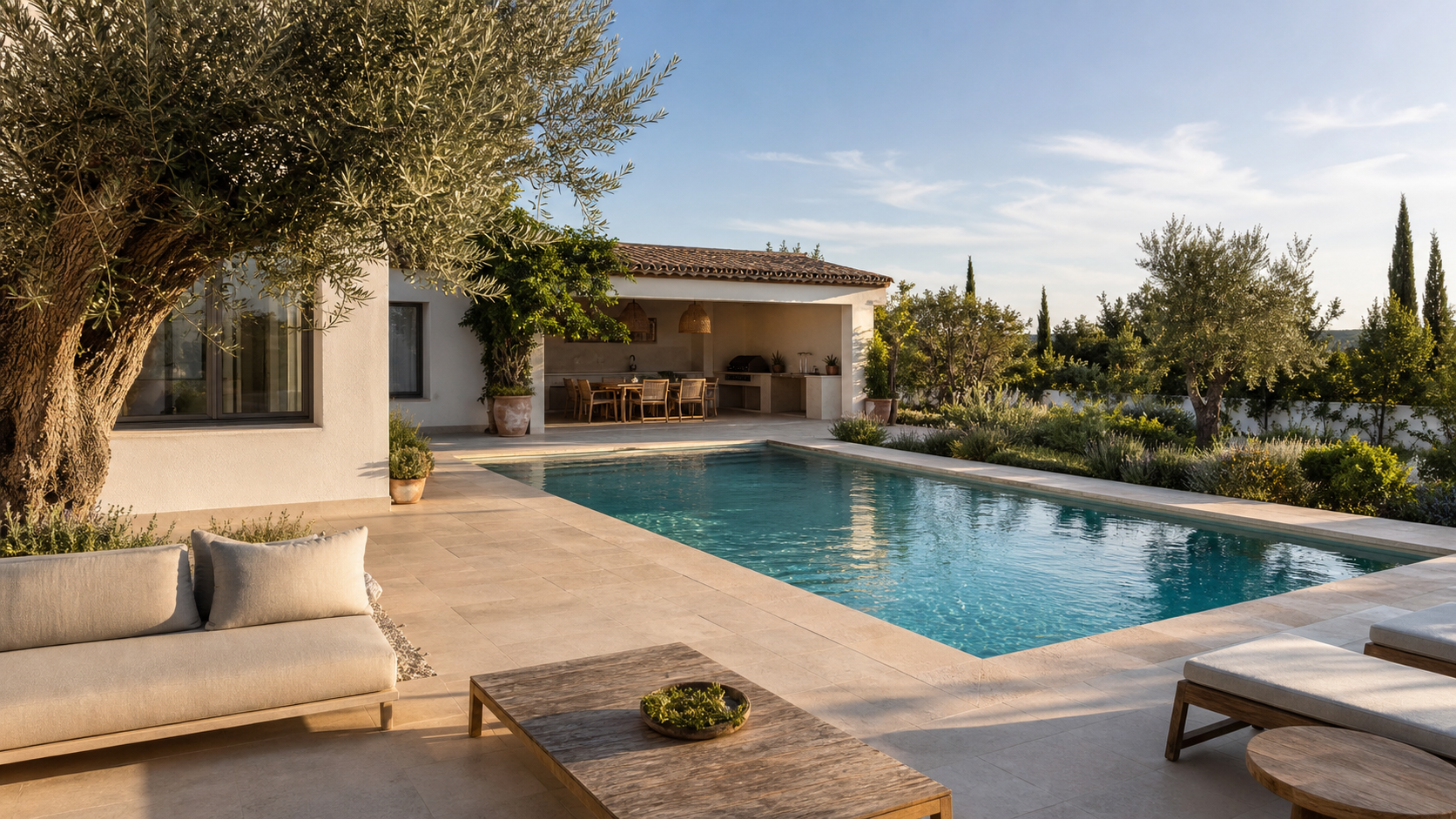
A garden with room and no pool. The work is in sizing the shell, placing it well and getting the earthworks right first time.
The old pool you inherited
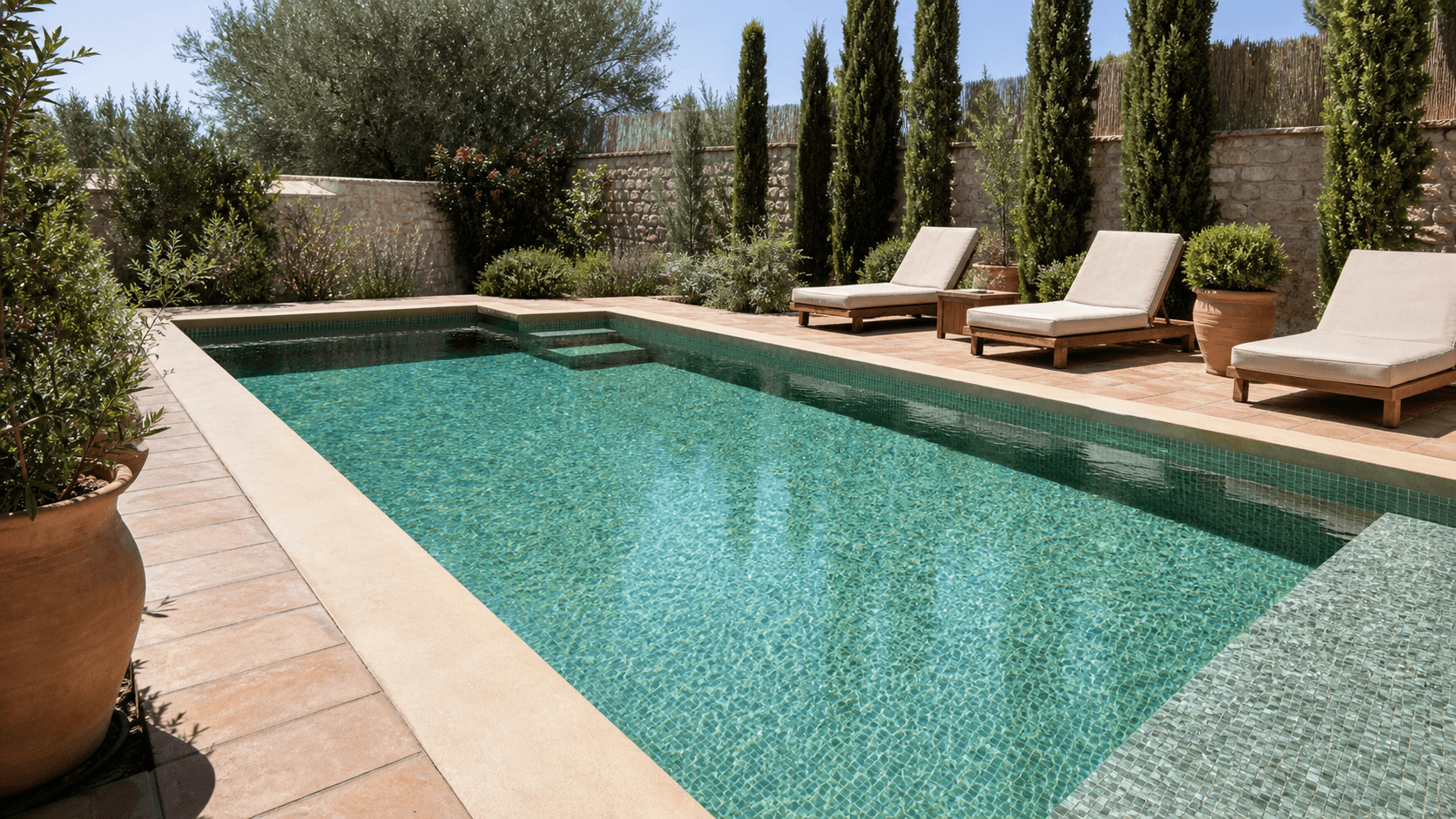
A worn mosaic or liner pool that came with the house. The work is a new finish, sorting out leaks and bringing the filtration up to date.
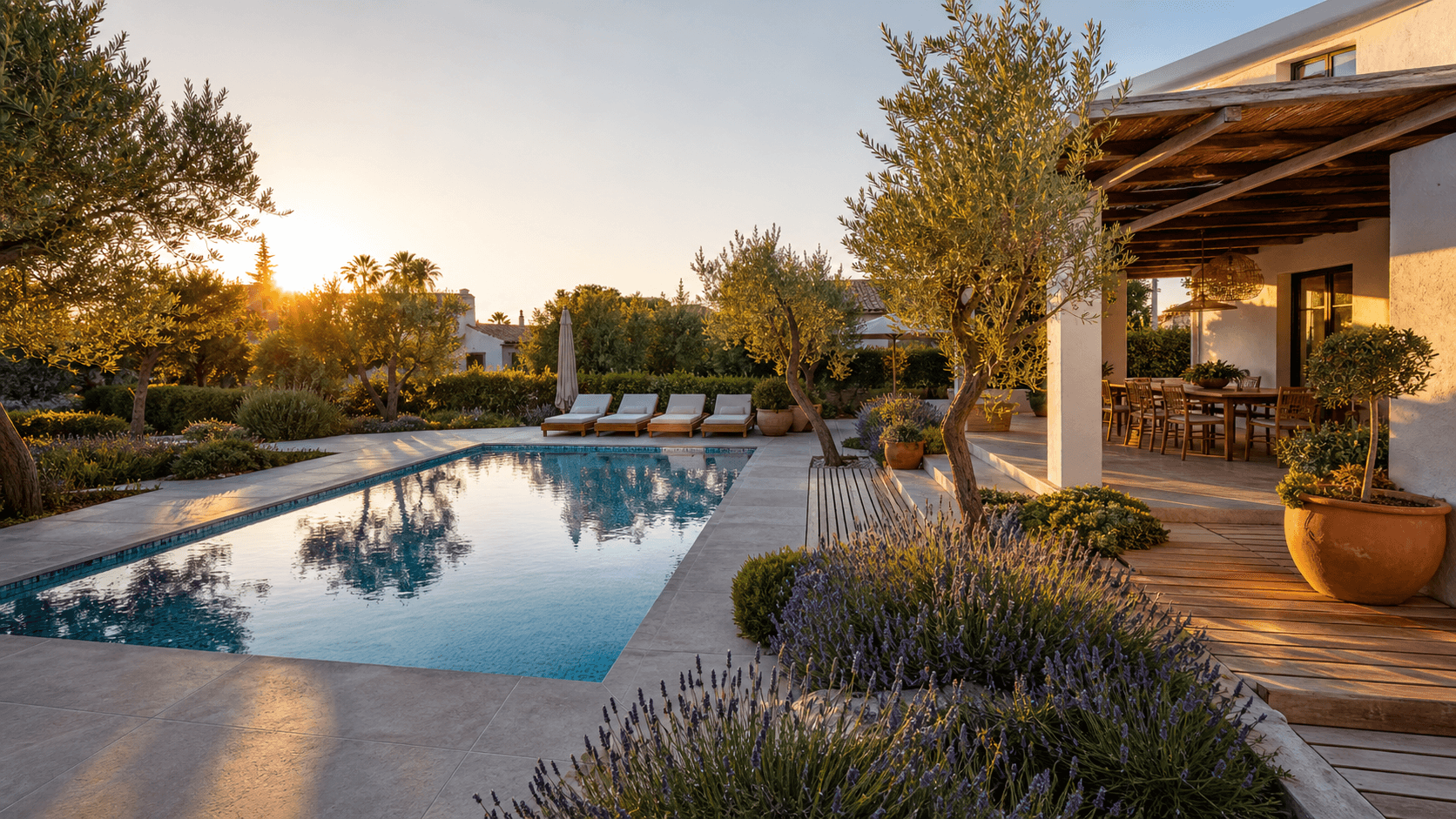
Pool, terrace and garden
You want the whole outdoor space, not just the water. The work is making paving, shade and access agree before anything is laid.
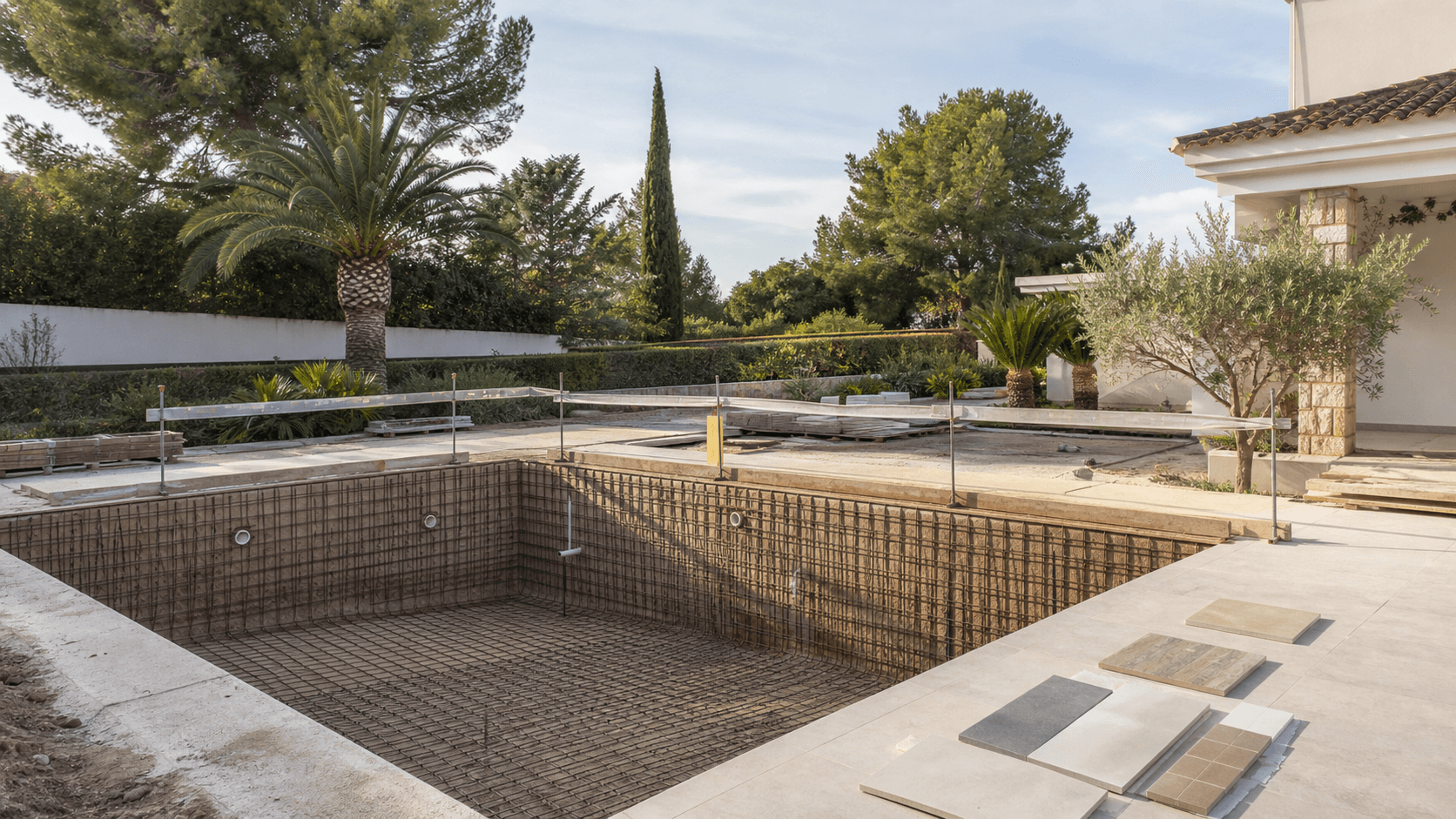
A small or awkward plot
Little space, a slope or a narrow entrance. The work is squeezing every usable metre and choosing a shell that fits and can actually get in.
04 Not just the water
The pool, the terrace and the garden as one job
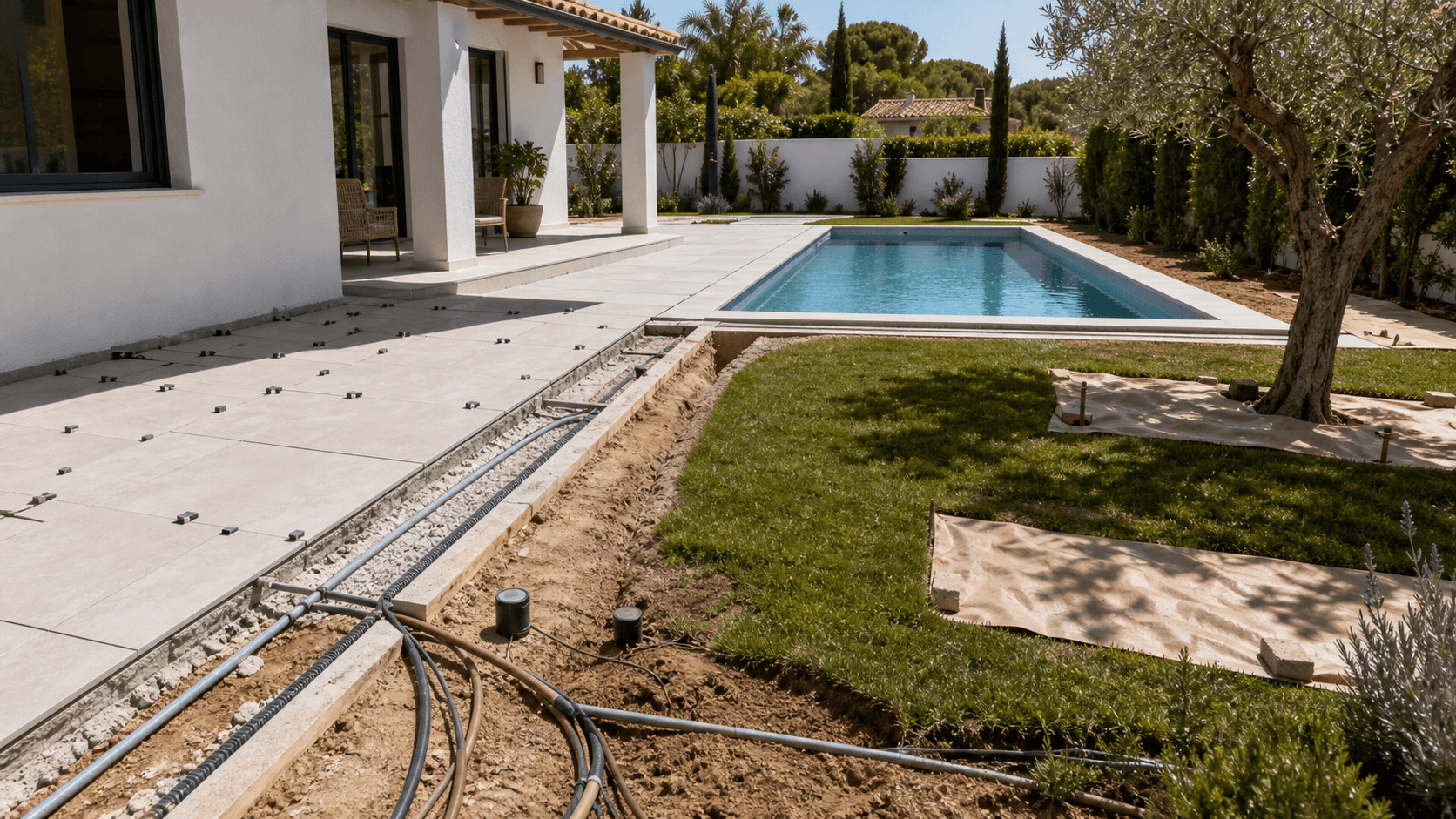
A pool very rarely works as an object dropped in the middle of a plot. It gains enormously when it is drawn at the same time as the terrace, the porch and the planting: the surround paving runs on into the terrace, the coping matches the outdoor floor, and the plant sits hidden but reachable. Thinking it through together avoids the most expensive mistake there is — building the pool this spring and then lifting everything you have just laid next spring to run a drain or a power supply that nobody provided for.
So we quote it as one project rather than three. One price, agreed in writing before anyone starts. One programme, so the paving is not laid until the services under it are tested. And one site manager, who is the person you ring whether the question is about the shell, the pergola or the gate.
It is also, frankly, cheaper. The digger, the concrete lorry and the tiler each come once instead of twice, and the second mobilisation you never pay for is the one that usually blows a garden budget apart.
If the house needs work as well as the garden, we price the pool, the terrace and the villa on one document and run them on one programme. That is what our villa renovations service is for.
No translation needed
Your pool, priced and run in English
The company is Spanish, the team is ours and so is the machinery — that is the part that actually builds your pool. What we add is that the person who prices it, the person who runs the site and the person who answers when you ring are all people you can talk to directly. In this trade that combination is rarer than it ought to be.
- One English-speaking point of contact. One name and one mobile number, from the first look at your garden to the morning we hand the pool over full — not whoever happens to be free that week.
- A quote you can actually read. Itemised trade by trade — earthworks, shell, waterproofing, plant, finish, coping, surround — and talked through with you line by line before you sign anything.
- The town hall dealt with by us. A building licence (licencia de obra) for a new pool, or a responsible declaration (declaración responsable) where the job is lighter. We prepare the file, we submit it, and we tell you plainly what it says.
- Changes put to you in writing. If the ground turns out to be rock, or you decide mid-job that the steps should move, it is priced and agreed before anyone lifts a tool. Nothing gets settled verbally on site.
One thing to be clear about: the paperwork itself stays in Spanish. A Valencian town hall issues its licences in Spanish, and nobody in this trade can change that. Our job is to make sure you know precisely what you are putting your name to, and what it commits you to, before it is lodged. If that is the part that has been stopping you from starting, our page for English-speaking builders in Valencia goes through it properly.
05 Investment
How much it costs to build a concrete pool in Valencia
No two plots are the same, but a market range helps you work out whether you are in the right conversation before anyone visits. The figures below are indicative: the real number is set after the site visit.
| Type of pool | Indicative range | What it usually includes |
|---|---|---|
| Standard gunite around 8×4 m | €18,000–€28,000 | Sprayed-concrete shell, waterproofing, standard filtration, mosaic finish and basic coping. |
| Porcelain or premium finish | €28,000–€45,000 | Concrete shell finished in porcelain, better plant (salt chlorination, LED lighting), quality coping and surround. |
| Infinity edge or large format | €45,000–€70,000 and above | Infinity-edge or large-scale design, balance tank, heating, app controls and the complete surroundings. |
Indicative market ranges for a concrete pool in the Valencia area, given as a guide and not as a quote or an offer. Liner and fibreglass pools normally start lower. Coping, advanced plant, heating and the surroundings — terrace, planting, shade — may be priced separately. What your pool costs depends on your plot, and we will not pretend otherwise.
What moves the price
Mostly four things: the size and shape of the shell, the finish you choose, the level of plant behind it (filtration, heating, controls) and the coping and surround. Then there is the plot itself. Rock instead of soil, a steep drop, or a gate too narrow for a lorry will all push the earthworks up, and none of that shows on a catalogue price.
Which is why we would rather come and look. After the site visit you get a fixed written quote, itemised, and that figure is the one you pay. If something extra is agreed later, it is priced and signed off before it happens.
Living with it
Filtration and maintenance: the cost the quote doesn’t show
A pool is not finished the day it is filled. What it costs to live with — water, chemicals, the electricity the filtration draws — is decided while it is being built, which is a poor moment to be thinking about it for the first time. After 35 years, this is what we tell people.
Never save on what gets buried. The waterproofing, the shell and the quality of the plant installation are the invisible structure. Saving there is the most expensive economy of all: fixing a leak means emptying the pool, breaking out the finish you have already paid for, and doing it again.
Filtration sized properly shows up every month. A pump and filter matched to the volume keep the water clear on fewer running hours and less chemistry. Salt chlorination cuts what you buy in a tub, and a variable-speed pump takes a visible bite out of the electricity bill. Both usually pay for themselves within a few seasons.
A good finish is maintenance you never do. Porcelain and a properly laid mosaic hold less dirt and clean up faster than a cheap alternative. And a cover cuts evaporation, leaves and heat loss: less water to top up, and a season that starts earlier and ends later.
The awkward questions
The three things everyone asks before they sign
They are the same three, whether you are calling us from a house in Rocafort or from a kitchen in Surrey. Here they are, answered properly.
Will the price move once you start digging?
No. The quote comes after the site visit, itemised trade by trade, and that figure is what you pay. Ground conditions are the one honest unknown in pool work, so we say in writing what the quote assumes about the ground and what happens if we hit rock — before you sign, not after.
Who deals with the town hall?
We do. We work out what your town hall requires for a pool on your plot, prepare the file, submit it and follow it up, and we tell you in English what it actually says. You are not left translating a planning form with a dictionary, and you are not digging without consent.
Will you still be around in five years?
We have been building in this corner of Valencia for more than 35 years, with our own team rather than a rotating cast of subcontractors. If the pool needs looking at after handover, the people who come back are the people who built it. That is the whole argument for using a Spanish company with a yard, rather than a middleman with a phone.
Want a figure for your own garden?
Send us the plot, the pool you have in mind and how you expect to use it. We come and look, and you get an itemised price in writing. We reply within 24–48 hours and there is nothing to sign.
Cost my pool06 In what order
How we build your pool, step by step
Six phases, in this order, from the first visit to the first swim.
Site visit and design
We look at the plot, the ground and the way you use the garden, then size the pool and place it where it will actually get used.
Design and building licence
A proposal with a fixed, itemised quote, and the town hall file prepared and submitted by us.
Excavation and shell
Earthworks, setting out, reinforcement and the gunite or concrete shell, with its drainage.
Services
Filtration, pipework, wall fittings, lighting and the plant room, all provided for before a single tile goes on.
Waterproofing and finish
The shell treated, the finish you chose laid, then coping and a non-slip surround.
Filling and handover
Filling, balancing the water and handing it over ready to swim in, with the maintenance explained in plain terms.
The order is the whole discipline. Each phase has to be finished and checked before the next one buries it, which is why we do not start tiling until the waterproofing and the watertightness test have both passed. It is what stops the classic “we filled it and it started losing water” two weeks after handover. You can read the same method applied to a whole house in how we work.
07 Making the call
Gunite vs. fibreglass or liner: which suits you
The question we get asked most. There is no single answer: it turns on how long you want it to last, the shape you are after and what you are willing to spend at the start.
More durability, free design
- Any shape, any depth, a bespoke infinity edge.
- Finished however you want it: mosaic, porcelain, microcement.
- A working life measured in decades with sensible maintenance.
- Can be repaired and re-finished without replacing the shell.
- Longer on site and more money up front.
Quicker and cheaper to start
- Fast to install: far fewer days with a lorry in your drive.
- Lower entry cost, the liner especially.
- Fibreglass gives a smooth surface that wipes clean.
- Shapes and sizes limited to what the catalogue makes.
- The liner is a consumable: plan for replacing it.
And porcelain? It is not an alternative to gunite; it is the premium finish laid over a concrete shell. It is the right answer when you want something elegant, non-slip and long-lived, and it is what we most often recommend when an old mosaic pool is being brought back to life. There is more on it in the finishes section below.
When you are not in Spain
Building a pool while you are out of the country
A pool is the job people are most willing to have built while they are somewhere else, and it is easy to see why: it happens outdoors, it does not stop you using the house, and the best months to build it are exactly the months a lot of owners are not in Spain. That changes nothing about how it is built. It changes how it is reported.
You get photo updates as the job moves — what is finished, what is next and anything we have found in the ground that you need to know about. The decisions that genuinely need your eye, such as the finish, the coping stone or where the steps go, go to you by video call, with the hole in front of you instead of a paragraph describing it.
Somebody has to be on the plot to take deliveries, open the gate and keep the trades in order. That somebody is us, not a neighbour doing you a favour. And when it is done the work is documented, so you can see what you are taking on before you fly back and fill it.
08 Recent pools
Pool and outdoor-space projects
A sample of the pools and gardens we build and rebuild across Valencia and the Camp de Túria.
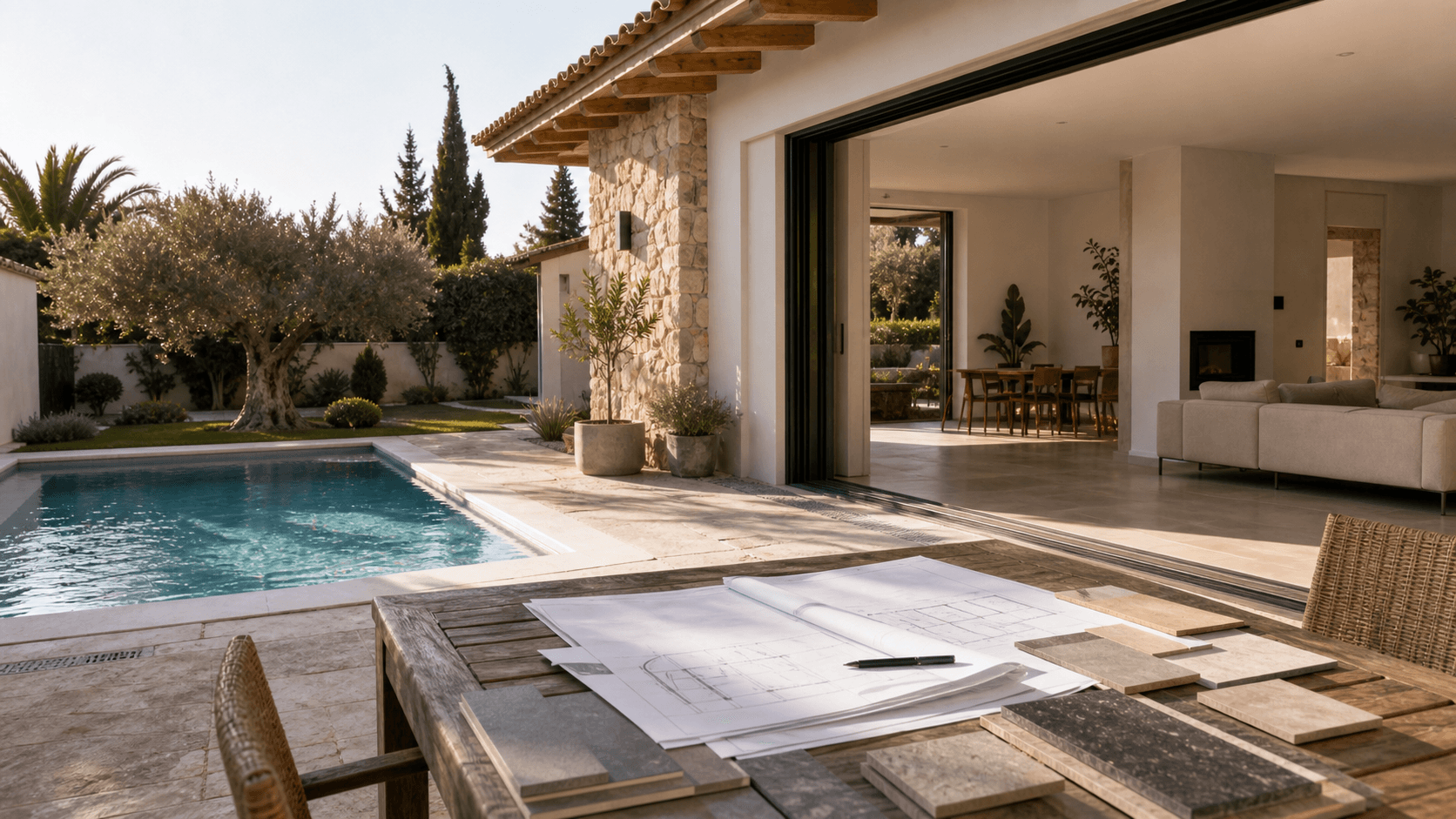
Mediterranean villa pool
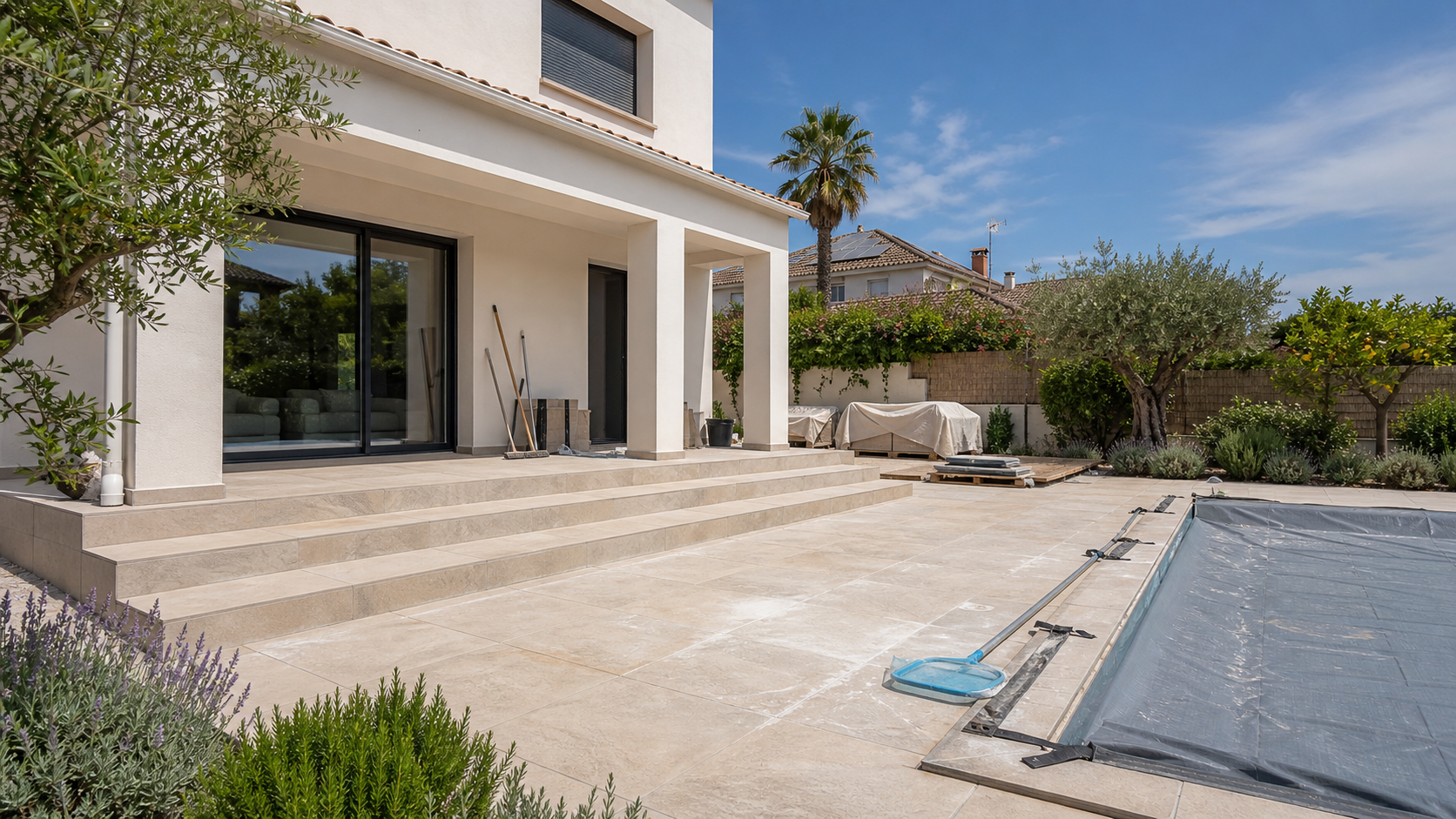
A concrete pool built into a villa with a natural-stone front: gunite shell, coping matched to the terrace stone, and a surround with a porch and planting. The result looks as though it has been there as long as the house, and it asks very little of its owners.
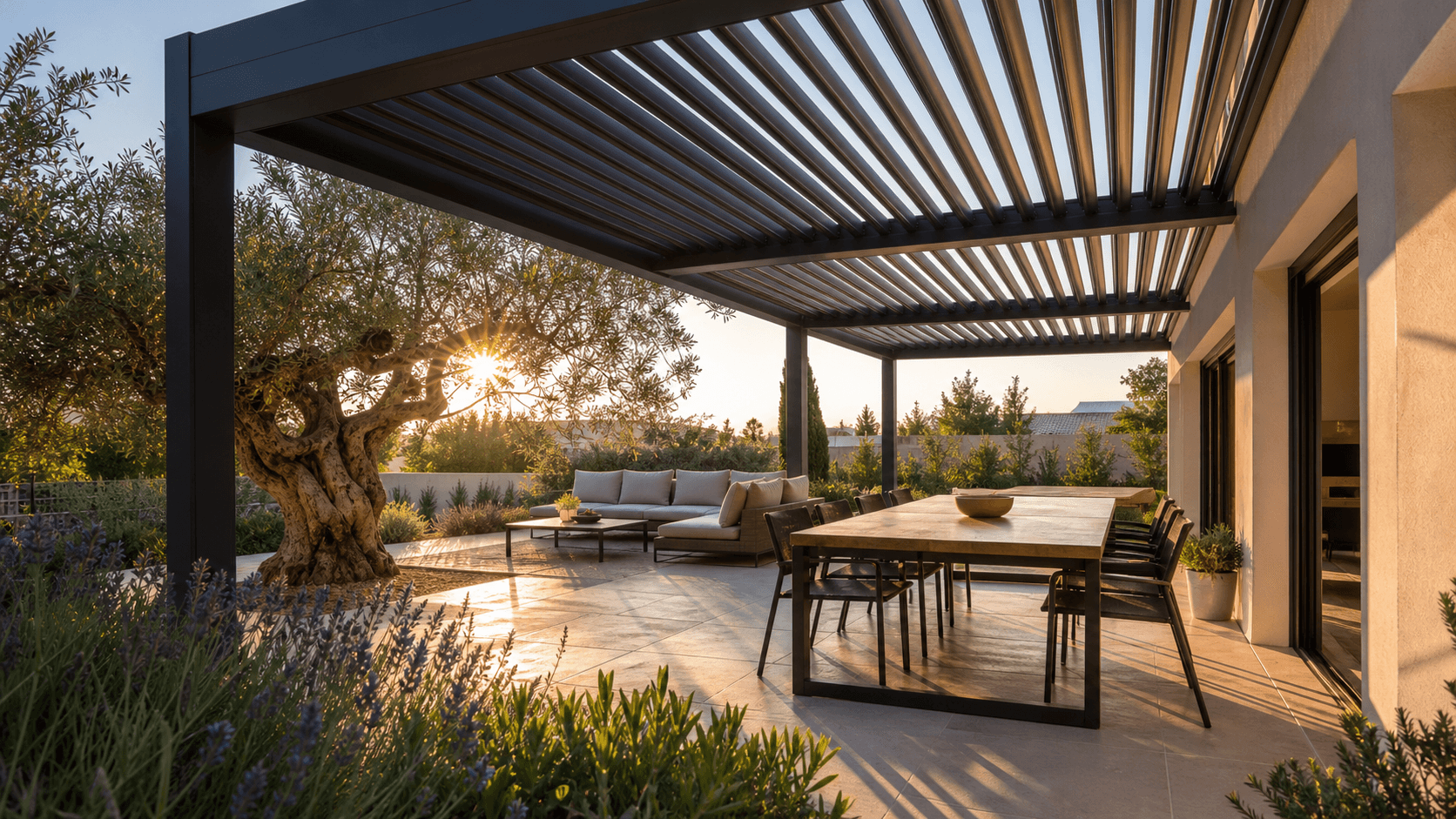
Pool with surround and shade
Pool, non-slip surround and a shaded area designed together so the garden is usable in August as well as photogenic in May. The care went into the join between surround and terrace, and into keeping the plant hidden but easy to reach.
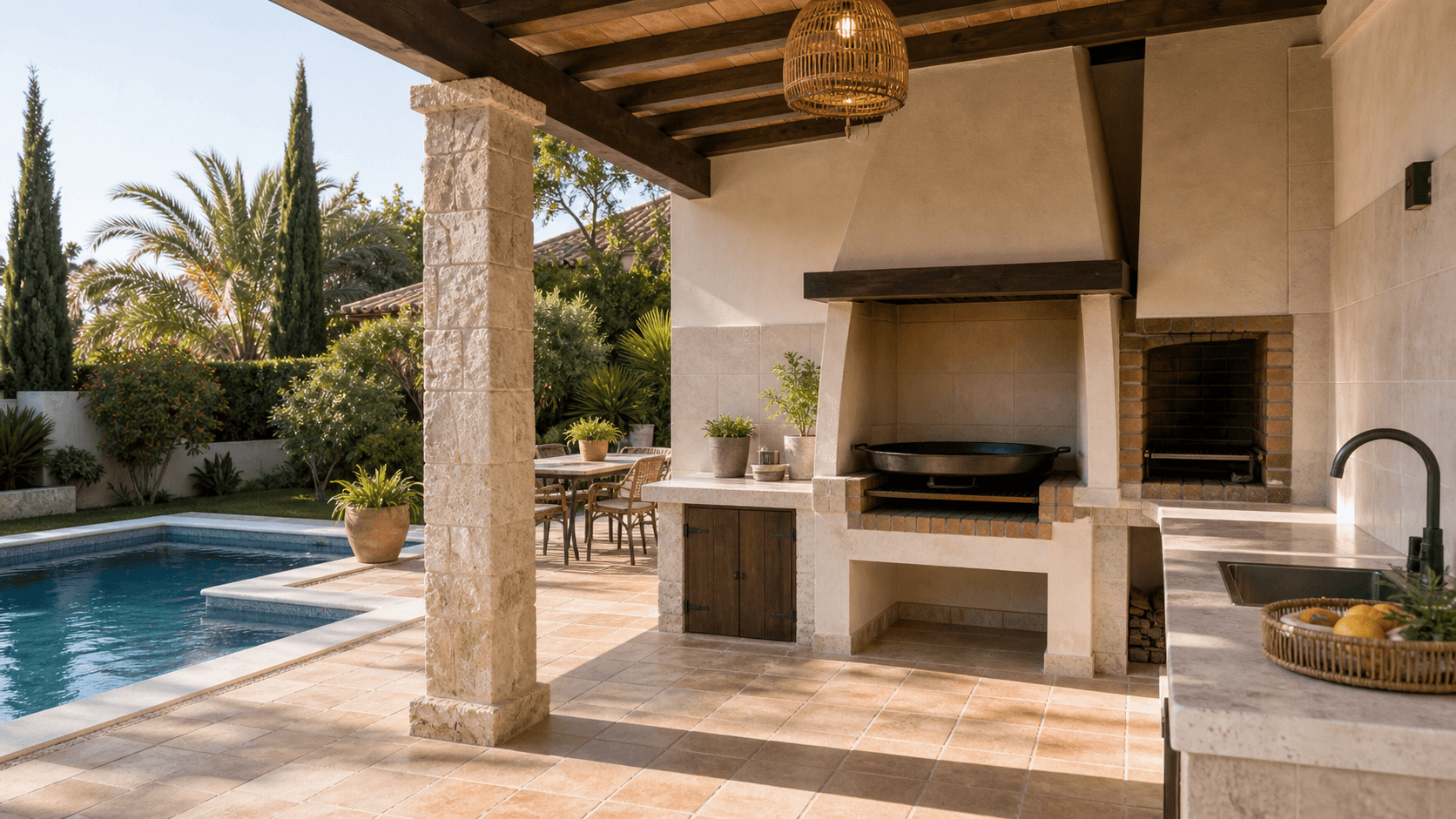
A complete outdoor space
An outdoor project where the pool was tied into stone walls, levels, access and planting. A good demonstration of why it pays to draw the pool with the rest of the garden rather than as an object on its own.
There is more finished work in our projects gallery. And if you would rather hand the whole thing over — pool, terrace, house and paperwork — that is what our turnkey renovations are for.
09 Materials
Finishes and non-slip surround paving
The finish decides how the pool looks, how the water feels and how much of your Saturday it takes. We advise on each material for what it does, not for what colour it comes in.
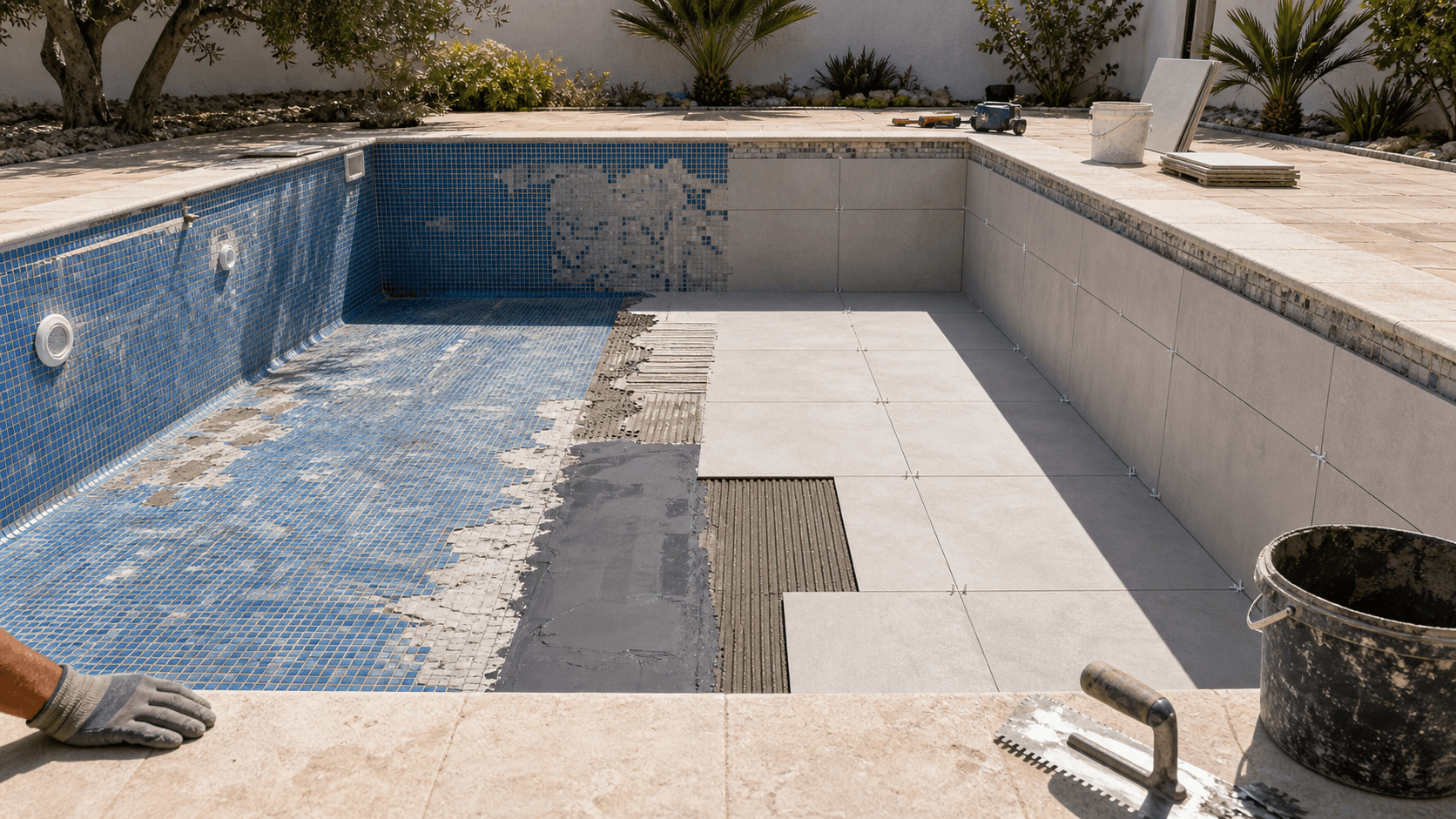
Mosaic
The classic of concrete pools: affordable, repairable tile by tile and available in a huge range of tones. Laid well, it still looks better than most of what replaced it.
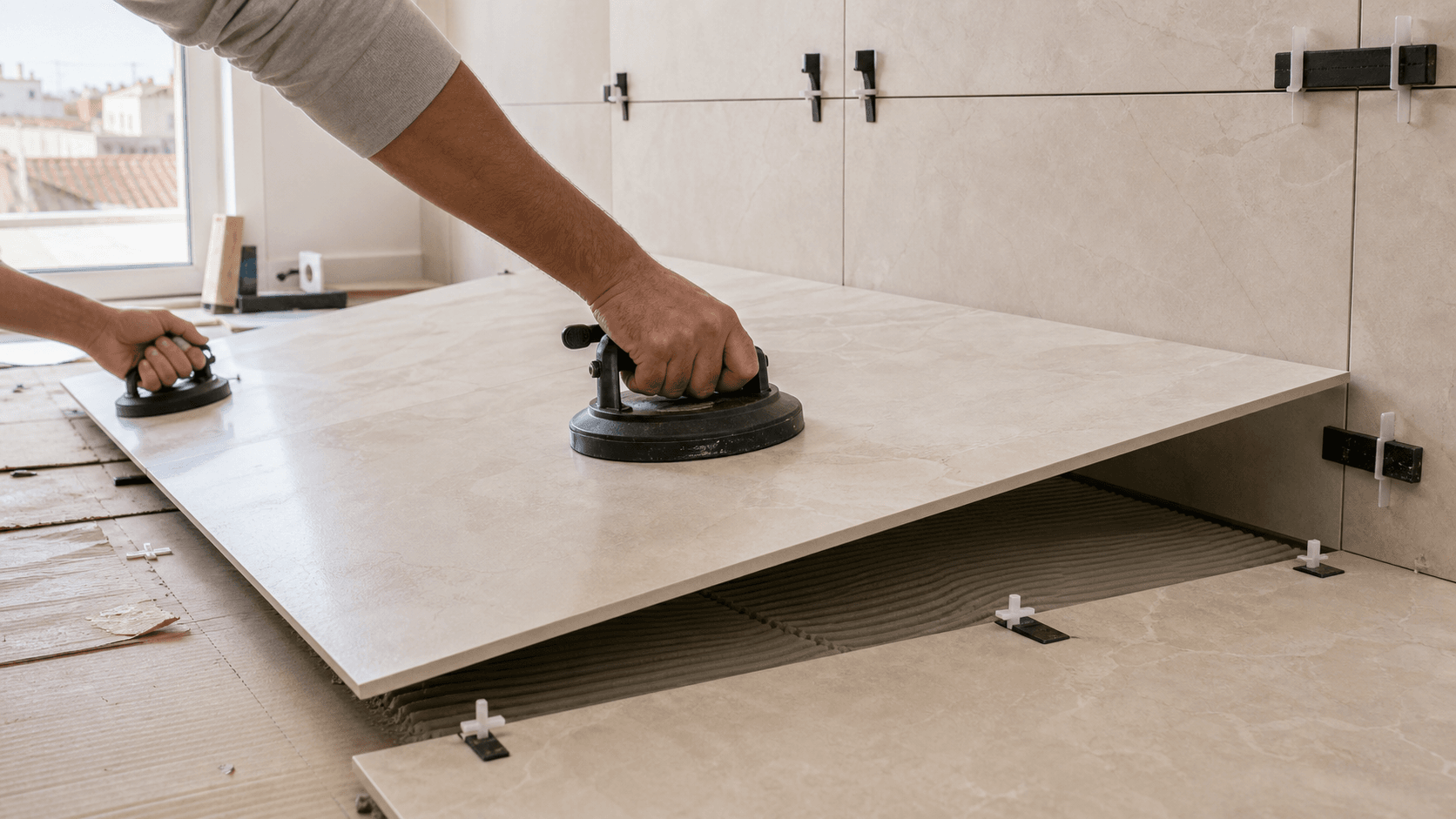
Porcelain
The premium finish: elegant, very hard-wearing, and available in non-slip versions. The usual choice when a tired old pool is being brought up to date.
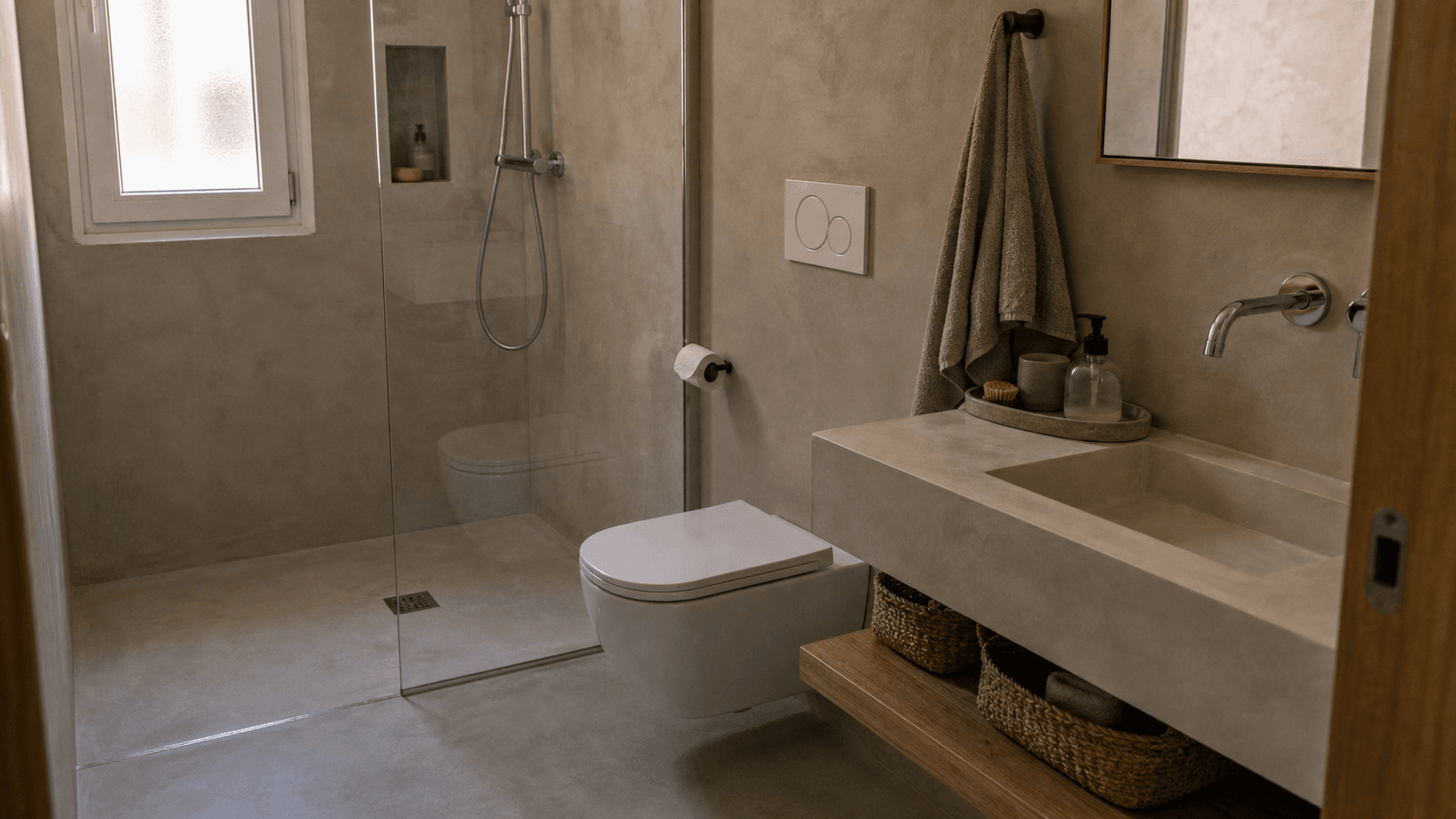
Microcement
A seamless, joint-free finish with a contemporary look. Applied and sealed by hands that have done it before, the result is very clean; done badly, it is a repair job.
Liner
A reinforced membrane that lines the shell. The quickest and cheapest to fit, renewed every so often, and forgiving about shape.
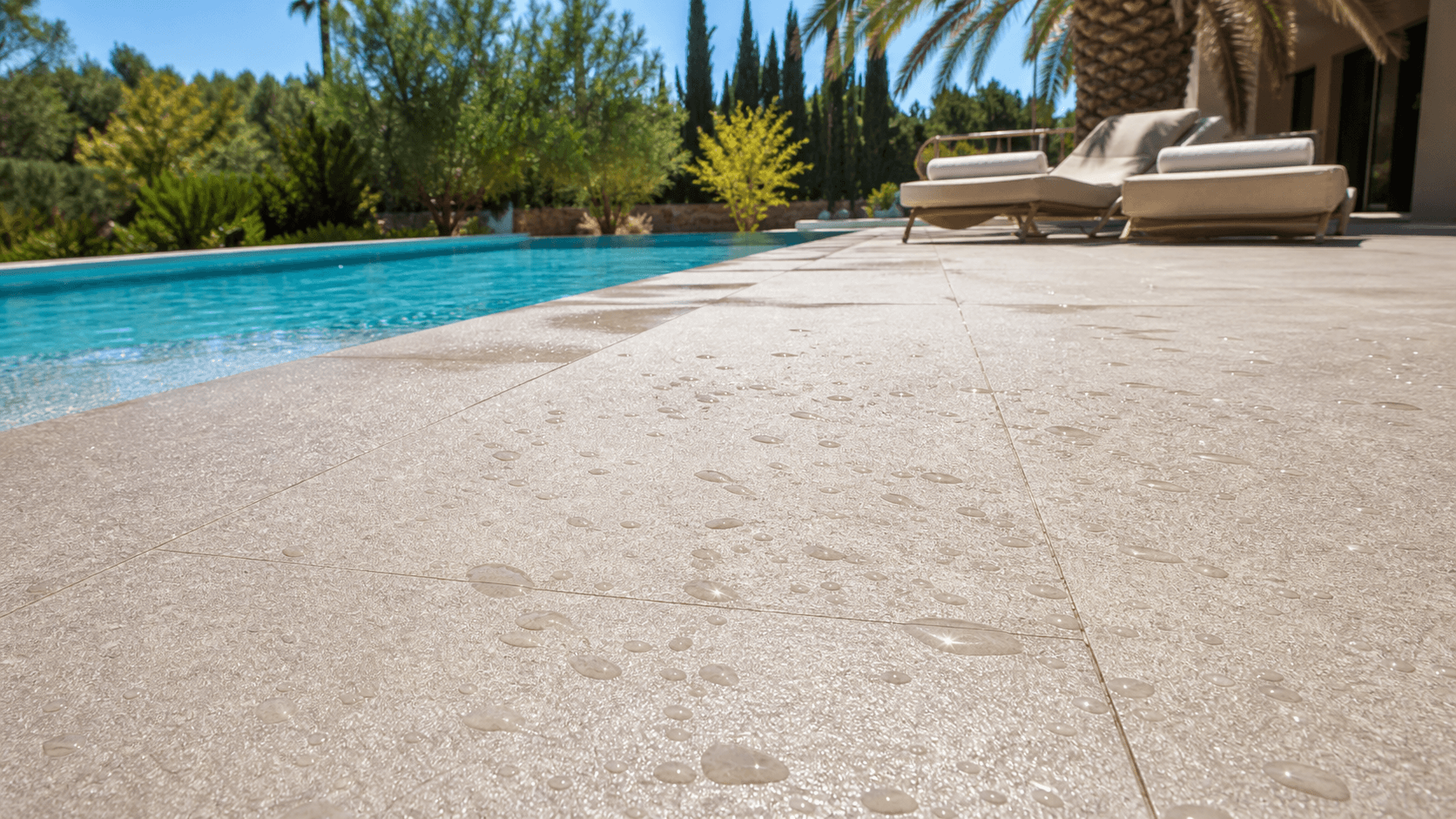
Surround paving
Non-slip porcelain, natural stone or technical decking. It should not burn bare feet in July, should not be slippery when wet and should agree with the terrace.
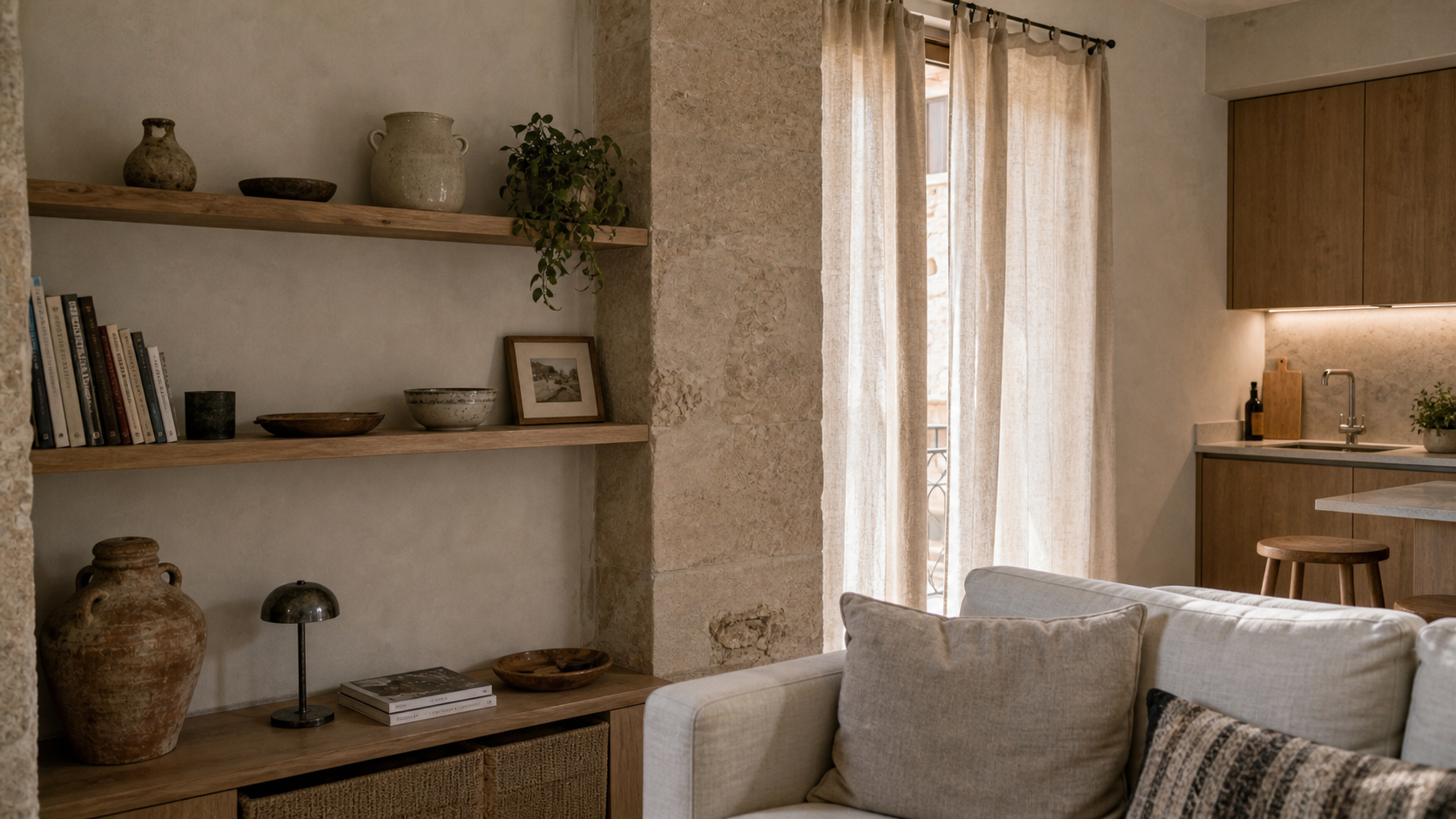
Coping and stone
The pool edge in natural stone or porcelain — the detail that does most to make a new pool look like it belongs to a Mediterranean house.
Before you dig
Do I need a permit to build a pool?
As a rule, yes. A concrete pool means excavation and a new structure, so most town halls around here — Valencia, La Eliana, Bétera, Riba-roja, La Cañada — want a building licence, and depending on the size of the pool and the classification of the plot, a technical project drawn up by an architect or a technical architect (aparejador) as well. Where the plot is rural or carries an easement, the file is heavier.
Here is the part that matters to you: the application is made in the owner’s name, and we prepare and submit it. We work out what your town hall asks for, put the file together, lodge it, chase it and tell you in plain terms what came back. If a technical project is needed, we bring in the technician. If your plot sits inside a private urbanisation with its own rules, we check those as well before anything is ordered.
Timescales and fees vary from one town hall to the next, so we will not put a figure on either until we have asked yours. Be wary of anyone who does. What we can tell you is that digging without consent is the expensive route: it can end in a penalty, or in having to sort the paperwork out after the fact with the hole already in the ground.
10 Learn from others
Mistakes worth avoiding when building a pool
- Letting a digger start before the consent is in and the price is in writing.
- Economising on the waterproofing and the shell, which is exactly where leaks begin.
- Building the pool on its own and then breaking up the new terrace to run a service.
- Under-sizing the filtration, then paying for it every month in chemicals and cloudy water.
- Tiling before the shell has passed a watertightness test.
- Choosing the finish on looks alone, with no thought for what it takes to keep clean.
- Paying a large sum up front to somebody with no yard, no team and no history in the area.
Photographs
Pools and outdoor spaces by Batecs
Concrete pools built into the terrace and garden of villas around Valencia and the Camp de Túria.
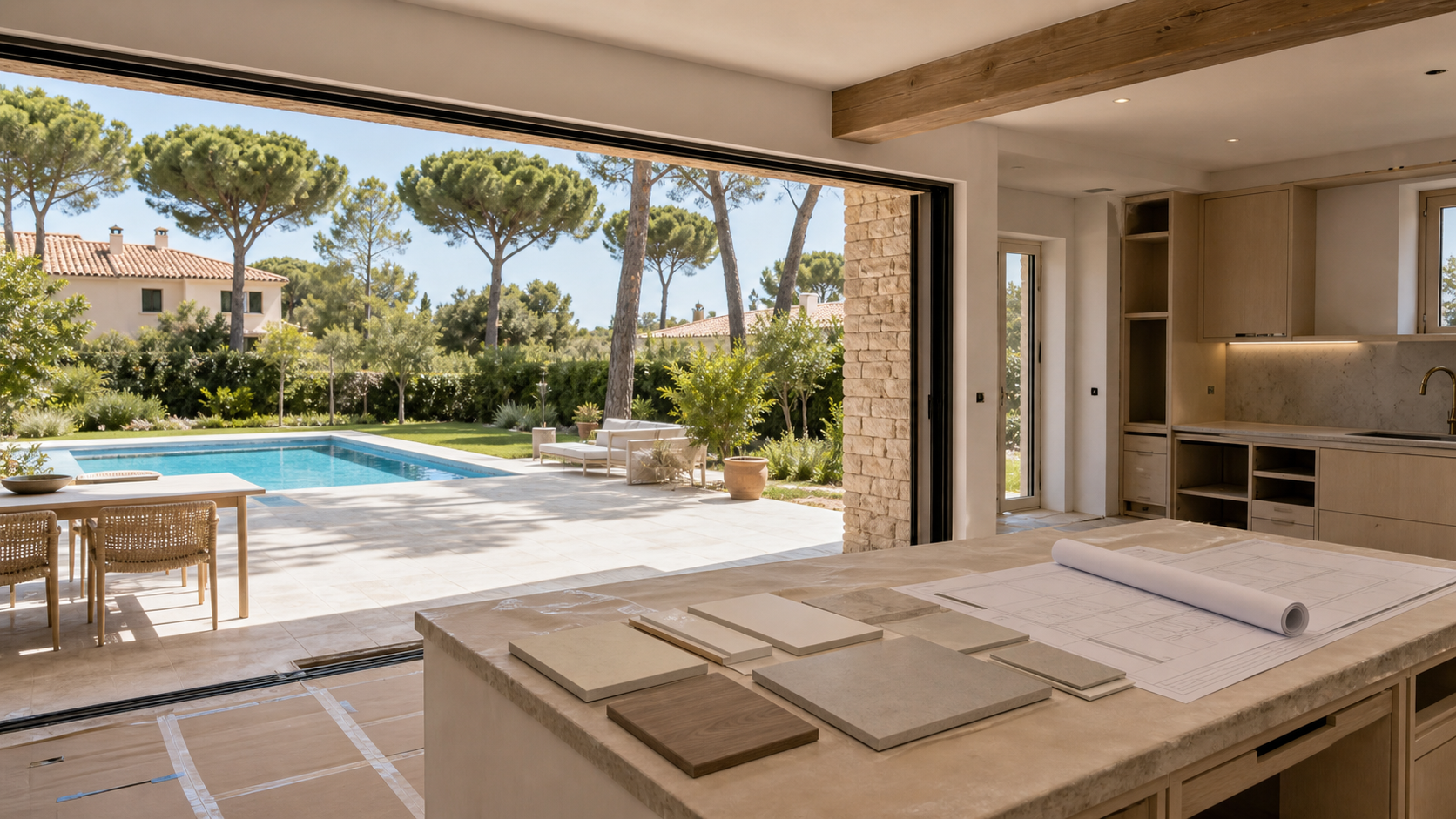
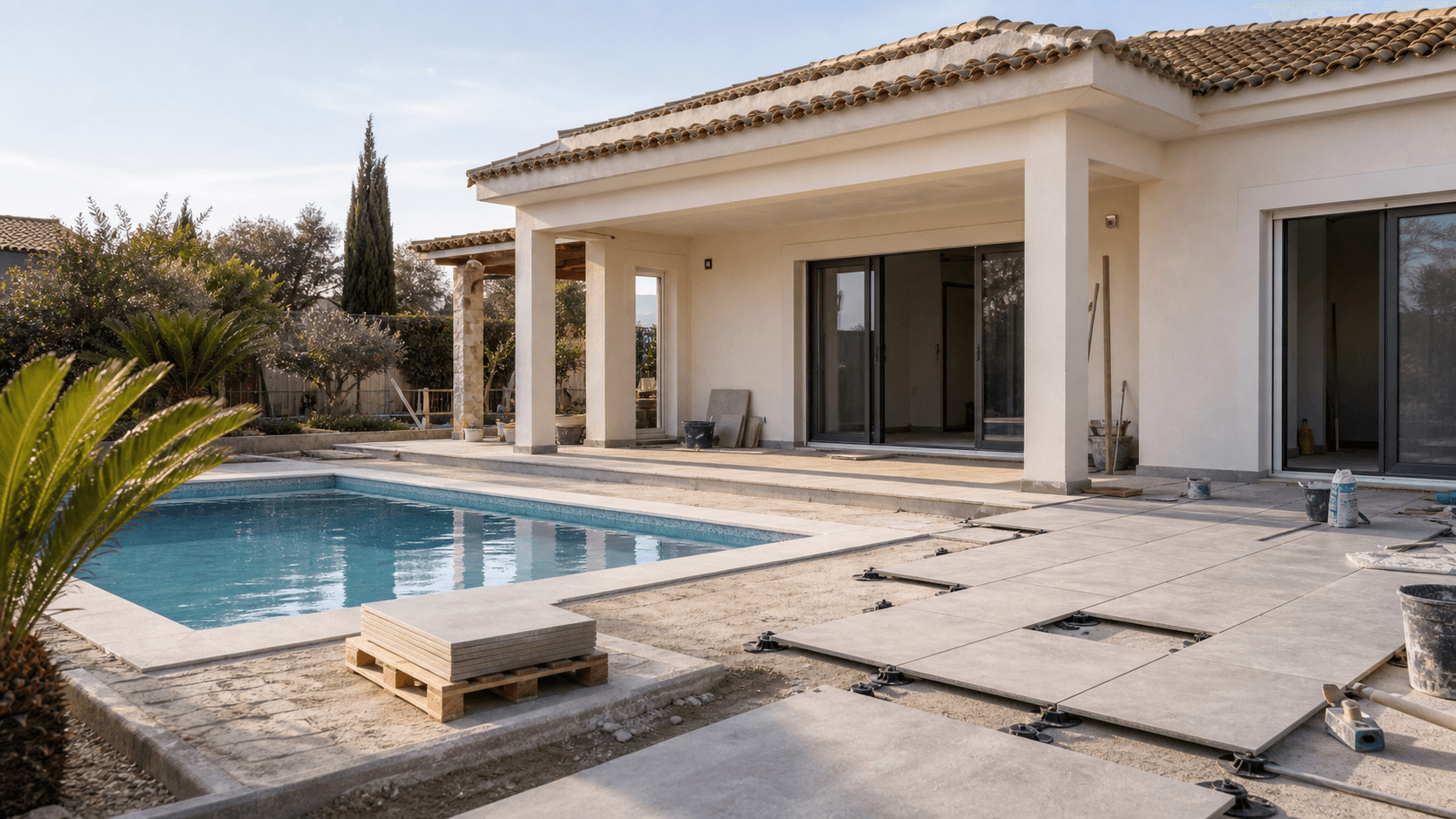
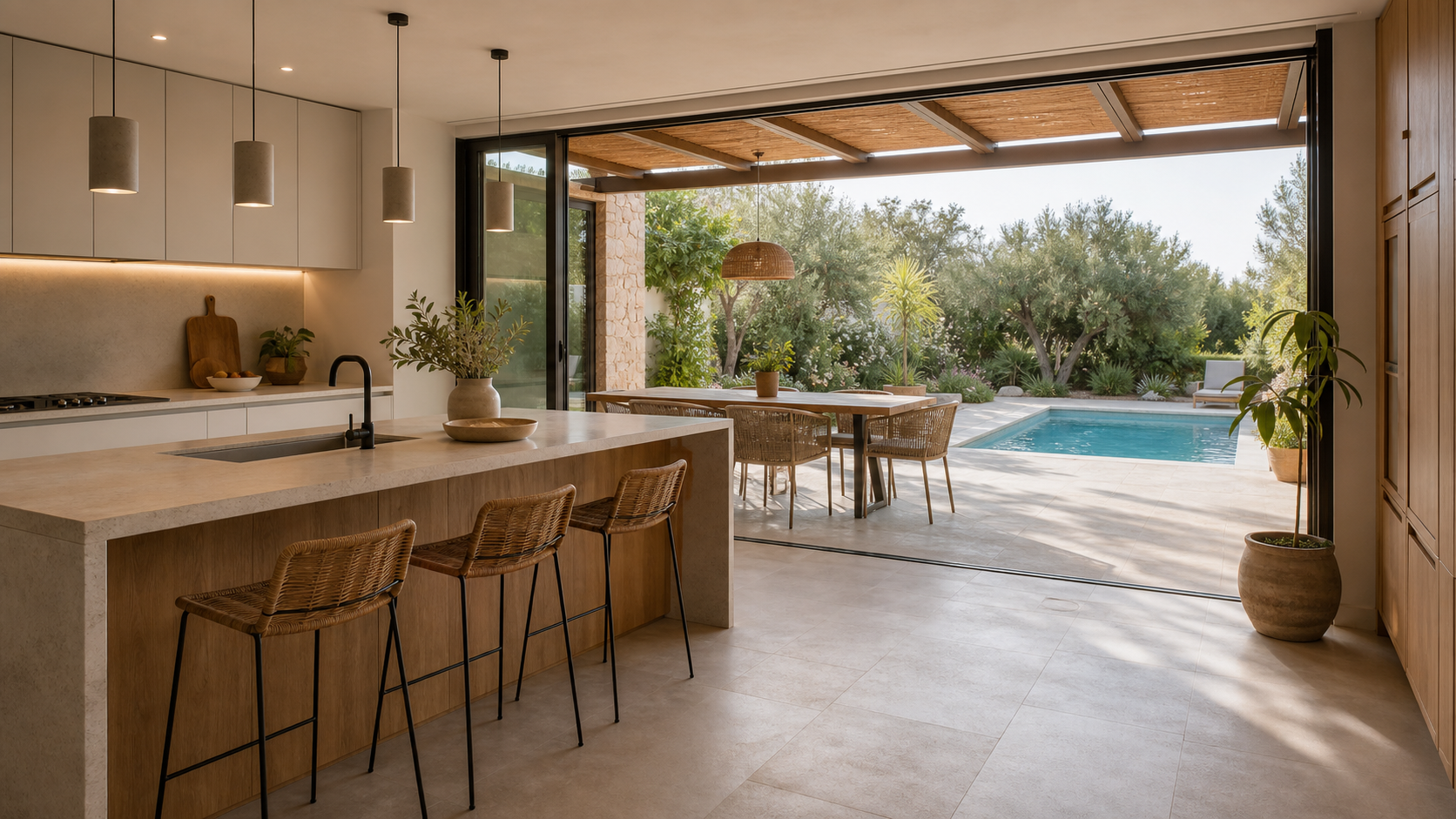
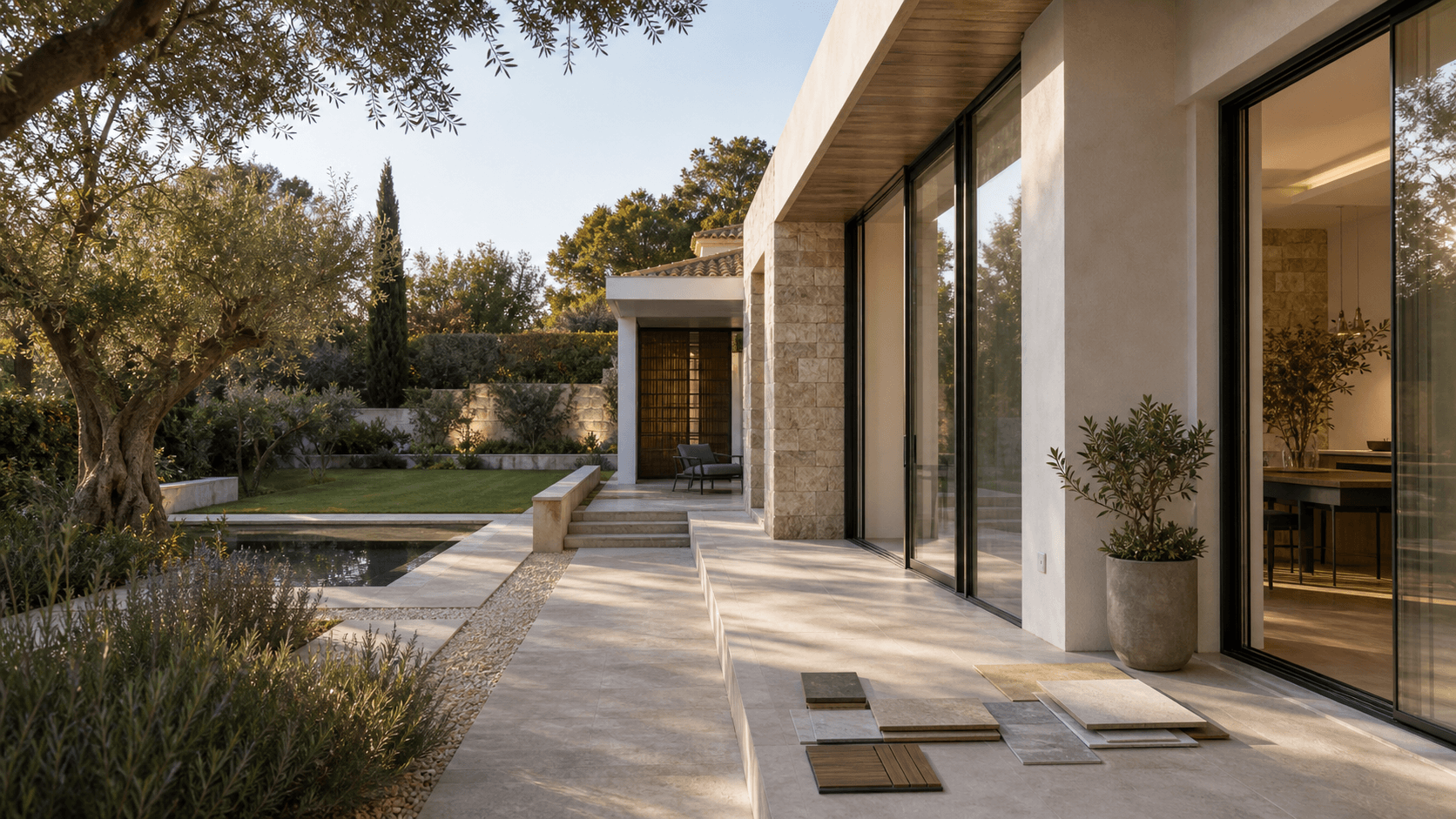
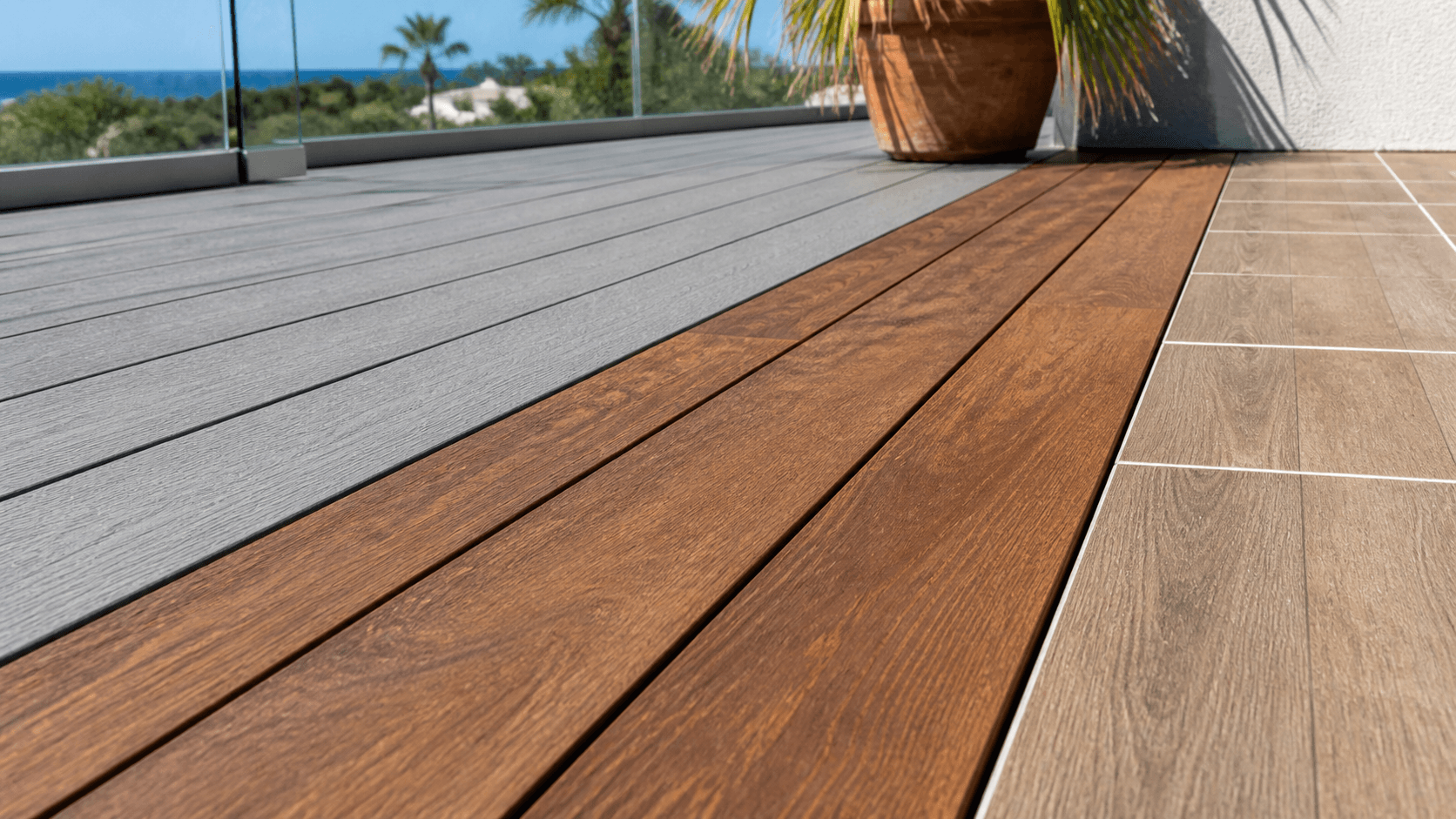
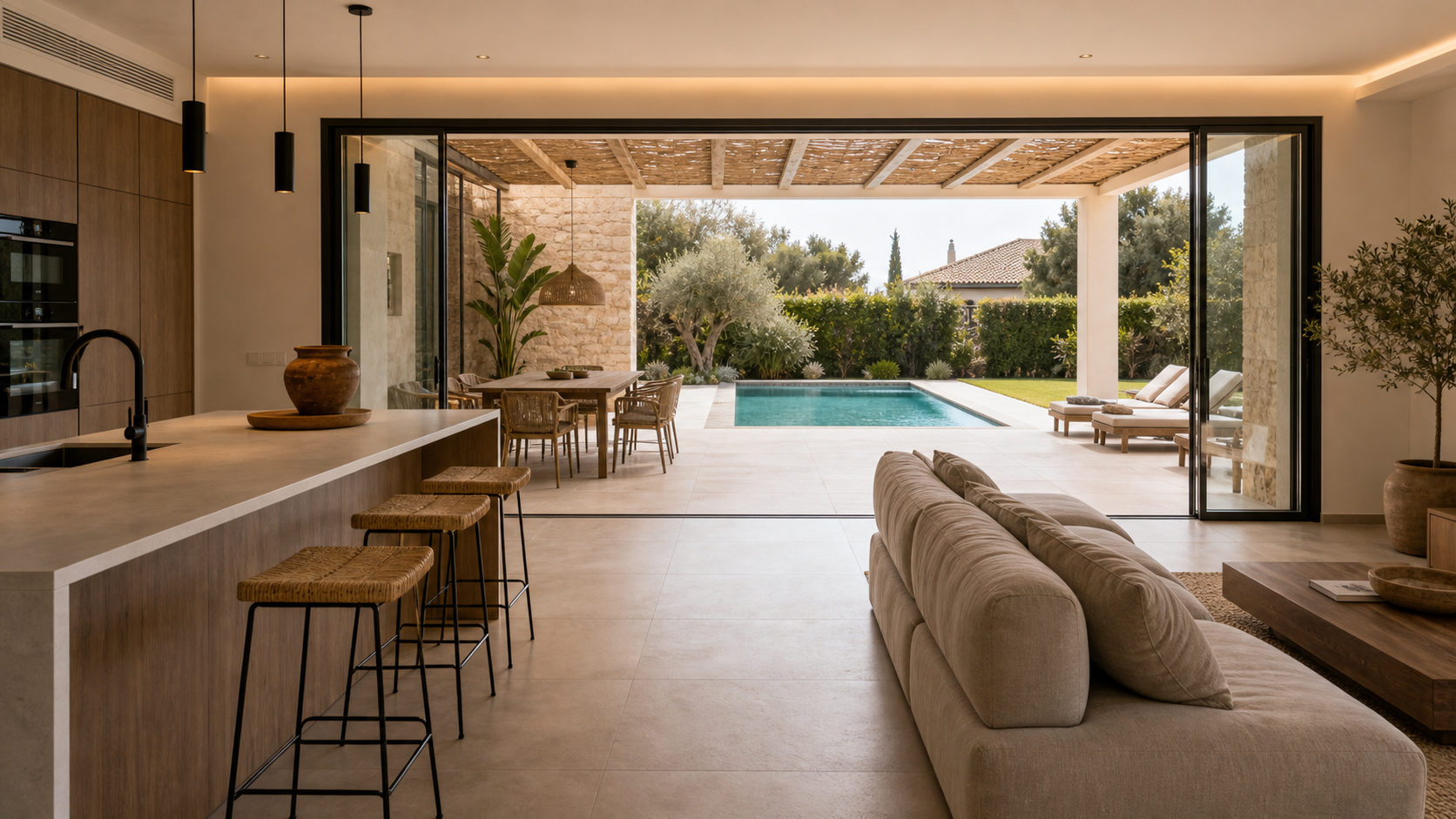
Tap a photo to enlarge · swipe for more →
Two case studies
Two pool projects, in detail
Open either one for the photographs and the decisions behind it.
Where we build
Areas where we build pools
We are based in La Eliana, in the middle of the Camp de Túria, so the villa areas around the international schools are ten minutes from our yard rather than an hour. We also build across Valencia city and l’Horta.
Your questions
Frequently asked questions about pool construction
How much does it cost to build a concrete pool in Valencia, and what is not in the quote?
As an indicative market guide, a standard gunite pool of around 8×4 m usually falls between €18,000 and €28,000; with a porcelain or premium finish, between €28,000 and €45,000; and an infinity-edge or large-format pool, from €45,000 and above. Liner and fibreglass pools normally start lower.
Just as useful is what a pool quote typically leaves out: earthworks beyond what was assumed if the ground turns out to be rock, garden fencing and gates, exterior lighting and irrigation, landscaping the ground you have just dug up, and the running cost once the pool is full. Ours says which of those are in and which are not, line by line, after the site visit — so the comparison you make between builders is an honest one.
How long does it take to build a pool?
It varies with the type and the weather, but as a guide a concrete pool takes between 6 and 12 weeks from the start of excavation, plus however long the town hall takes over the licence. Fibreglass and liner pools go in faster. The proposal you get from us sets out the phases with realistic dates rather than a single optimistic one.
Do I need a permit to build a pool?
As a rule, yes. Most town halls in Valencia and the Camp de Túria require a building licence for a concrete pool and, depending on the size and the plot, a technical project as well. On rural land the file is heavier. The application goes in the owner’s name, but we prepare it, submit it and follow it up, and we tell you what it says. Rules differ from one town hall to the next, so we always check yours before quoting a programme.
Which is best: gunite, fibreglass or liner?
Gunite — a concrete shell built in place — is the most durable and the only one that allows any shape, depth or infinity edge. It takes the finish you want and lasts decades, in exchange for more time on site and more money up front. Fibreglass installs quickly and wipes clean, but you are choosing from a catalogue and the shell has to physically reach the plot. Liner is the cheapest way in, although the membrane is a consumable. In villas where the pool is the point of the garden, we usually recommend gunite.
Which finish suits me: mosaic, porcelain or microcement?
Mosaic is the classic: affordable and repairable tile by tile. Porcelain is the premium option — elegant, very hard-wearing, available in non-slip versions — and it is what we most often recommend when an old pool is being modernised. Microcement gives a seamless, contemporary look if it is applied and sealed properly. We advise according to the style of the house, how much the pool gets used and what you want to spend.
My pool is losing water — is it a leak or evaporation?
In summer it is normal to lose water to evaporation: a couple of centimetres a week, more in heat and wind. If the drop is bigger than that, or it carries on when the weather turns, it is worth ruling out a leak. The simple check is the bucket test — stand a full bucket on the steps and compare how much the pool drops against how much the bucket drops over a couple of days. If the pool loses more, you probably have a leak. We locate and repair them without rebuilding the whole pool.
Is my old pool worth saving, or should I rebuild it?
Renovating existing pools is one of the jobs we are asked for most, and in the 1970s and 1980s villas around La Cañada, Rocafort and Bétera it is usually the right answer. If the shell is sound and it is the mosaic, the coping and the plant that have aged, renovating is clearly the better buy: we strip it back, waterproof it again, re-finish it in porcelain or microcement and renew the filtration.
Rebuilding earns its keep when the shell has structural cracking, when it has been patched repeatedly, or when the shape and depth simply do not suit the way you want to use the garden — paying for the same repair three times costs more over twenty years than doing it once. We can normally tell you which of the two it is at the site visit, and we will say so even when the answer is the cheaper one.
Do you coordinate the pool with the terrace and garden?
Yes, and we push for it. Drawing the pool at the same time as the terrace, the porch and the planting avoids the classic sequence of building the pool and then breaking up what you have just laid. We coordinate paving, services, shade and access so the garden works as one space and gets used for more than eight weeks a year.
How much maintenance does a concrete pool need?
Not much, if it was built properly. Filtration sized to the volume keeps the water clear on fewer running hours and less chemistry; salt chlorination cuts what you buy in tubs and a variable-speed pump takes a visible bite out of the electricity bill. A good finish and a cover reduce dirt, evaporation and heat loss. We go through the maintenance with you at handover, in plain terms, and write it down.
What guarantee does the pool work carry?
We answer for the work carried out and for the materials, under current Spanish law. Because the team is ours rather than a chain of subcontractors, anything that needs adjusting afterwards is handled by us directly and not passed to a third party. The important part happens before handover: the waterproofing and the watertightness of the shell are tested before a single tile is laid over them.
Which areas do you build pools in?
Valencia city, La Eliana — where we are based — and the towns of the Camp de Túria and l’Horta Nord: La Cañada, San Antonio de Benagéber, Bétera, Godella, Rocafort, Paterna, Llíria, Riba-roja de Túria, La Pobla de Vallbona and the surrounding area. If your house is nearby but not on that list, ask: we probably work there too.
In short
Building a concrete pool in Valencia means the shell (gunite or concrete), the waterproofing, the plant, the finish, the coping and the surround, all tied into the terrace and garden. We build it with our own in-house team, under a single site manager and against a fixed written quote, and we take particular care over the parts nobody ever sees again, because those are the parts that decide whether it lasts twenty years. From the first site visit to handover, it is managed in English.
As an indicative market guide, a standard gunite pool usually falls between €18,000 and €28,000; with porcelain or a premium finish, €28,000 to €45,000; and an infinity-edge or large-format pool, from €45,000 upwards. The figure for your own plot is fixed after the site visit, in writing, and it does not move afterwards.
Let us talk about your pool
Thinking about a pool for next summer?
Tell us about the plot and how you want to use it. We will come and look, tell you what actually fits, what it takes to build and what it costs to run — and only then give you a fixed written price. Nothing to sign, and an answer within 24–48 hours.
+34 632 224 555+34 962 742 447info@batecs.es
Get my pool quotePools are one part of what we do. We also handle villa renovations, full home renovations, turnkey renovations and new-build homes, and you can see the method behind all of them in how we work. If your house is in the villa belt, we are already on site in La Cañada, Rocafort and Bétera.