New-build homes · Valencia
New-build homes in Valencia, turnkey and at a fixed price
From an empty plot to the keys, with one site manager: design, building licence, structure, envelope, finishes and outdoor space. A Spanish building company that has been on site around Valencia for 35+ years, a fixed written quote, and every stage put to you in English.
Ask for your new-build quoteCall · +34 632 224 555Building a house from nothing is the largest single thing most people ever buy, and the one where the most has to go right at the same time. A plot. A design. A building licence (licencia de obra mayor). A structure somebody has to calculate. Services that have to arrive in the right order, and a few hundred decisions about specification. When one link in that chain slips, the programme slips with it and the money follows.
Most of the people we build for are already here. They have rented or owned in La Eliana, Bétera or San Antonio for years, they know the schools and the roads, and they have finally bought the plot. Others are still abroad and are buying land they have walked across exactly once. The worry turns out to be identical, and it is almost never about concrete: it is about not knowing who is actually in charge.
So we run it the other way round from the way the trade usually does. Instead of you chasing an architect, a builder, three installers and a town hall separately, one site manager sets the order of the phases, brings in each trade when it is due and tells you where the job stands. You take the decisions that are yours to take. We answer for the sequence and for the price.
Whether the plot is already yours or you are still working out whether to buy it, this is the service that puts the whole thing in order: preliminary design, full design and licence, construction in phases, and a handover with the certificates signed and the keys in your hand. If what you really want is to transform a house that already stands, look instead at our villa renovations and full home renovations.
01 The complete service
What a turnkey new build includes
We build the whole house, from the first bucket of earth to the day you get the keys — not a collection of separate trades for you to referee.
Design and licence
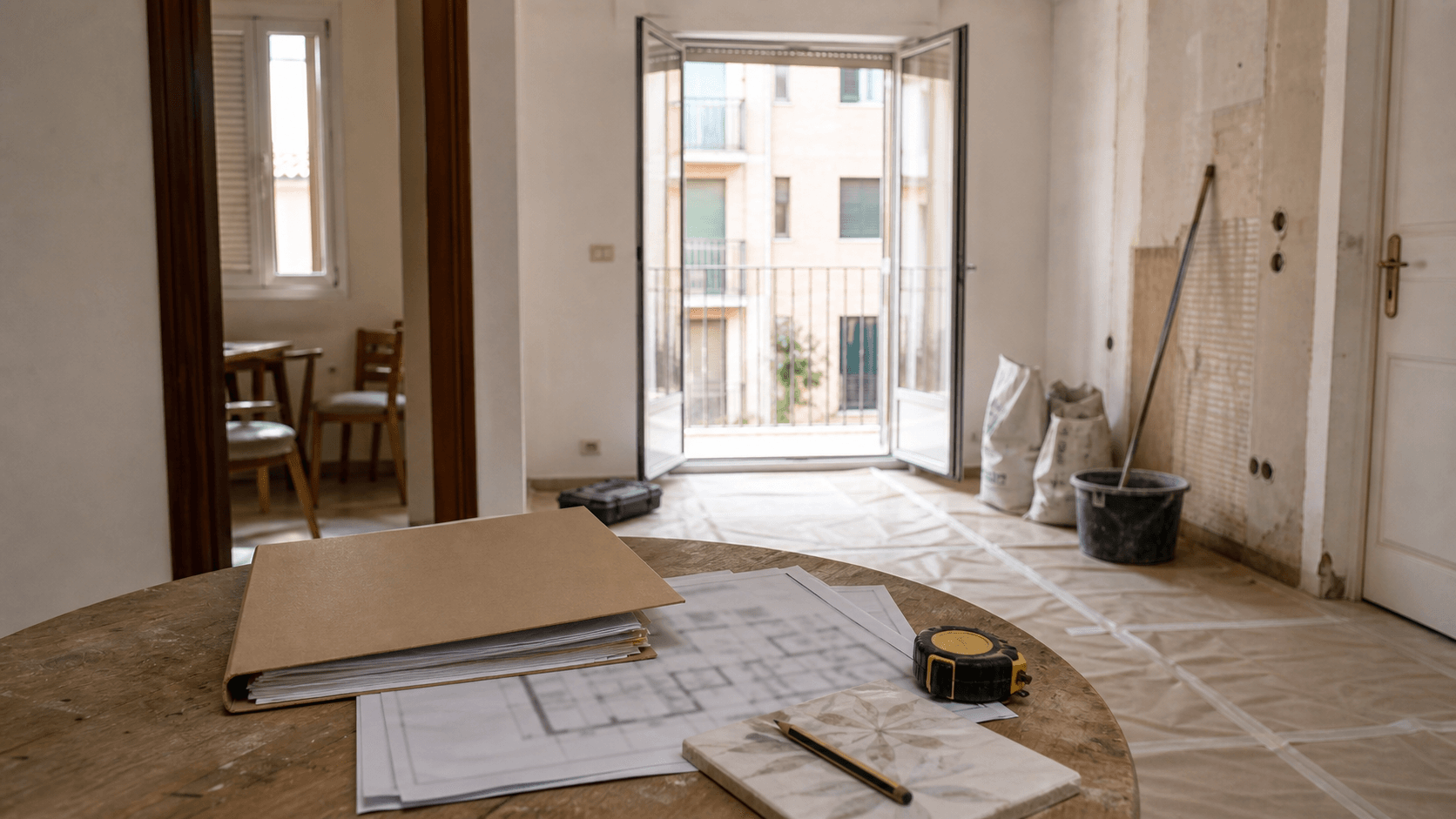
Technical design, site supervision by registered professionals, and the building licence applied for and followed up at your town hall.
Foundations and structure
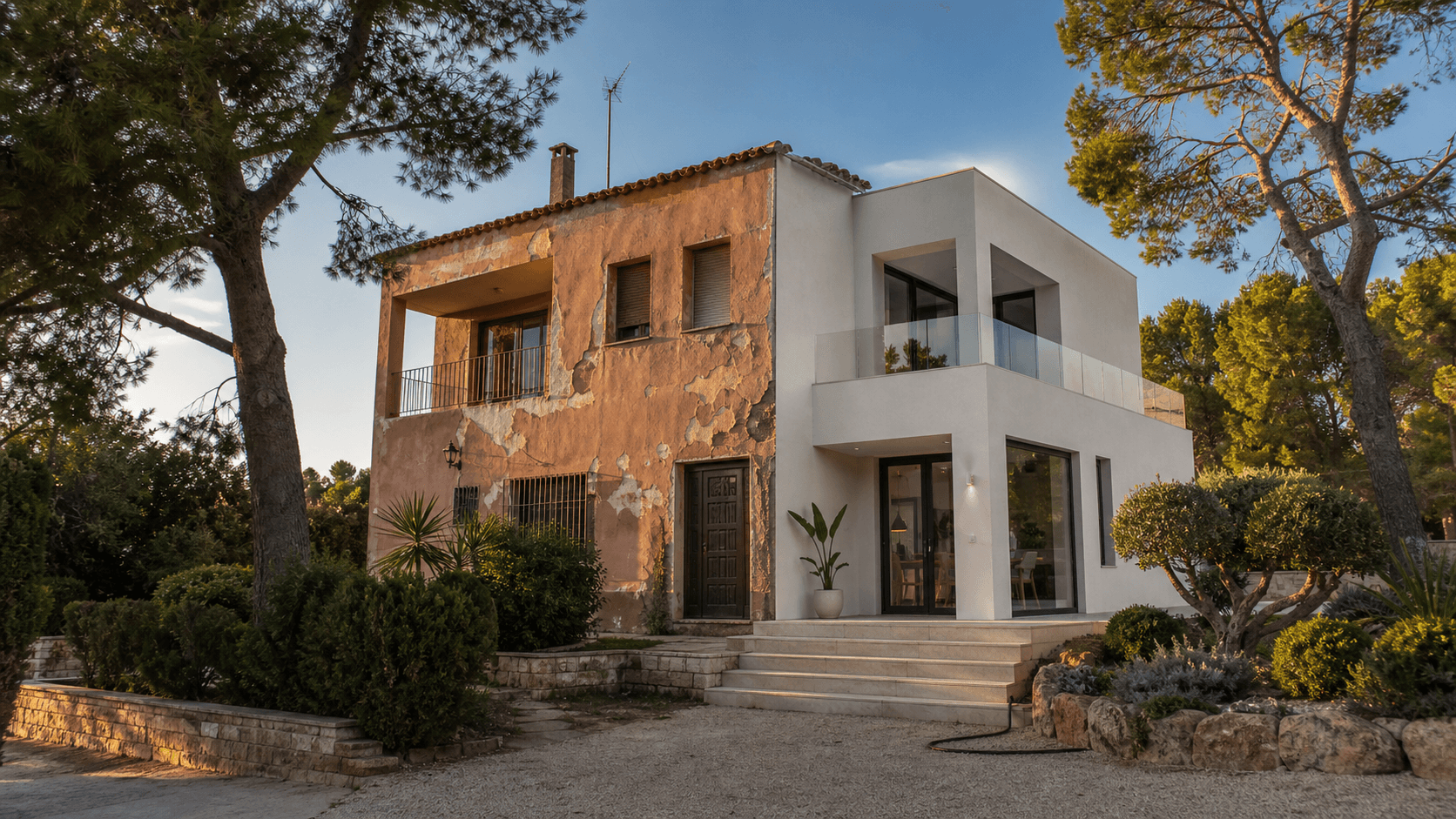
Groundworks, foundations and structure engineered for your plot and for the ground underneath it, backed by the technical design.
Envelope and façade
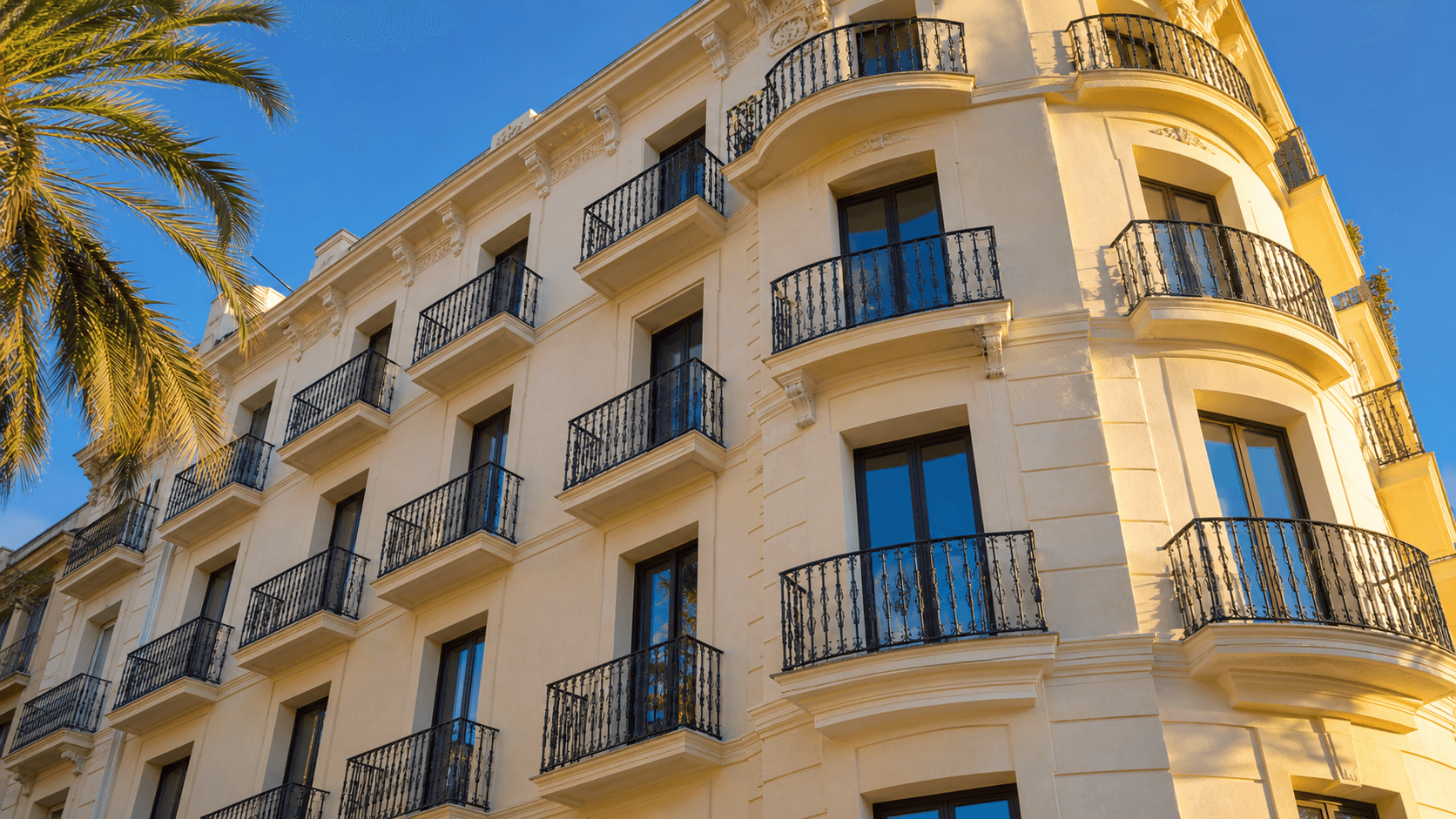
External walls, roof, insulation and exterior joinery specified for the Valencian climate and for full compliance with the building code (CTE).
Complete services
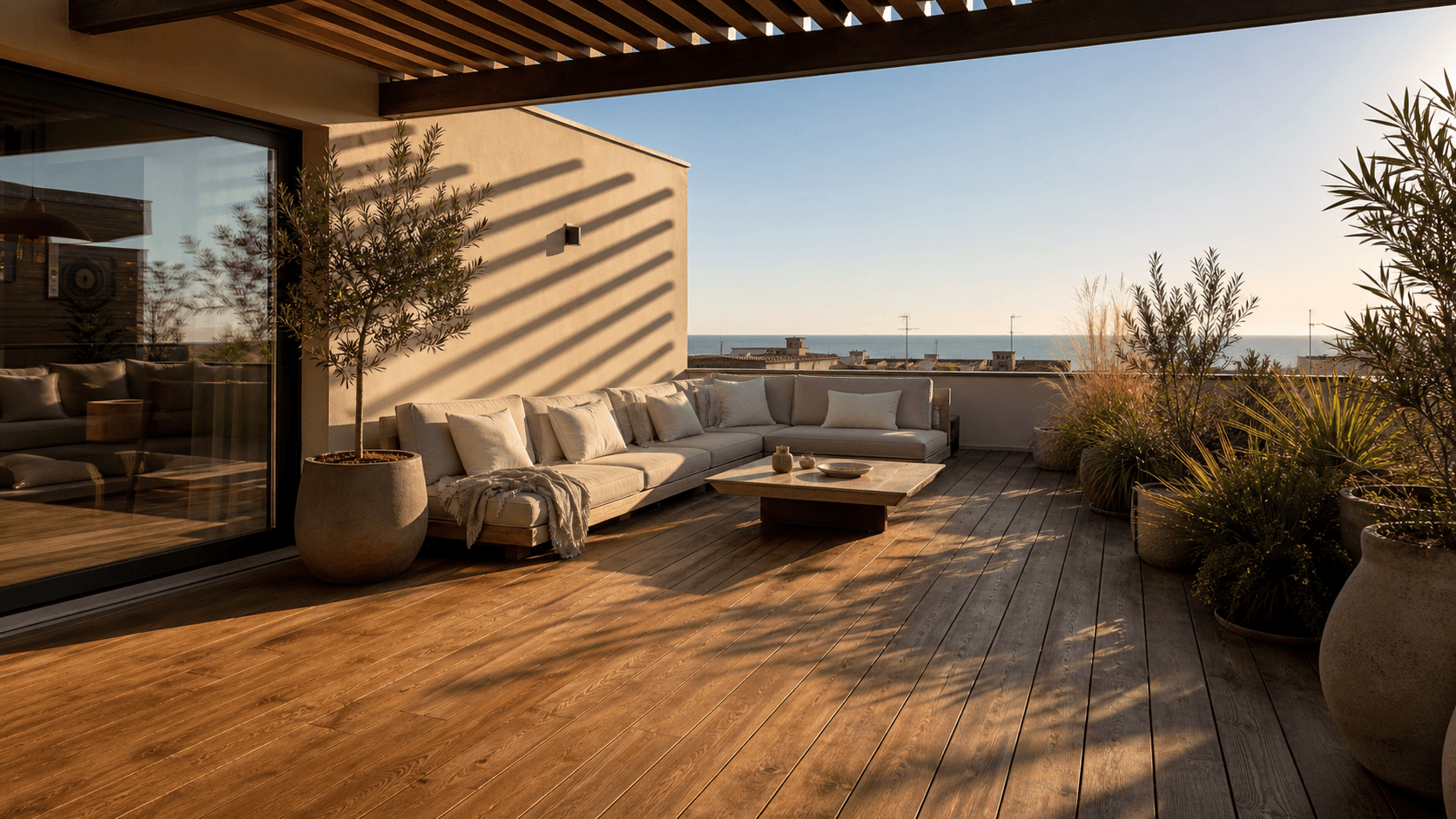
Electrics, plumbing, drainage, air-source heat pump climate control and, if you want it, home automation — all drawn in at design stage, not improvised later.
Finishes and interior design
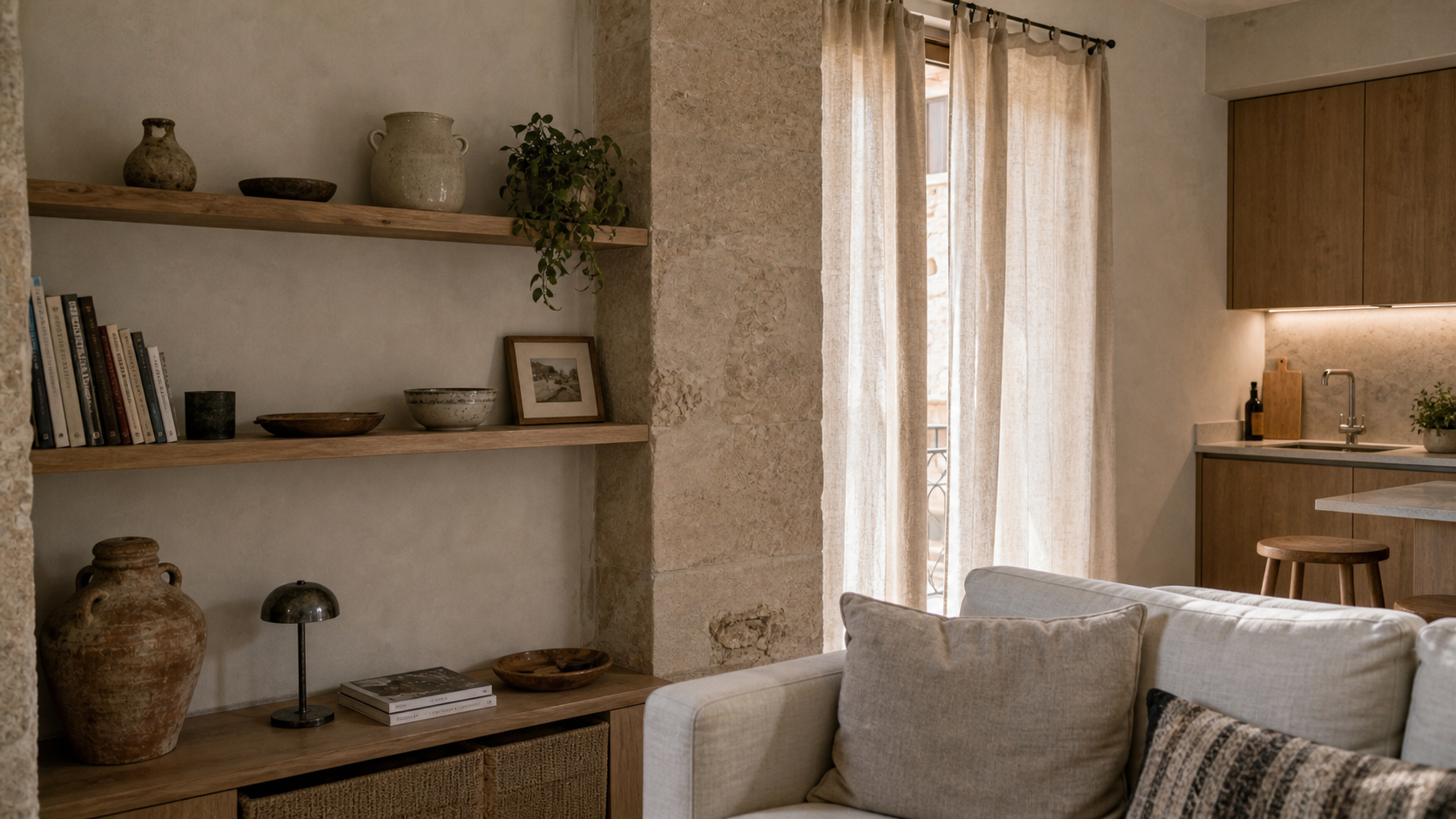
Flooring, interior joinery, kitchen, bathrooms and finishes chosen as one scheme, so the house reads as a whole and is ready to live in.
Outdoor space and pool
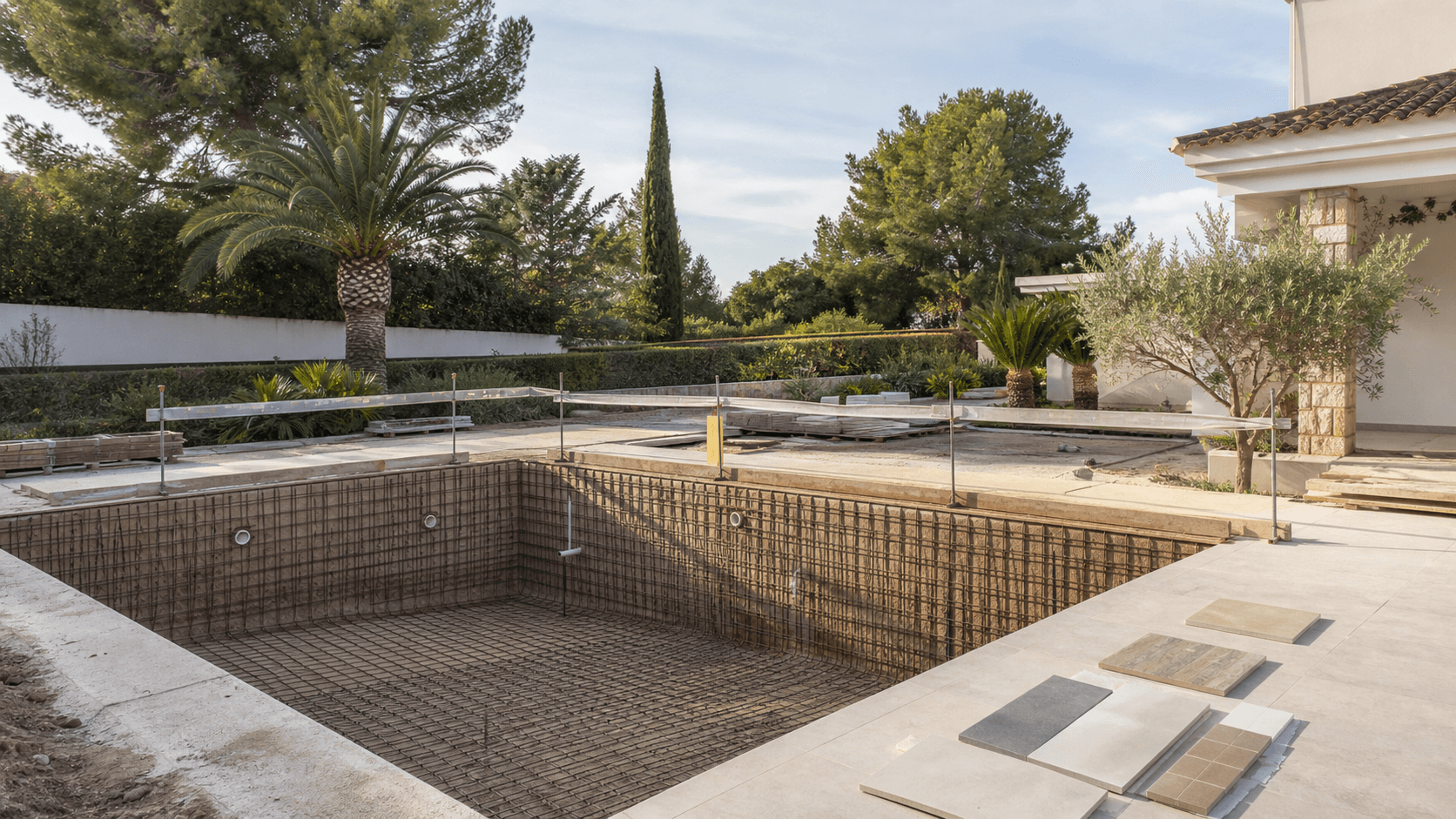
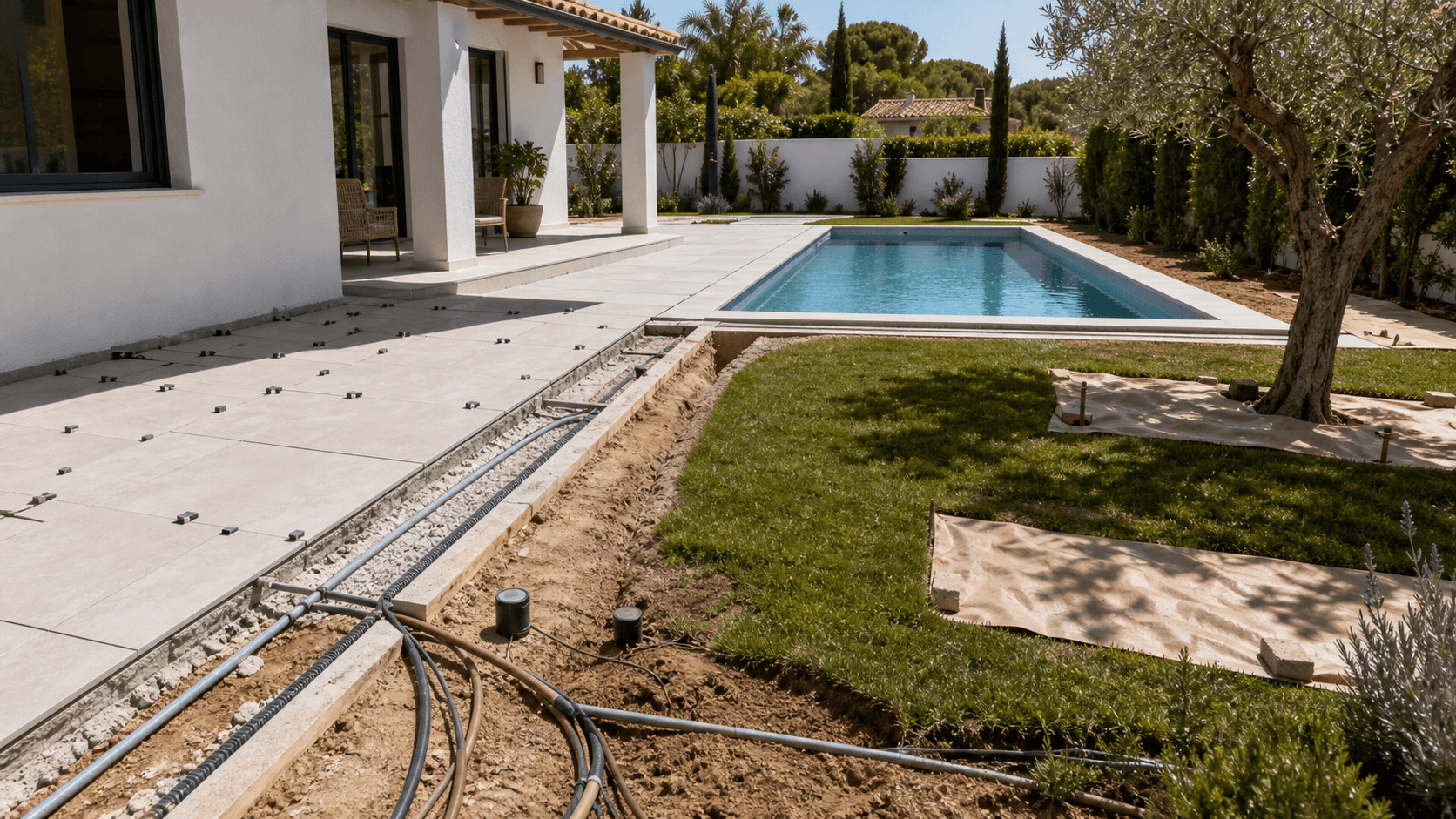
Terrace, porch, garden, the landscaping of the plot and the concrete pool, built as part of the house rather than after it.
The point of a turnkey contract is that you never have to act as your own site manager. If the house already exists and you want it rebuilt from the inside out, that is a full home renovation; you can see everything else we build on our renovation and construction services page.
By type of house
The types of home we build
A single-storey house on a generous plot is not built the way a two-storey villa on an estate is built. These are the shapes people ask us for around Valencia and the Camp de Túria, and what is worth knowing about each one before the design starts.
Detached home (villa)
A standalone house on its own plot is the most common new build in towns such as La Eliana, Bétera and San Antonio de Benagéber. You can spread it over one or two storeys, open the whole ground floor onto the garden, and design the way inside and outside meet — large openings, a porch, a pool — instead of inheriting somebody else’s answer. The real skill is reading the orientation of the plot so you gain light in winter and shade in August.
Semi-detached or terraced home
On a tighter plot, or in a development of several houses, a semi-detached or terraced home shares one or two party walls. Sound insulation between the houses matters more than people expect, and so does using the floor plan properly so you do not give away usable metres. It is an efficient answer when the plot will not take a fully detached house.
Single-storey house
More and more asked for, partly for comfort and partly for thinking ahead: no stairs, easy access, simple to look after. It needs a plot with some width to it, but it gives you a house you can move through without thinking about it. If you want somewhere that still works for you in twenty years, design it that way from the first sketch rather than adapting it later.
02 Your project
Choose your situation
Every new build starts somewhere different. These are the four starting points we see most often around Valencia; open the one that sounds like yours.
I have the plot
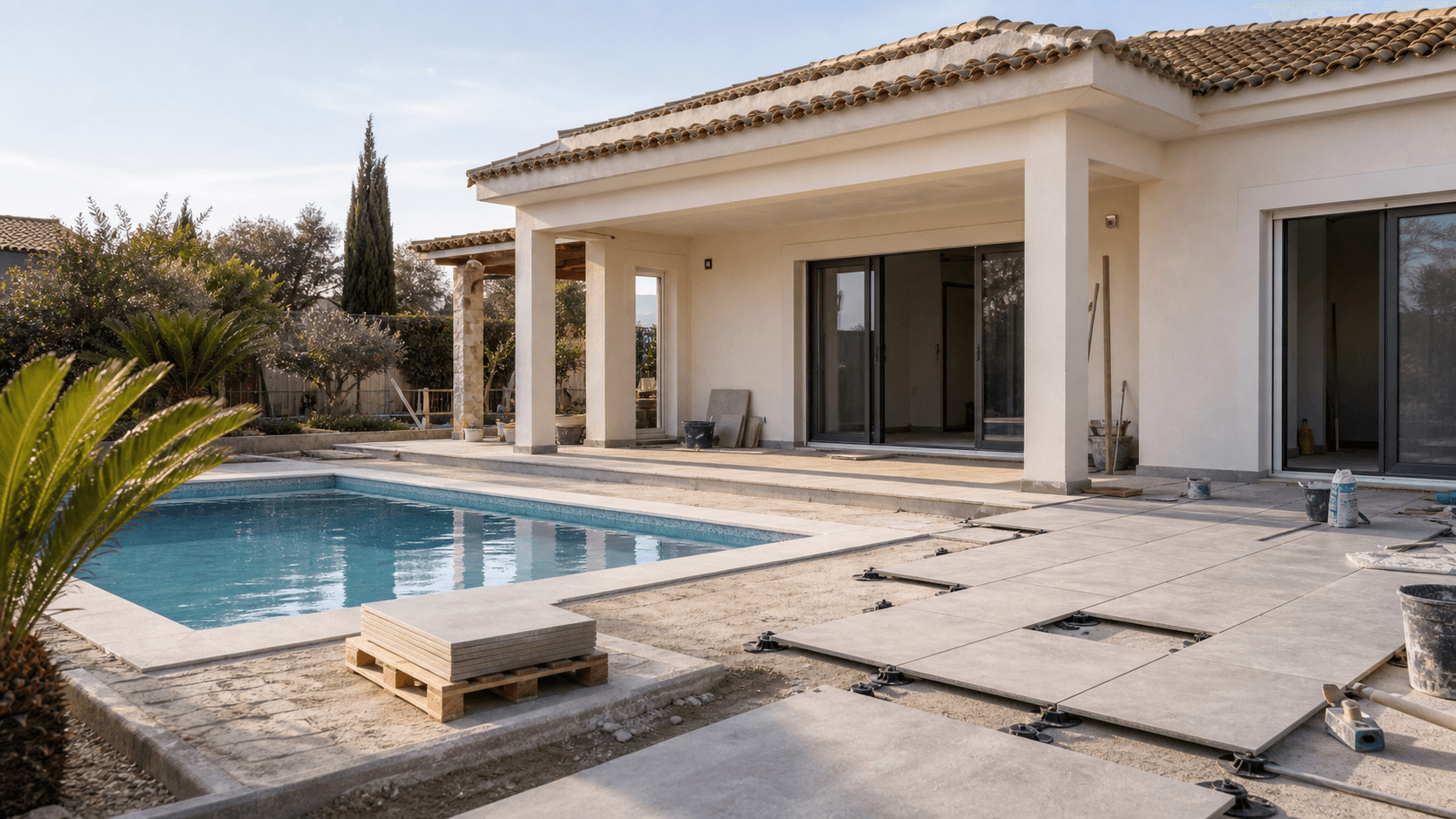
The land is yours and you want to build on it. What you need: a design, the licence and a fixed price before anything starts.
A villa with a pool
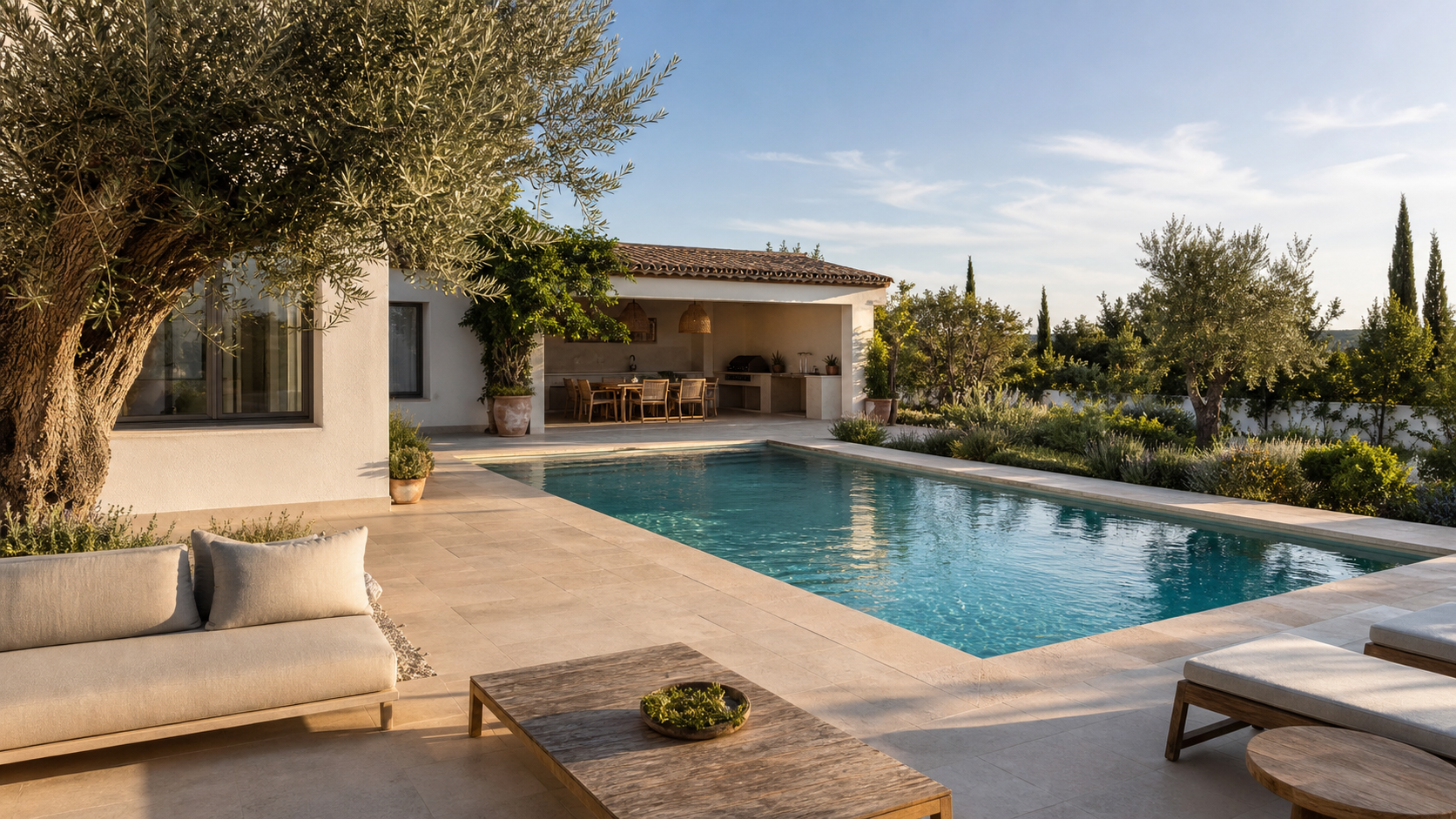
A detached house, a garden and a pool. What matters: orientation, how inside and outside meet, and what the pool costs to run.
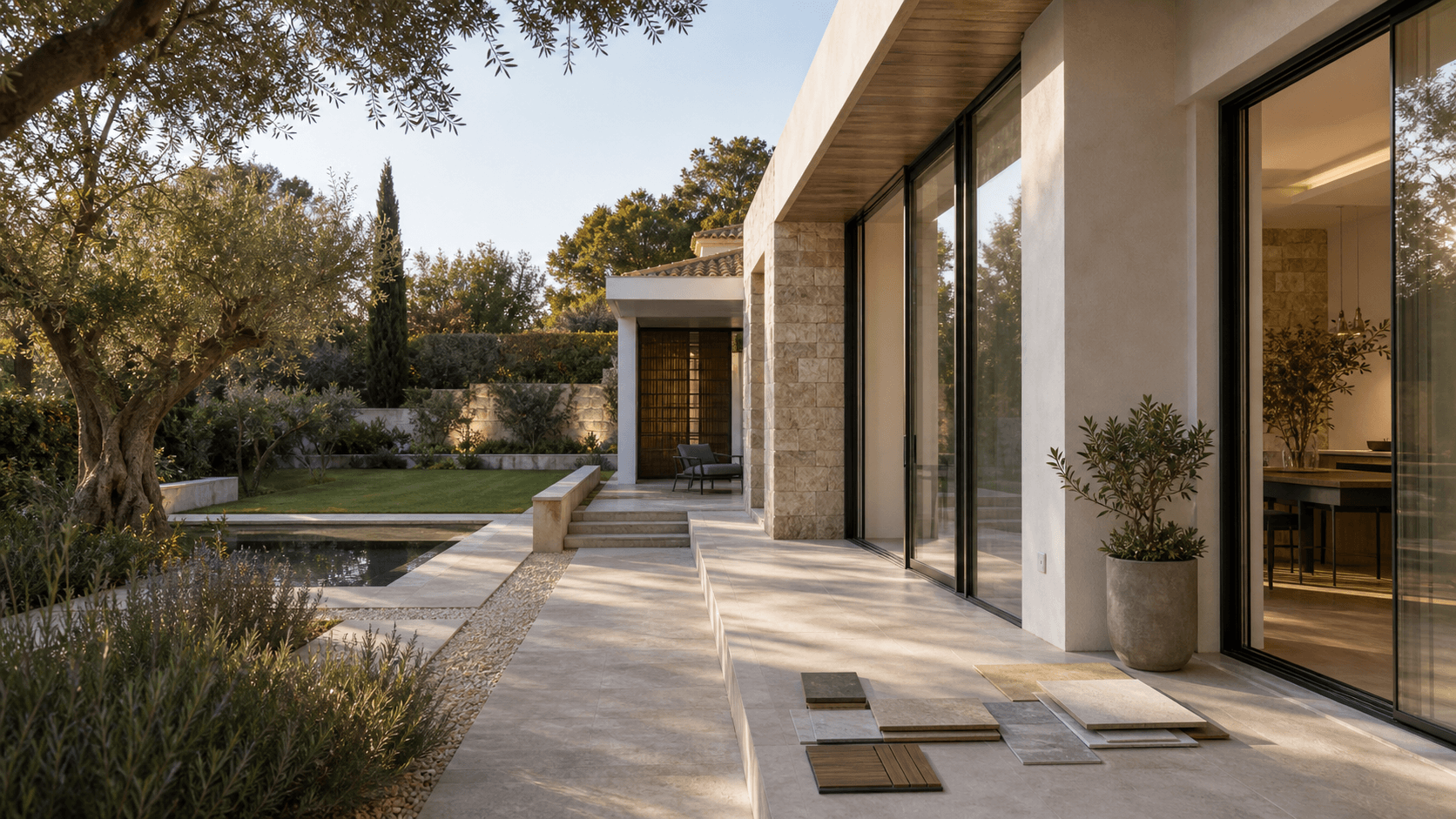
A house on one level
No stairs, easy to reach, easy to keep. What matters: making the plot work hard and getting daylight into the middle of the plan.
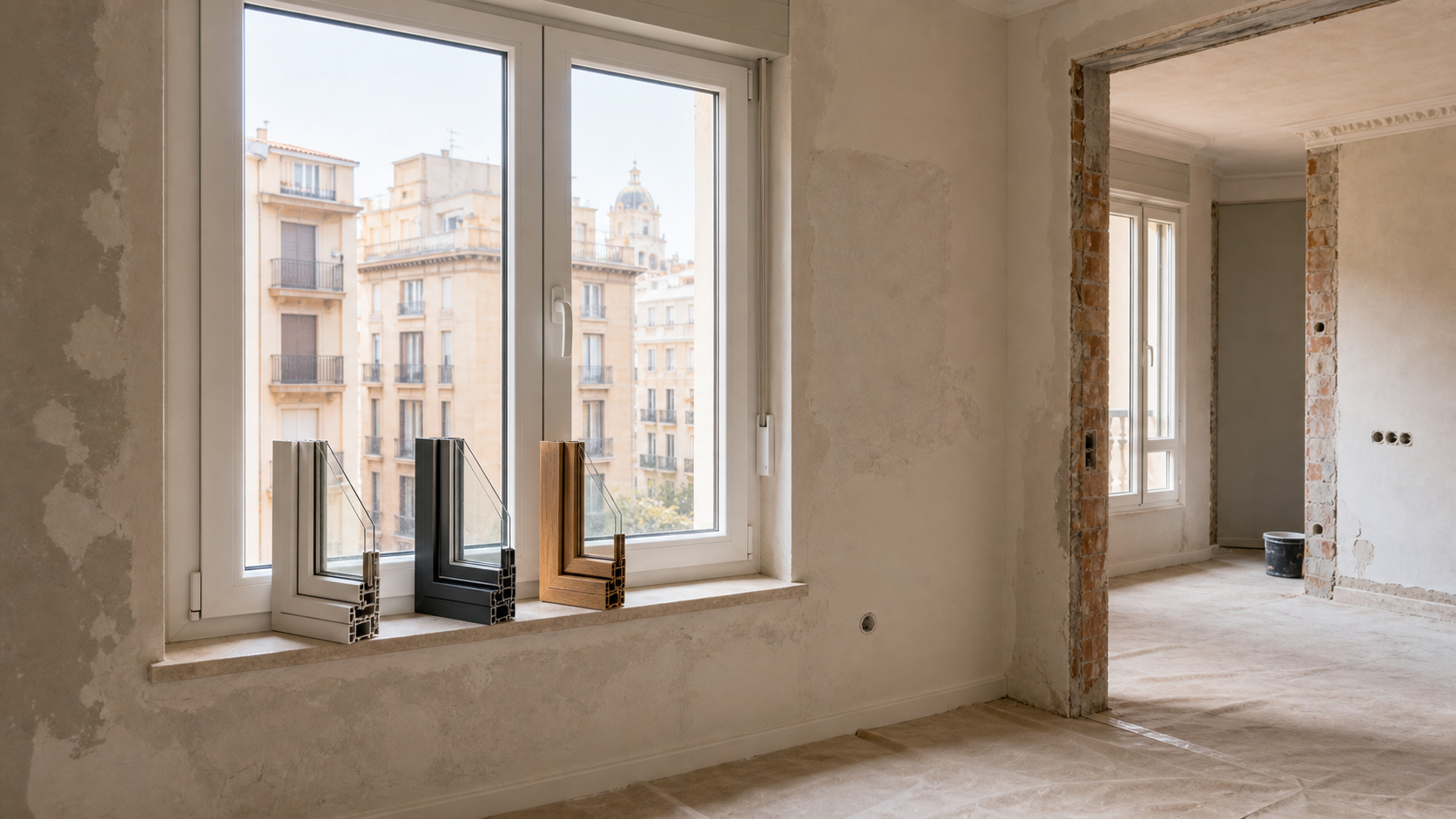
A house that costs little to run
Low bills, all year. What matters: insulation, glazing and an envelope resolved on paper before the first block is laid.
03 How it is run
Turnkey, with a single point of contact from plot to keys
Very few problems on a new build come from one piece of bad workmanship. They come from the design, the licence, the structure, the services and the finishes each moving to their own timetable. When that happens the phases collide, extra costs appear from nowhere and nobody owns the result. Hire everybody separately and the person conducting the orchestra is you — without the hours or the technical background to do it.
At Batecs one site manager sets the running order, brings in groundworks, structure, envelope, services and finishes when each is due, and tells you where the job is without you having to ask twice. That is what produces fewer surprises, dates that hold, and a build that stays tidy right through to the turnkey handover: the house finished, checked, signed off and ready to live in.
The language question
Building a house here without speaking the language
We are a Spanish building company, and on a new build that is the part that protects you. The difference is that the person who writes your quote and the person who runs your site both speak English, so nothing about your own house arrives second-hand or a week late.
- The same person from the first walk round the plot to the day you get the keys. Not a switchboard, not a new name each month, and not a friend of a friend translating on the phone.
- A written quote broken down trade by trade, gone through with you line by line before you commit to anything.
- The town hall file prepared and lodged by us — the building licence to start, the certificates to finish — with the contents of each document explained to you in plain English.
- Every change put to you in writing. On a build lasting the better part of a year that matters: nothing gets agreed in the middle of a site in a language you only half follow.
The official paperwork will still be in Spanish. A licence issued by a Spanish town hall is written in Spanish and there is no version of this where it is not. What we do is make sure you know what every line of it says before you sign it. There is more on that, and on how to vet a builder here, under English-speaking builders in Valencia.
04 What it costs
How much it costs to build a house in Valencia
No two houses land on the same figure, but there are market ranges per built square metre that will tell you whether you are in the right conversation. Treat them as a market guide, not a quote: the real number comes after we have seen the plot and read the design.
| Build level | Guide price | What it usually covers |
|---|---|---|
| Standard | ≈ €1,200–€1,600 per m² | A house that works: sound standard specifications, complete services and correct finishes, ready to move into. |
| Mid to high | ≈ €1,600–€2,200 per m² | Better specifications, an air-source heat pump with underfloor heating, higher-performance joinery, more insulation and a more considered design. |
| High end | ≈ €2,200–€3,000+ per m² | Architect-led design, home automation, premium materials, very large openings, a pool and interior design made to measure. |
Guide ranges for the Valencia area in 2026, per built square metre. They are a reference point, not a quote and not an offer. The plot itself, the licence, the town hall fees and the professional fees all sit outside these figures. To put it in context: a 180 m² house at mid-to-high level would sit somewhere around €288,000–€396,000 of construction, but the number that matters is the one for your project.
What moves the price
Four things, in this order. The built floor area. The number of storeys and how awkward the structure is. The level of specification you choose for envelope, services, kitchen, bathrooms and joinery. And the plot itself — slope, ground conditions, access for a lorry, and whether water, power and drainage are already at the boundary.
That is why we would rather study the design and hand you a fixed price with the work itemised than quote a rate per square metre that stops being true the moment your plot turns out to be on a slope. Once you sign it, the figure does not move; if you widen the scope later, the extra is priced and agreed in writing first.
Where the money goes
How to keep costs down without giving up what matters
Building for less is not buying the cheapest version of everything. It is knowing which decisions you can revisit later and which ones you get exactly one chance at. After 35 years, this is the advice we give people who have a firm ceiling and no intention of regretting the house.
Do not economise on the envelope or on anything you will never see again. Structure, insulation, waterproofing and the services buried in the walls are the skeleton. Saving there is the most expensive mistake available, because putting it right later means opening up work you have already paid for twice over. A well-insulated house quietly pays you back every month on the heating and cooling.
Do adjust the finishes and the furniture. There is flooring, joinery and tiling on the market now that looks superb and costs sensible money. The indulgences — an island in the kitchen, one wall in something special, the final decoration and interior design — can wait for a second phase without making the house any less liveable on day one.
A simple shape costs less to build. Complicated geometry, long cantilevers and split levels all push the structure up. A compact volume, well oriented, comes out cheaper and performs better, and nobody has ever walked into one and thought it looked mean. What matters is that the design knows from the beginning where you eventually want to get to.
What would your house cost to build?
Send us the plot, the square metres you have in mind and the level you are aiming at. You will hear back within 24–48 hours, in English, with nothing to sign.
Cost my new build05 The Batecs method
How we build your home, step by step
Six phases, in this order, from the first sketch to the day the certificates are signed and the keys change hands.
Preliminary design and advice
We look at the plot, at what the planning rules allow on it and at how you actually want to live, and turn that into a first proposal for the house. No obligation and no charge.
Design and licence
The technical design is developed with registered professionals, the price is closed item by item, and the building licence application goes in to your town hall.
Foundations and structure
Groundworks, foundations and structure: the part that holds everything else up, and the one part of a house where there is no such thing as a shortcut.
Envelope and services
External walls, roof, façade and insulation, then the electrics, plumbing, drainage and climate control threaded through them in the right order.
Finishes and outdoor space
Flooring, joinery, kitchen, bathrooms, paintwork, and the landscaping of the plot: terrace, garden, porch and pool.
Handover and sign-off
Final inspection with you, the completion certificate signed by the technical team, the first-occupation licence (licencia de primera ocupación) applied for, and the keys.
Behind the scenes
The phases of a new build, explained
Beyond the six-step summary, this is what is actually happening on the ground. Knowing the order is what makes the timescale make sense, and it is why the coordination between the drawing board and the site is worth so much more than it looks.
1. Preliminary design and full design
First we establish what the planning rules permit on your particular plot — how much you may build, how high, how far back from the boundary — and the house takes shape as a preliminary design. Then comes the construction design, with the calculations, the drawings and the measured quantities. It is the least photogenic phase of the whole job and it prevents more problems than every other phase put together.
2. Licence and start on site
With the design finished, the building licence is applied for at the town hall. How long that takes varies from one municipality to the next, which is exactly why it belongs in the plan from day one rather than as a surprise in month three. While it is with the town hall the price is closed item by item and the build is programmed. Confirm the procedure and the fees with your own town hall; we will tell you what they have told us.
3. Foundations, structure and envelope
Now the building appears: groundworks, foundations and structure, then the external walls, the roof and the façade. This is the month you drive past and it finally looks like a house. It is also where most of the durability and most of the running cost are decided, so the insulation and the waterproofing get more attention here than anything you will ever see.
4. Services, finishes and handover
The services go in and the finishes go on top of them: flooring, joinery, kitchen, bathrooms, paintwork and outdoor space. It closes with the final certificates — the completion certificate and the first-occupation licence — and the handover. Through every one of those phases there is one person who can tell you where the job is and what happens next.
Anything we say here about licences, fees and regulations is a general guide and should be checked with the town hall of the municipality you are building in. We prepare and submit the file; the timetable belongs to them, not to us.
If you are not here
Building while you are somewhere else
Some of the houses we build belong to people who are only in Valencia a few weeks a year, at least until the house is finished. That changes nothing about how it gets built. It changes a great deal about how it gets reported back.
A new build has milestones you can recognise from a photograph, and we send them as they happen: the slab poured, the first floor cast, the roof closed, the render going on. In between comes a straight account of anything the ground has produced that you ought to hear about early. When a decision genuinely needs your judgement — where a window lands, which stone goes on the elevation, how high the boundary wall runs — we set up a call and stand in the space while we talk it through.
And somebody still has to be at the gate every morning: signing for deliveries, letting the electrician in, looking at what went up yesterday and saying whether it is right. That is not a favour you can ask of a neighbour for eleven months. It is our job, and it is why the file is complete and the house is checked over before you land to collect the keys.
The same arrangement applies to an existing house: see our turnkey renovations.
06 Your decision
Turnkey building vs. managing the project yourself
The difference is not the day rate. It is who carries the coordination and who answers for the finished house.
You coordinate the build
- You appoint the architect, the builder and the installers separately.
- When something goes wrong, each one points at the one before.
- Phases overlap and the end date drifts with nobody defending it.
- The site visits, the deliveries and the surprises are all yours.
- You will not know the total until the last invoice arrives.
We take on the whole thing
- One written price, itemised, agreed before we start.
- One person to call, and they know the answer.
- Phases planned in sequence and dates we commit to.
- We coordinate the design, the trades and the licence; you decide.
- You know what the construction costs from the first day.
And the company that hands you the keys is the company still answering the phone afterwards. Spanish law makes us responsible for the work we carried out and for the materials we put in, and after thirty-five years in the same towns we are not hard to find. The people who come back to look at something are the people who built it.
07 Our work
Detached homes we have built
A sample of the kind of detached houses we put up around Valencia and the Camp de Túria.
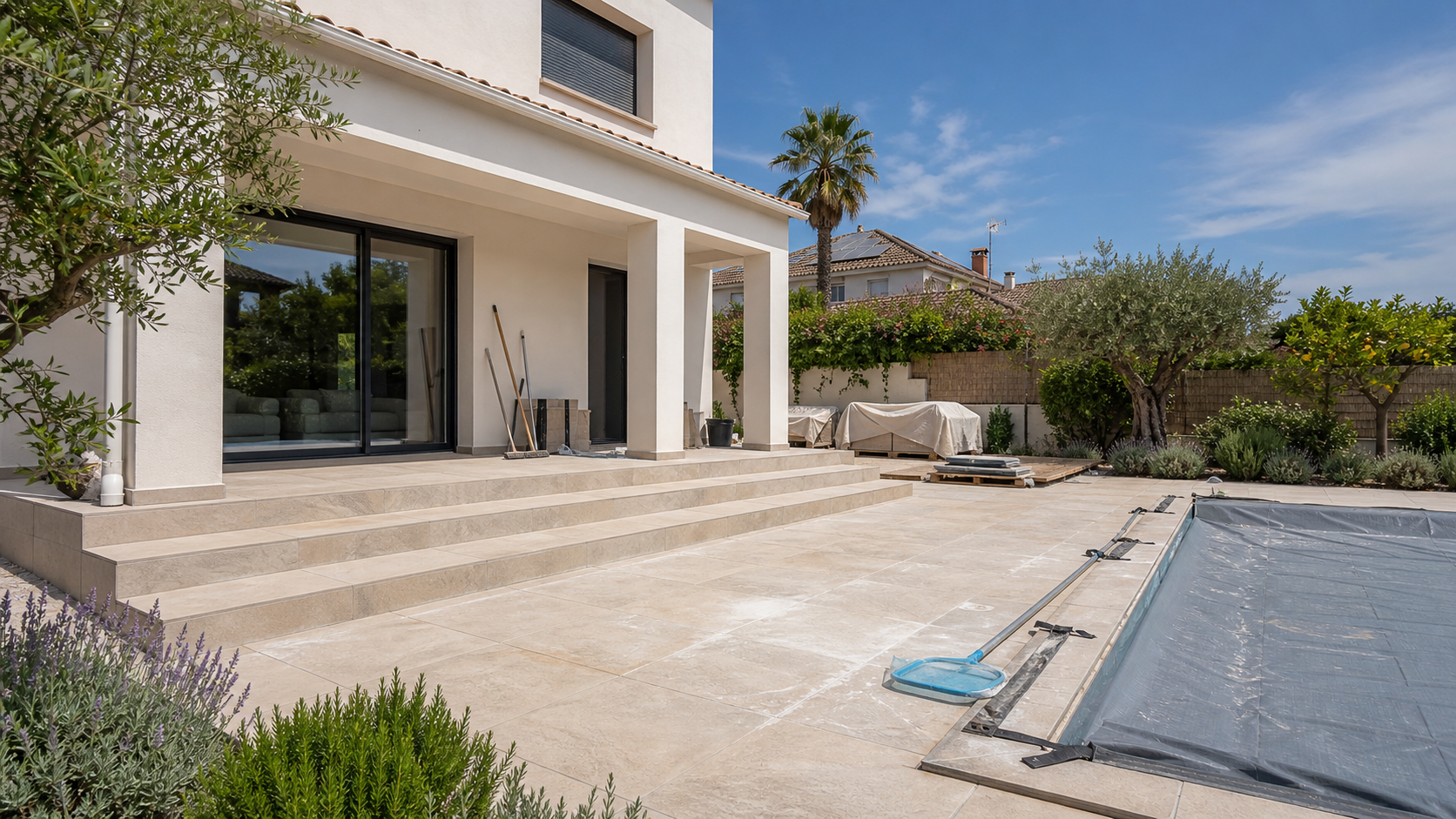
Detached home in stone
A Mediterranean house with a natural stone façade, set over two storeys and turned towards the garden. A well-insulated structure and envelope, with wood and stone finishes chosen so the house stays bright and asks very little of its owner.
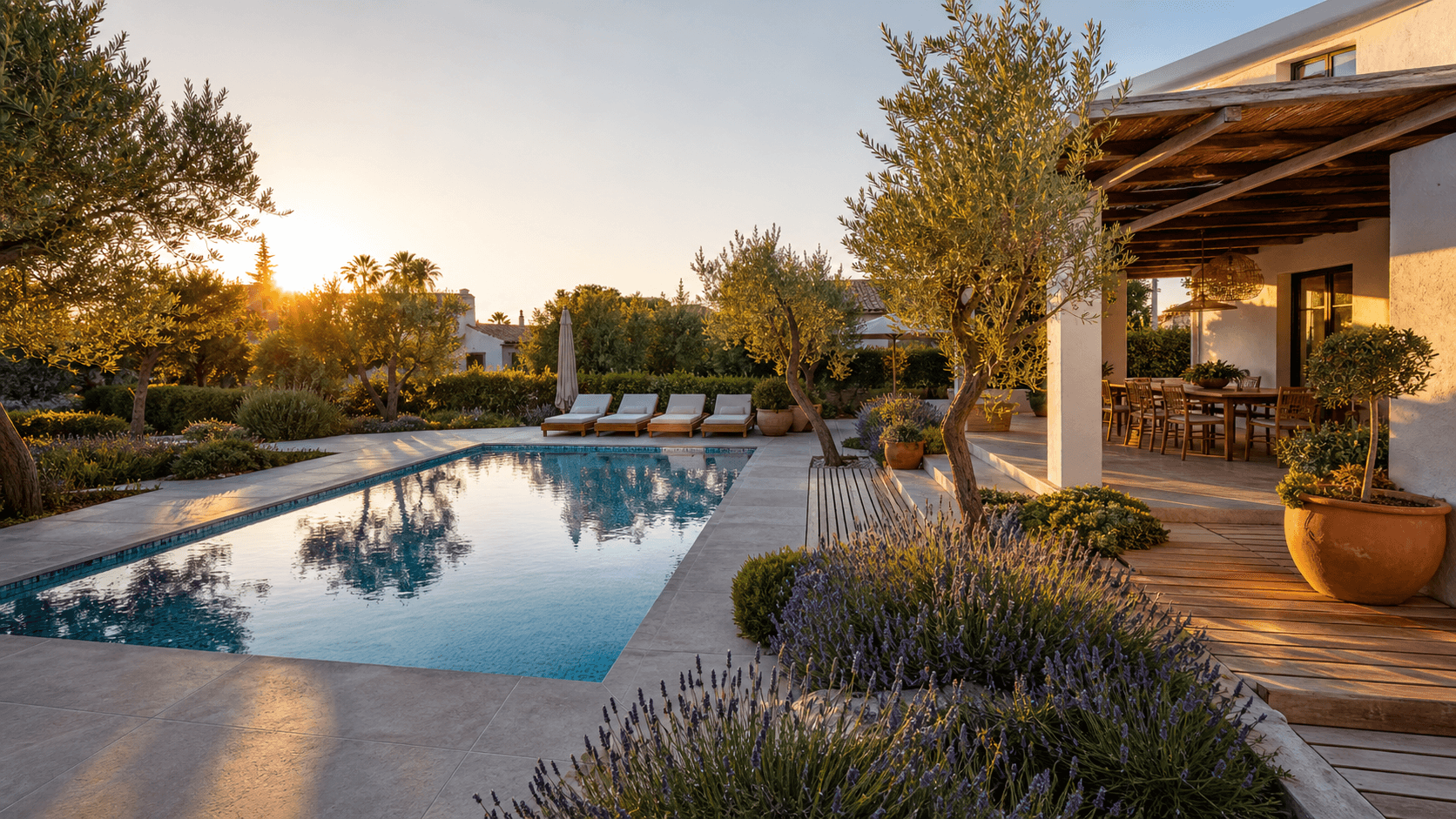
Villa with porch and pool
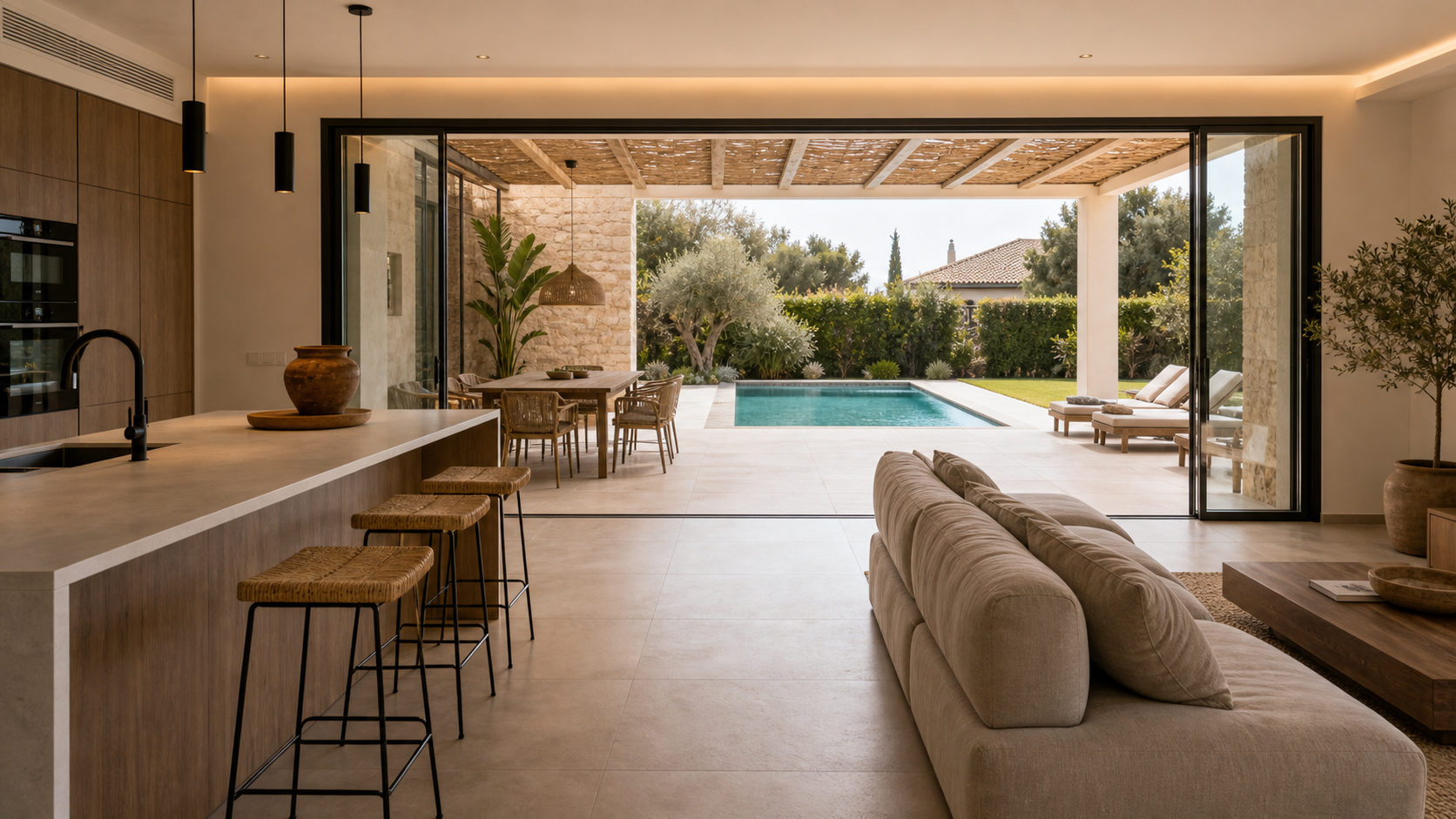
A detached house where inside and outside genuinely run into one another: a covered porch, a wooden pergola and a pool set into the plot. The orientation was used to pull daylight in and keep the cooling load down.
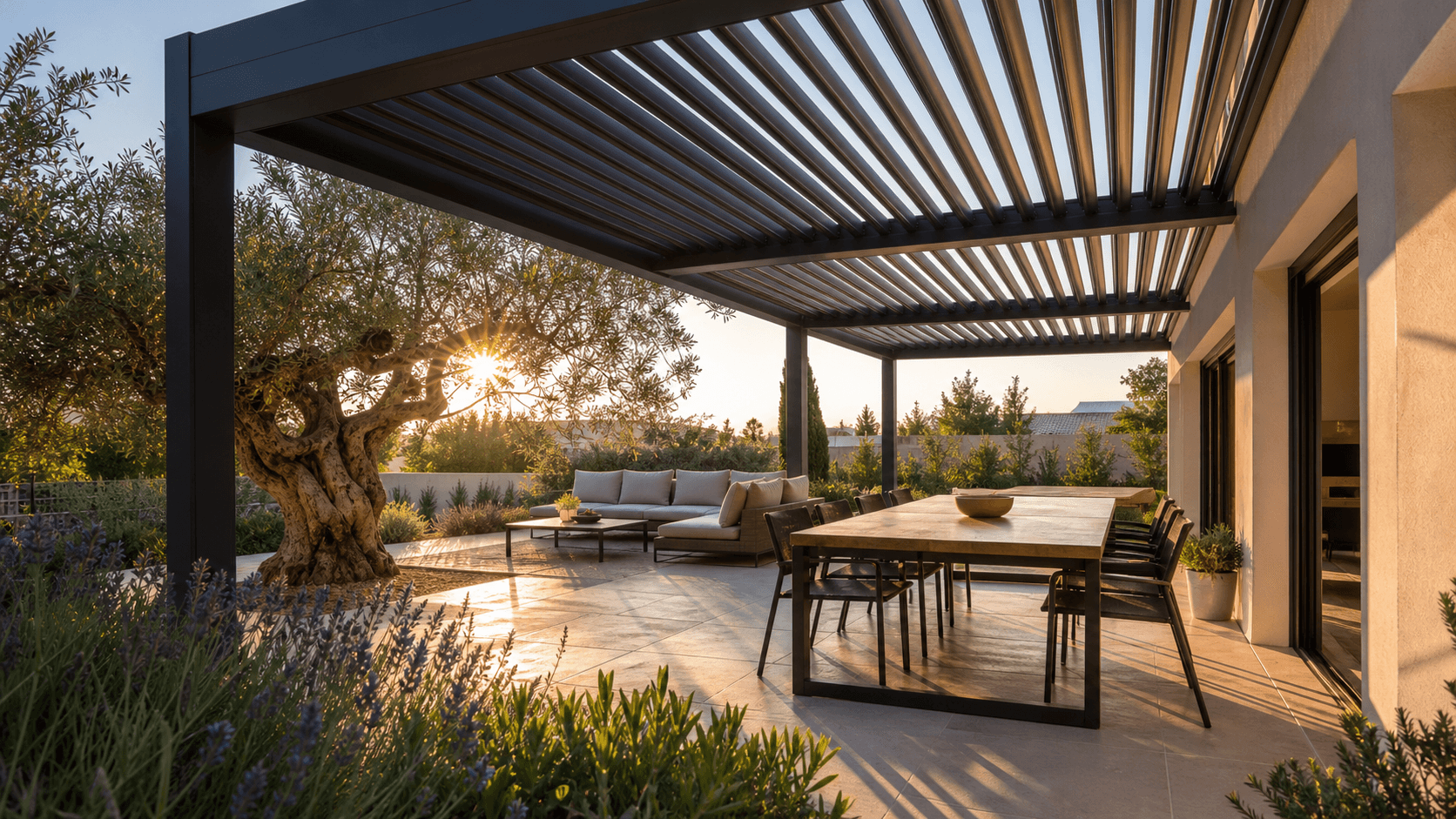
Home with porch and natural finishes
A house in the Mediterranean language of wood and stone, with covered places to sit outside and an envelope resolved with care. The outdoor space was designed at the same time as the house, which is why terrace, garden and building read as one thing.
There are more finished houses, with their sizes and timescales, in our projects gallery — including a villa taken back to the structure and rebuilt around its pool.
08 Specification
Structure, envelope, services and finishes
We will tell you what each item is actually buying you: durability, comfort, running cost, maintenance. Looks are the easy part.
Foundations and structure
Concrete foundations and frame calculated for your ground and your house. It is the item nobody ever sees and the one that decides whether the building behaves for the next fifty years.
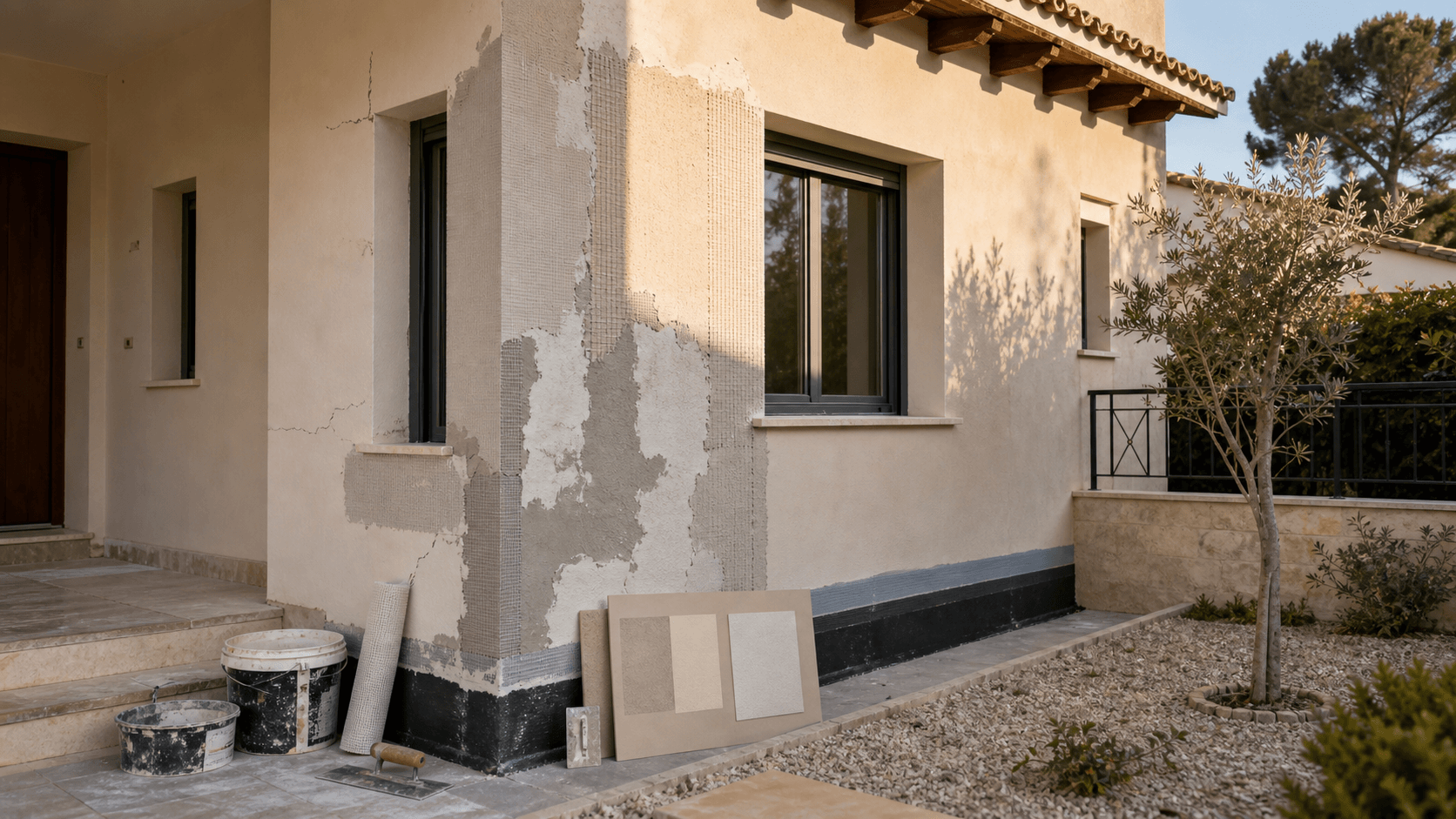
Envelope and façade
Well-insulated external walls, a ventilated or externally insulated façade, a properly waterproofed roof and thermally broken joinery with double glazing.
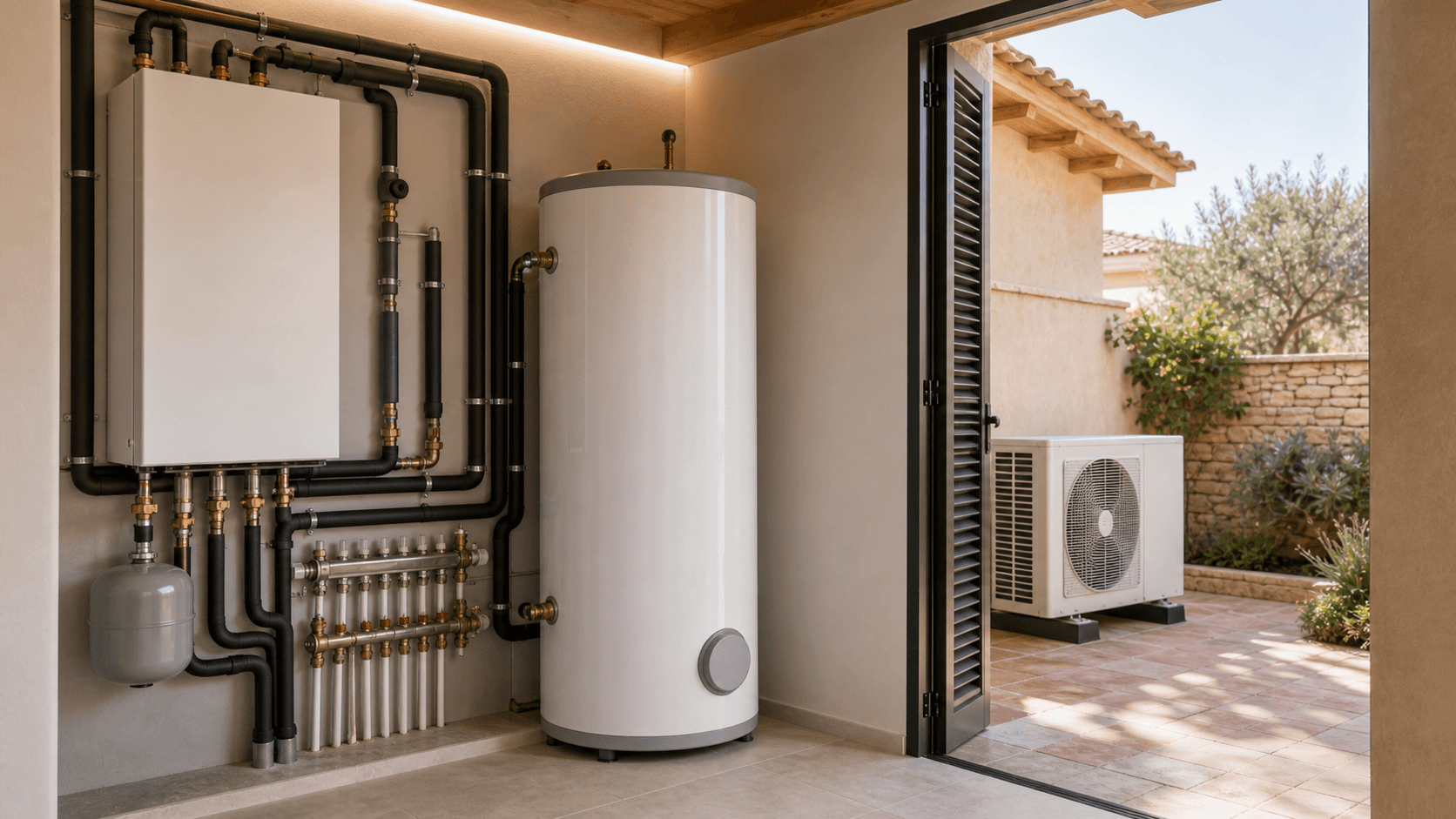
Climate control and services
An air-source heat pump, underfloor heating and cooling, new electrics and plumbing throughout, and home automation if you want the house to do some of the thinking.
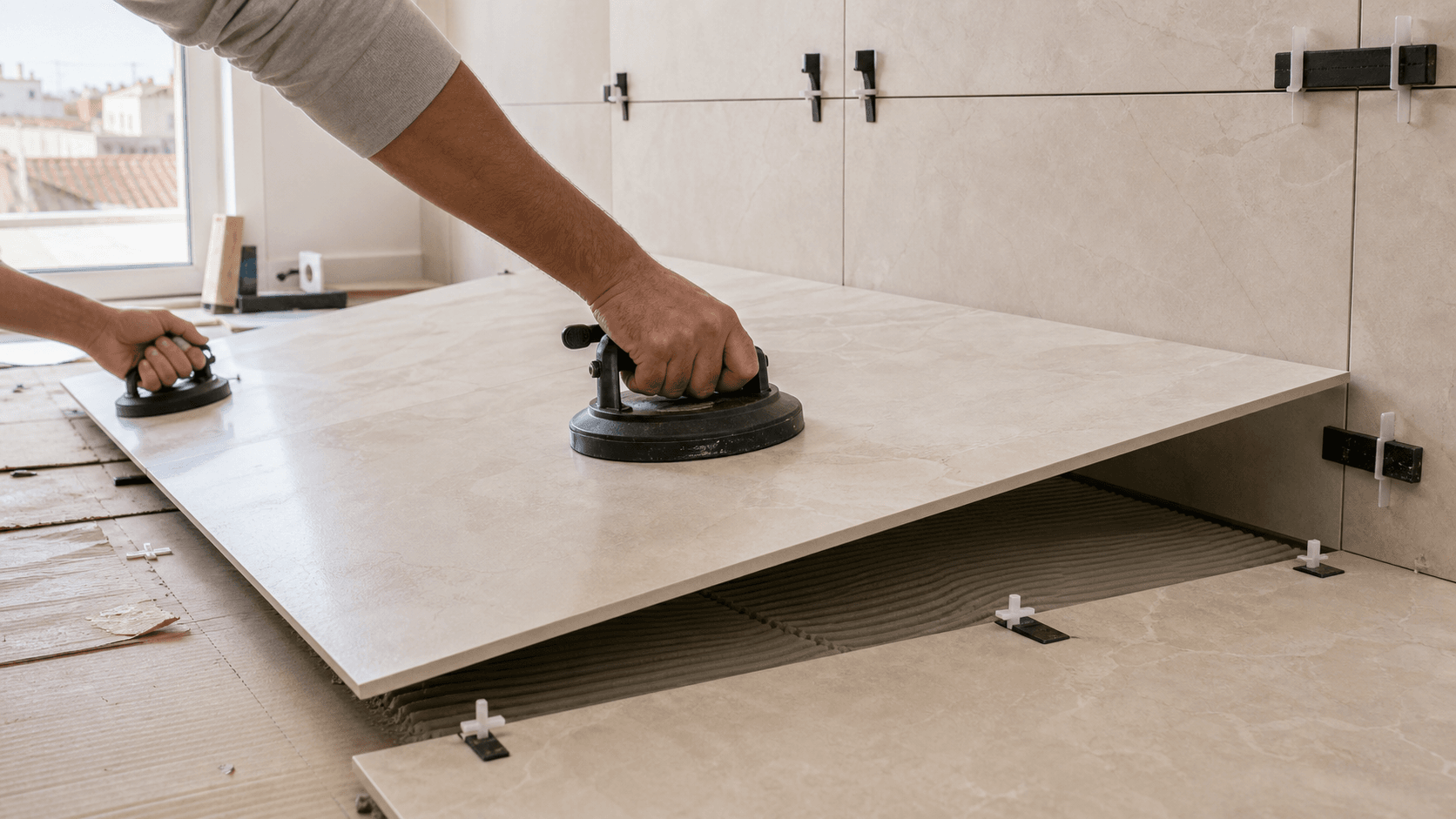
Flooring and wall finishes
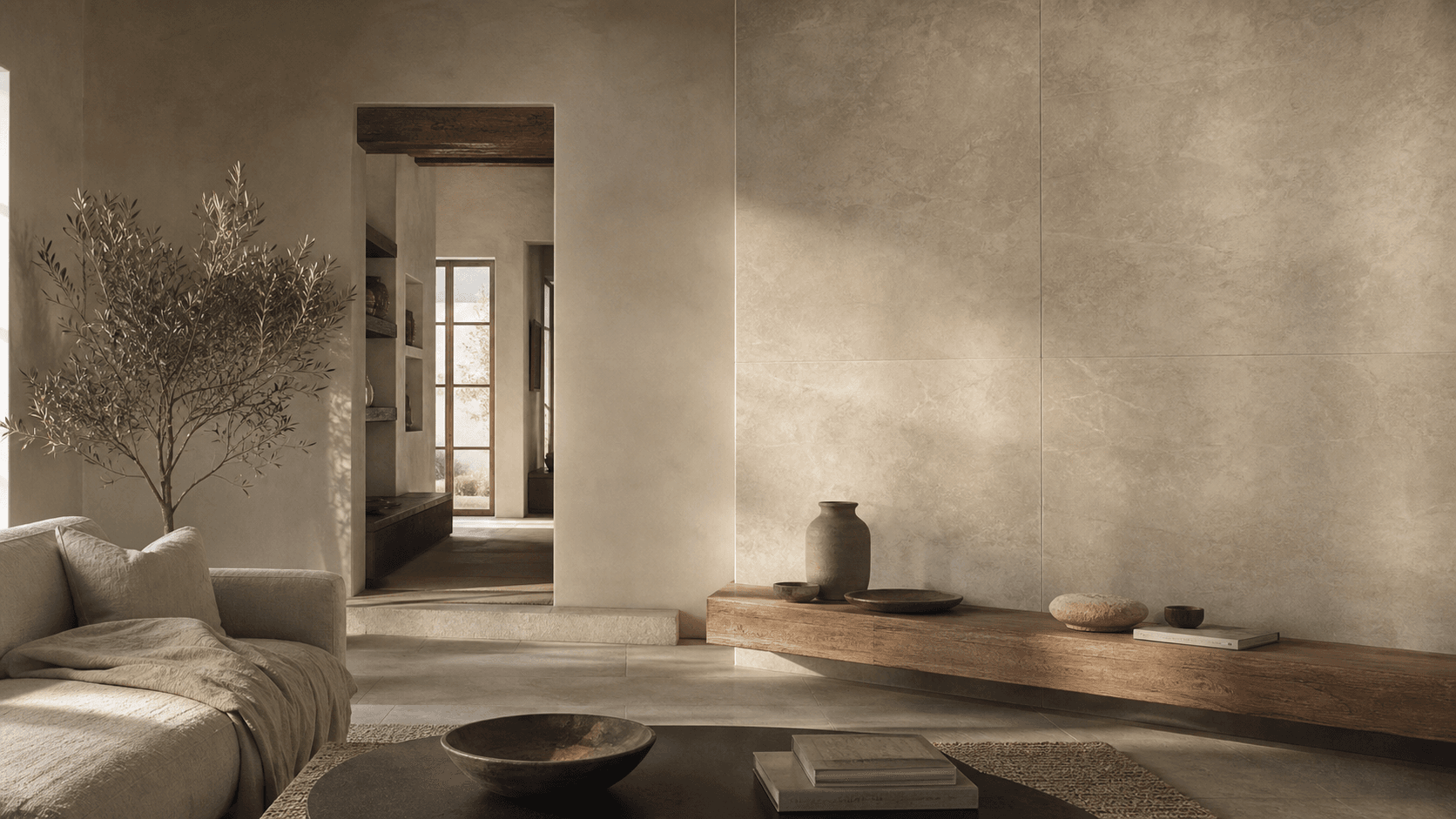
Large-format porcelain, microcement or natural timber; tiling and wall finishes picked for how the room is used, not only for how it photographs.
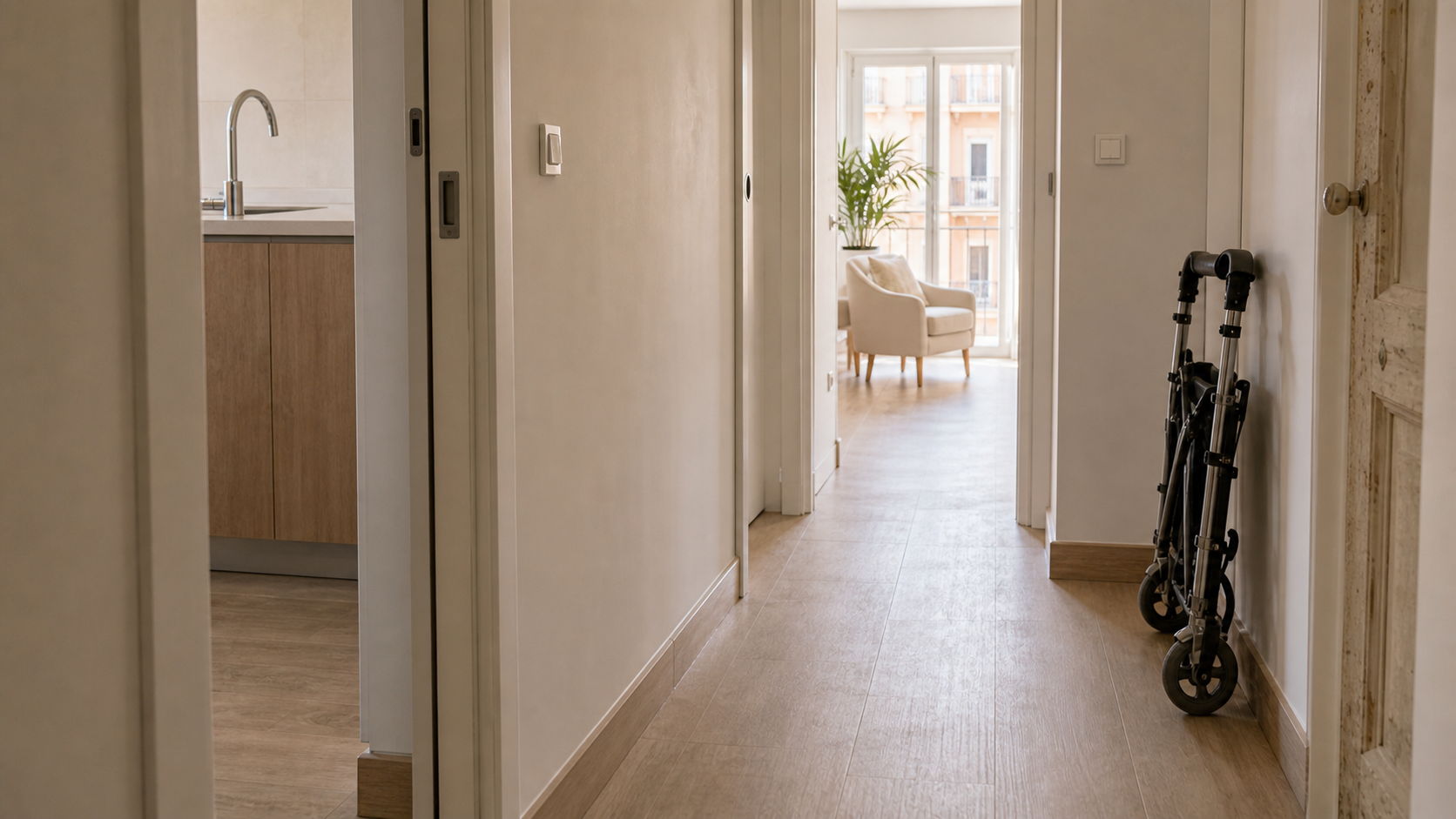
Joinery and kitchen
Doors, wardrobes and kitchen made to measure, complete bathrooms and ironmongery that still works in ten years, all drawn from the same design language.
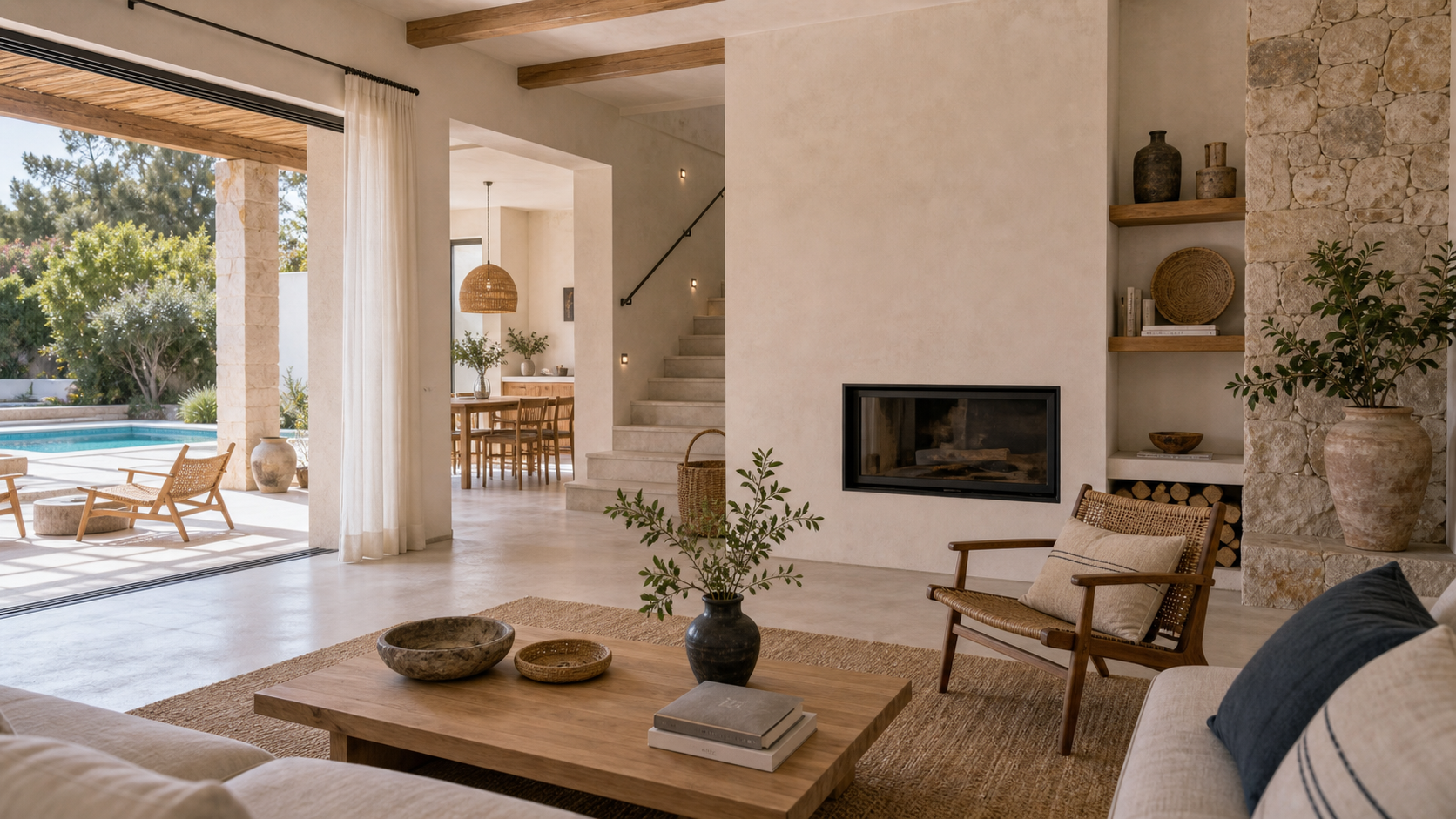
Natural finishes
Stone and timber used properly rather than decoratively — the vocabulary most houses around here are already speaking, and the one that ages best in this light.
More than looks
The chance to build an efficient home from the very first brick
A new build is the one moment when efficiency is cheap, because every decision is still on paper. A house that is properly insulated and correctly turned on its plot needs far less heating and cooling than one that is not, and it is more comfortable in February and in August alike.
Good insulation in the façade and the roof, thermally broken joinery with double glazing, and an air-source heat pump running underfloor heating make a difference you can feel against older solutions. The building code already demands a decent standard; what we will do is tell you honestly where going beyond it pays you back and where it simply flatters the specification sheet.
This is not about spending more. It is about putting the money where you notice it every month: thermal comfort, quiet, and bills that stay boring. We will tell you which of it belongs in the build and which of it can wait.
09 Before you start
Mistakes worth avoiding when building
- Buying the plot before anyone has checked what the planning rules let you put on it.
- Starting on site without a finished design and a price closed item by item.
- Appointing the architect, the builder and the installers separately with nobody coordinating them.
- Choosing the cheapest option for structure, insulation and services, all of which then disappear behind plaster.
- Forgetting that water, power and drainage have to physically reach the plot, and that this can take months.
- Underestimating how long the licence takes, and leaving the final certificates until the removal van is booked.
Gallery
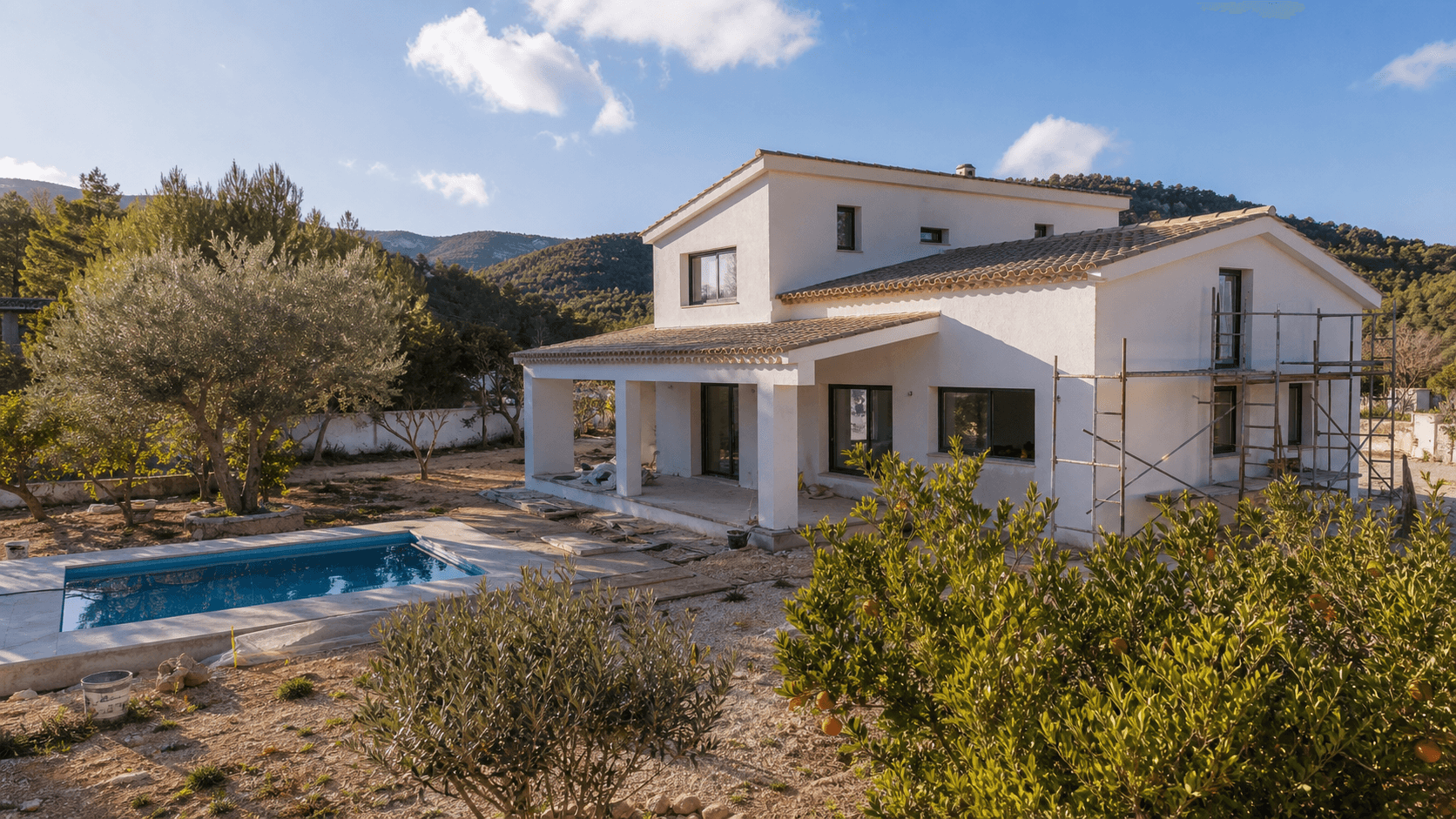
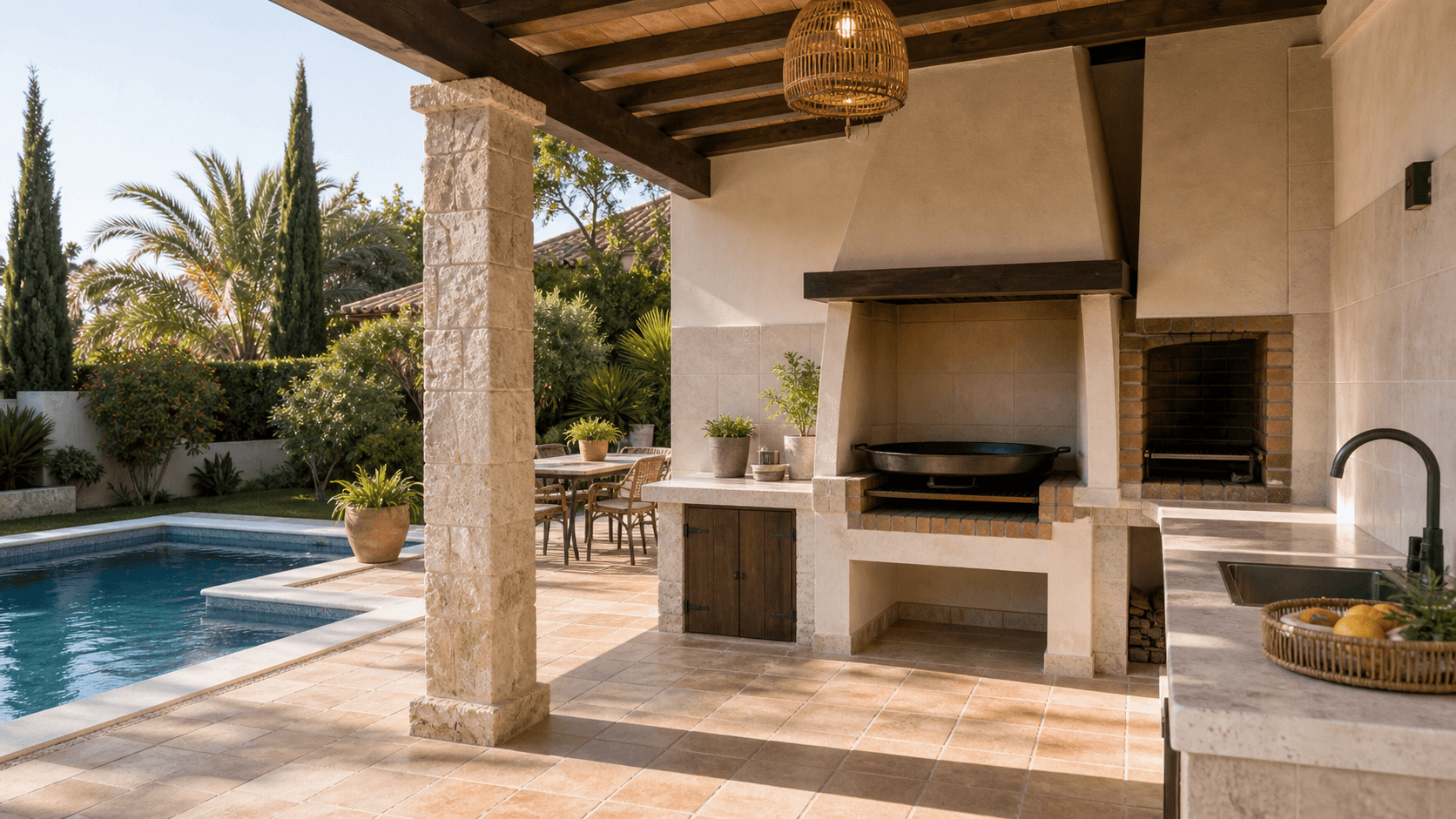
Detached homes by Batecs
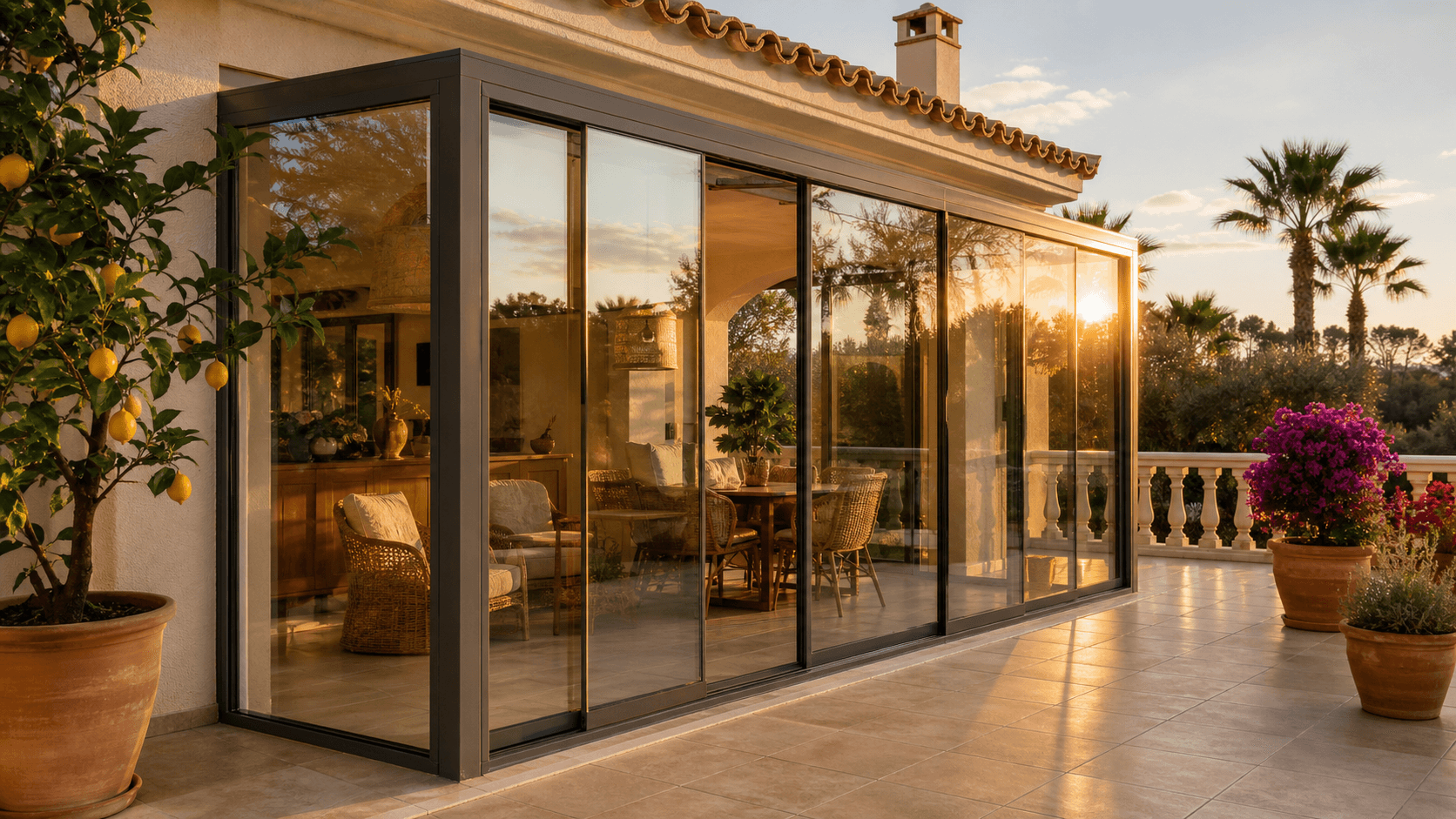
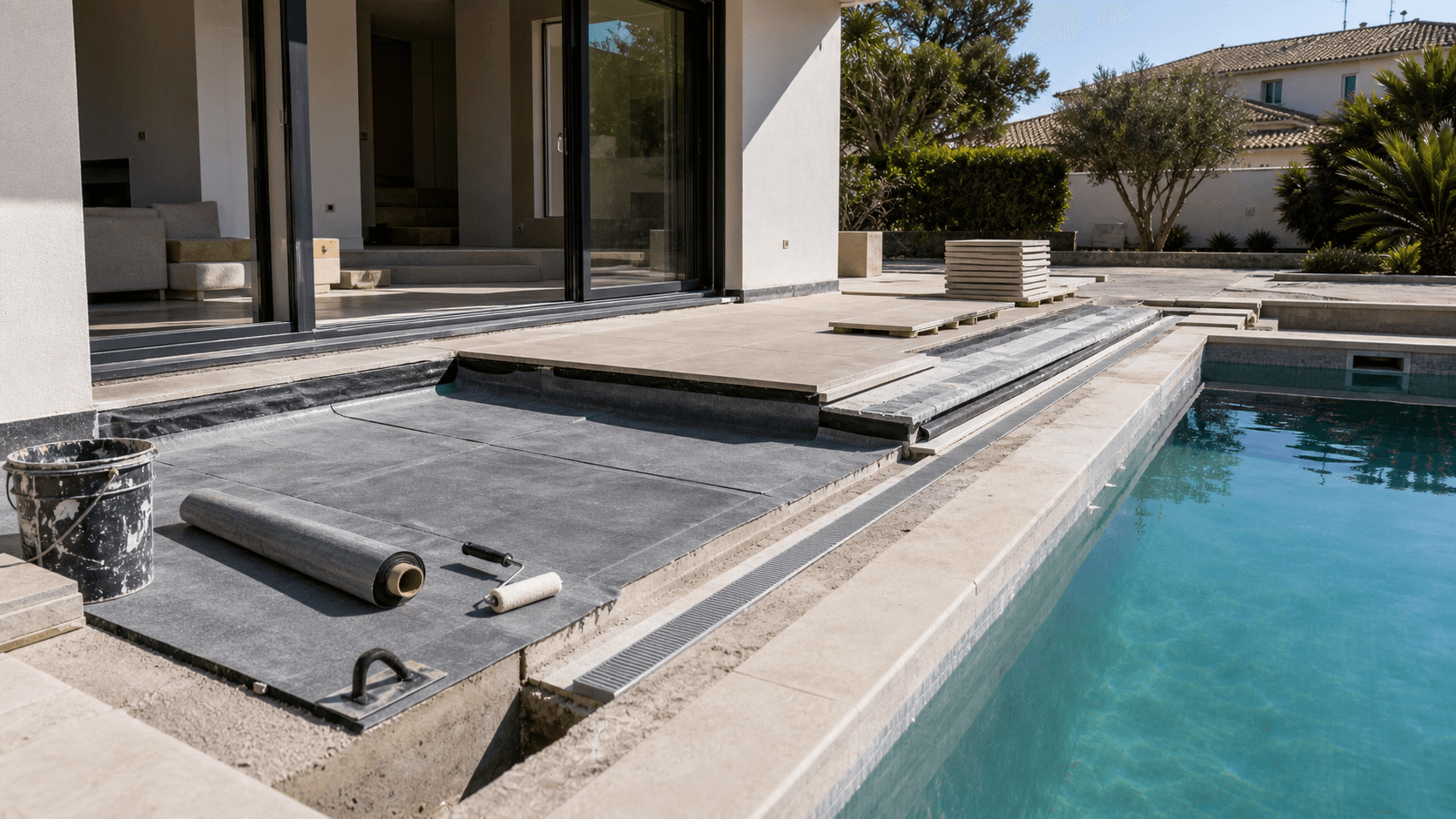
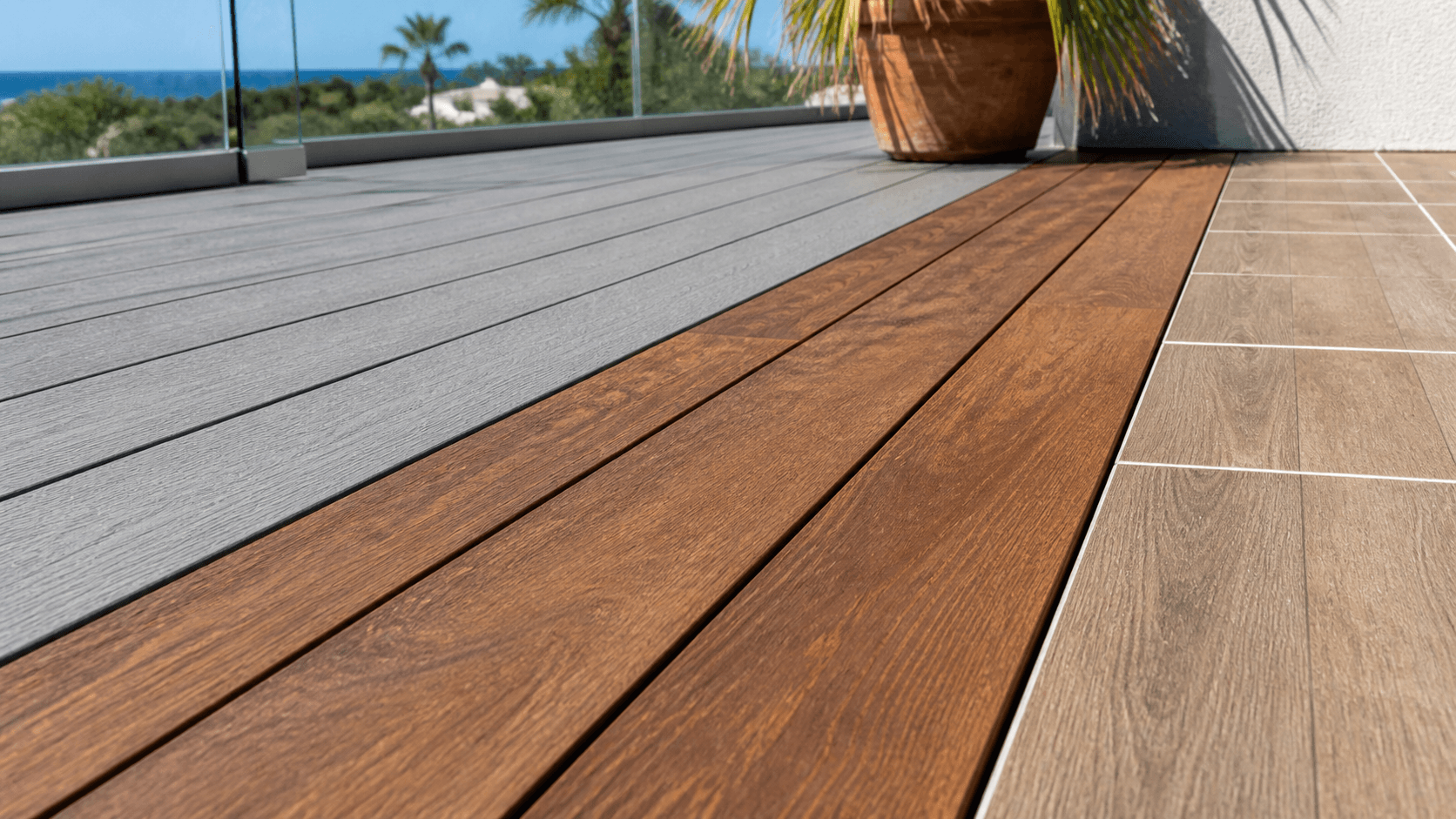
Finishes and outdoor space on detached houses handed over in the Camp de Túria.
Related projects
Houses and outdoor space we have finished nearby
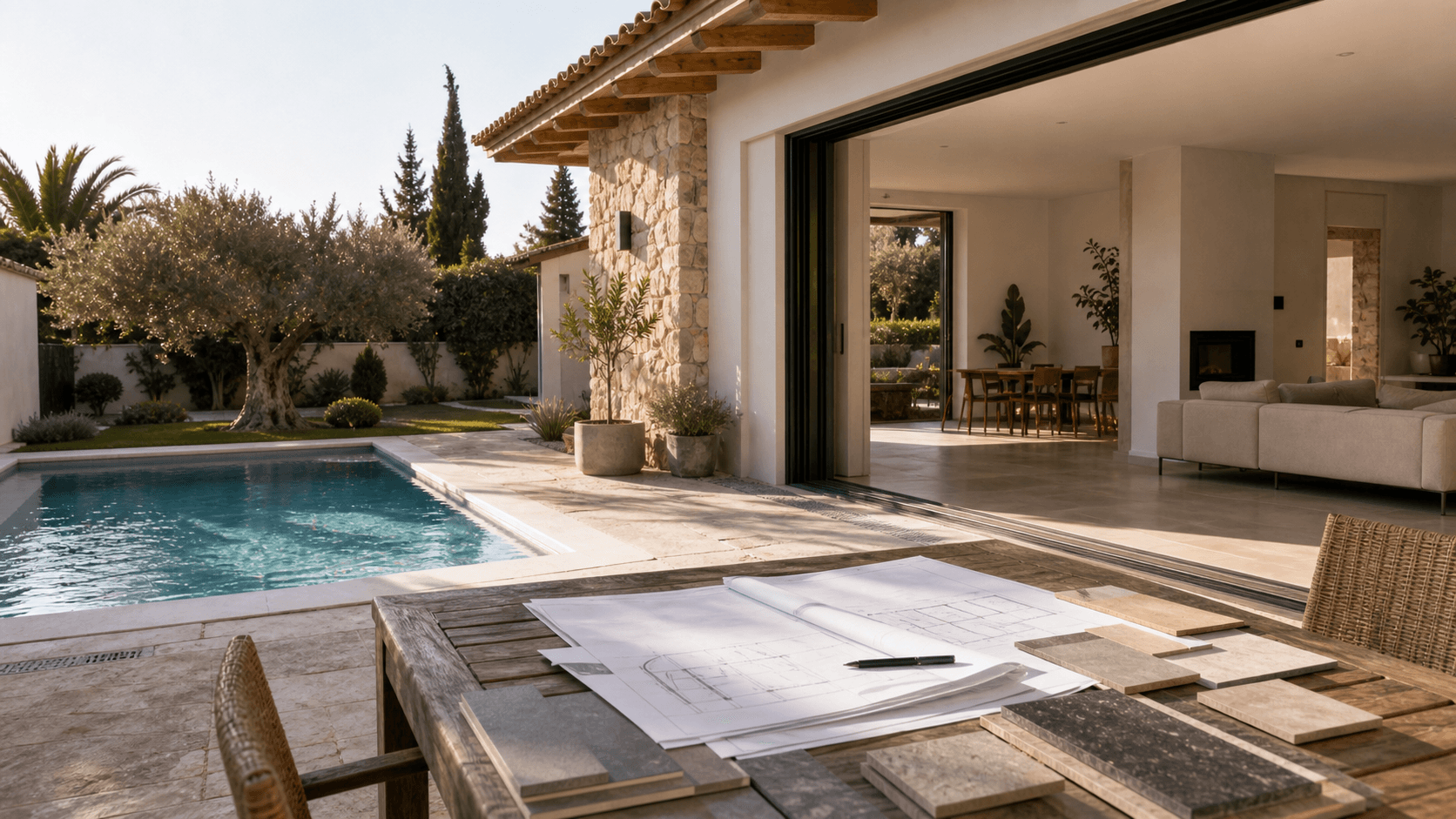
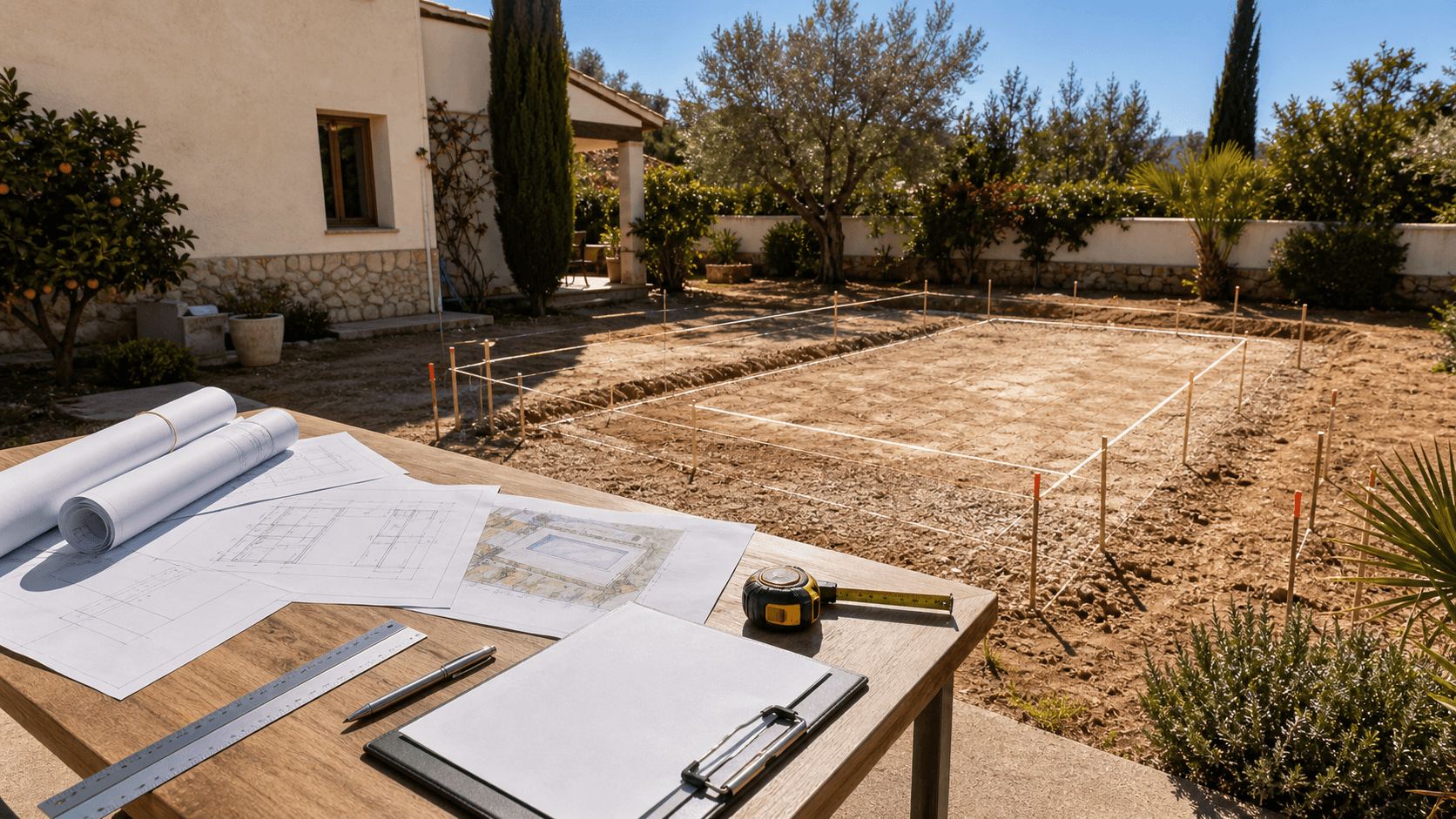
Open any of them for the numbers: size, timescale and location.
Where we build
The towns we put new houses up in
Our yard sits in La Eliana, which puts most of the plots we build on within a fifteen-minute drive: a site visit here is a short trip rather than a day out. We also build across the city of Valencia and out through l’Horta Nord.
The things people ask us
Frequently asked questions about new-build homes
How much does it cost to build a house in Valencia?
As a market guide for 2026, construction tends to run between roughly €1,200–€1,600 per m² at standard level and €2,200–€3,000 per m² or more at the high end. It moves with the floor area, the number of storeys, the specification and the plot. The land itself, the licence, the town hall fees and the professional fees all sit outside that figure. Once we have studied the design we give you a fixed price, itemised, and it is the price you pay.
How long does it take to build a detached home?
Counting the licence and the construction together, the whole thing usually takes between one and two years. The build itself, once the licence comes through, is typically 10–14 months for a house of ordinary size. The licence is the part nobody can promise, because it belongs to the town hall; we give you a phased programme with dates we are willing to commit to for the part that is ours.
Do I need an architect to build my house, or can the builder do it?
You need an architect. A new house has to be designed and signed by one, and the work on site has to be supervised by a qualified technical team — in practice the architect together with a technical architect (aparejador), who is the one on site most weeks measuring what has been done. A building company cannot sign the design of a new home; that signature belongs to the architect, and it is worth knowing that before anyone tells you otherwise. What we do is take the whole arrangement off your desk: we work alongside the architect, we handle the licence and we build the house, so you sign one contract and call one person. If you want to satisfy yourself that a Spanish building company is what it says it is, we walk through the checks worth making on our page about English-speaking builders in Valencia.
What does turnkey building mean?
It means we hand you a finished house you can move into, with one company answerable for the design, the licence, the structure, the services, the finishes and the certificates at the end. You take the decisions that shape the house; we coordinate every trade and every date. You are never asked to be your own site manager, and you never get five invoices from five people who have never met.
What licences do I need to build a home?
A new house needs a building licence before anything starts, and on completion the completion certificate and the first-occupation licence before it can legally be lived in. The procedure and the fees vary from one town hall to another. We prepare and submit the file and we tell you in plain terms what each document says, but confirm the details with the town hall of your own municipality — they set the rules, not us.
Do you handle the design, the licence and the build?
Yes. We coordinate the technical design, the site supervision, the licence application and the construction itself, through to handover with the certificates signed. The advantage of putting it all in one place is not the paperwork: it is that there is one company with nowhere to hide when the structure meets the services and something has to give.
Can I build on my plot in the Camp de Túria?
That is decided by the planning rules that apply to your particular plot, not by us and not by the person selling it — how much floor area you may build, how high, how far back from each boundary, and the class of the land. Before you commit to anything, we study the plot and the municipal rules with the technical team and tell you what they allow. If you have not bought yet, that is the cheapest money you will spend on the whole project.
Do you work to a fixed price?
Yes. After the design is finished you get a written price, broken down item by item, and we hold to it. It moves only if you decide to widen the scope, or if something genuinely unforeseen turns up — the ground is the usual culprit — and in that case it is explained, priced and approved by you in writing before anyone carries on. Never as a line on the final invoice.
Is it better to build or to buy a house and renovate it?
It depends what you are optimising for. Building gives you a house shaped entirely around how you live and efficient from the first day, but it needs a plot and it needs patience with the licence. Buying to renovate is usually faster and can be the better deal if the location is right and the structure is sound. We will give you a straight answer for your case at the visit; it is also worth reading our full home renovations page.
Do you build efficient homes with an air-source heat pump?
Yes. We design houses with serious insulation, high-performance joinery and air-source heat pump systems running underfloor heating, which is where the comfort actually comes from. A new build is the best moment to do it, because nothing has been built yet and every improvement is still a line on a drawing rather than a wall coming down.
Which areas do you build new homes in?
The city of Valencia, La Eliana — where our yard is — and outwards through the Camp de Túria and l’Horta Nord. In practice that means Bétera and San Antonio de Benagéber, Godella and Rocafort, La Cañada, Llíria, La Pobla de Vallbona, Riba-roja de Túria, Paterna and the towns sitting between them. The whole list is on our areas we cover page.
In short
A new-build house in Valencia with Batecs means the whole thing from an empty plot — design, licence, foundations, structure, envelope, services, finishes and outdoor space — under one site manager and one written price. We build it with our own team, hand it over turnkey with the certificates signed, and tell you where the job stands from the first visit to the last.
As a market guide, construction sits between roughly €1,200–€1,600 per m² at standard level and €2,200–€3,000+ per m² at the high end, with the plot, the licence and the professional fees outside that. The figure for your house comes after we have read the design and walked the plot, and it does not move afterwards.
Let us look at your plot
Bring us the plot and we will tell you what it takes
Send the plot, the square metres you are picturing and the level you want to build to. We will come and see it, and you get a written price, itemised, with every line explained, and nothing to sign.
+34 632 224 555+34 962 742 447info@batecs.es
Start with a site visitBesides putting up new houses, we do villa renovations, concrete pools, turnkey renovations and interior design. There is more finished work in our projects gallery, and if your plot is out in villa country, our pages for La Eliana, Bétera, San Antonio de Benagéber and Náquera.