Villas & country homes · Valencia
Villa renovations in Valencia: interior, outdoor space and pool as one project
The detached house with tired wiring, windows that no longer close and the pool it was built with. We take on all of it — interior, façade, roof, terrace, garden and pool — in the right order, so nothing gets built twice. A Spanish building company based in La Eliana, 35+ years on site here, and every step of the job explained to you in English.
Book a free site visitCall · +34 632 224 555A villa is not renovated like a flat. Where a flat stops at the front door, a detached house carries on: there is the façade, the roof, the terrace, the garden and, very often, a pool. All of it belongs to the same job. The most expensive mistake we see across the Camp de Túria is not choosing the wrong material; it is planning the interior on one side and the outdoor space on the other, and then digging the same trench twice or breaking up an access route that was finished a fortnight ago. We have spent more than 35 years renovating villas in La Eliana, La Cañada, Bétera, San Antonio de Benagéber and the towns around them, and the distance between a calm project and a miserable one comes down to order and coordination.
That is why one site manager runs every phase — assessment, interior, façade and outdoor space — in sequence. You do not have to referee a builder, a pool specialist, a gardener and an installer who never speak to each other: you make your decisions with one person, and that person makes sure each trade arrives at the right moment, without overlapping and without redoing what is already done.
It makes no difference whether you signed for the house last month and are still living somewhere else, or you have been in it for twenty years and the family has outgrown it. This is the service that holds the whole thing together: interior, building envelope and outdoor space, coordinated, through to turnkey handover. If it is only the inside of the house you have in mind, look at our full home renovations instead.
01 The complete project
What a villa renovation includes
One project that brings interior and exterior together, so the result reads the same from the façade to the pool — not a string of separate jobs done by trades who never met.
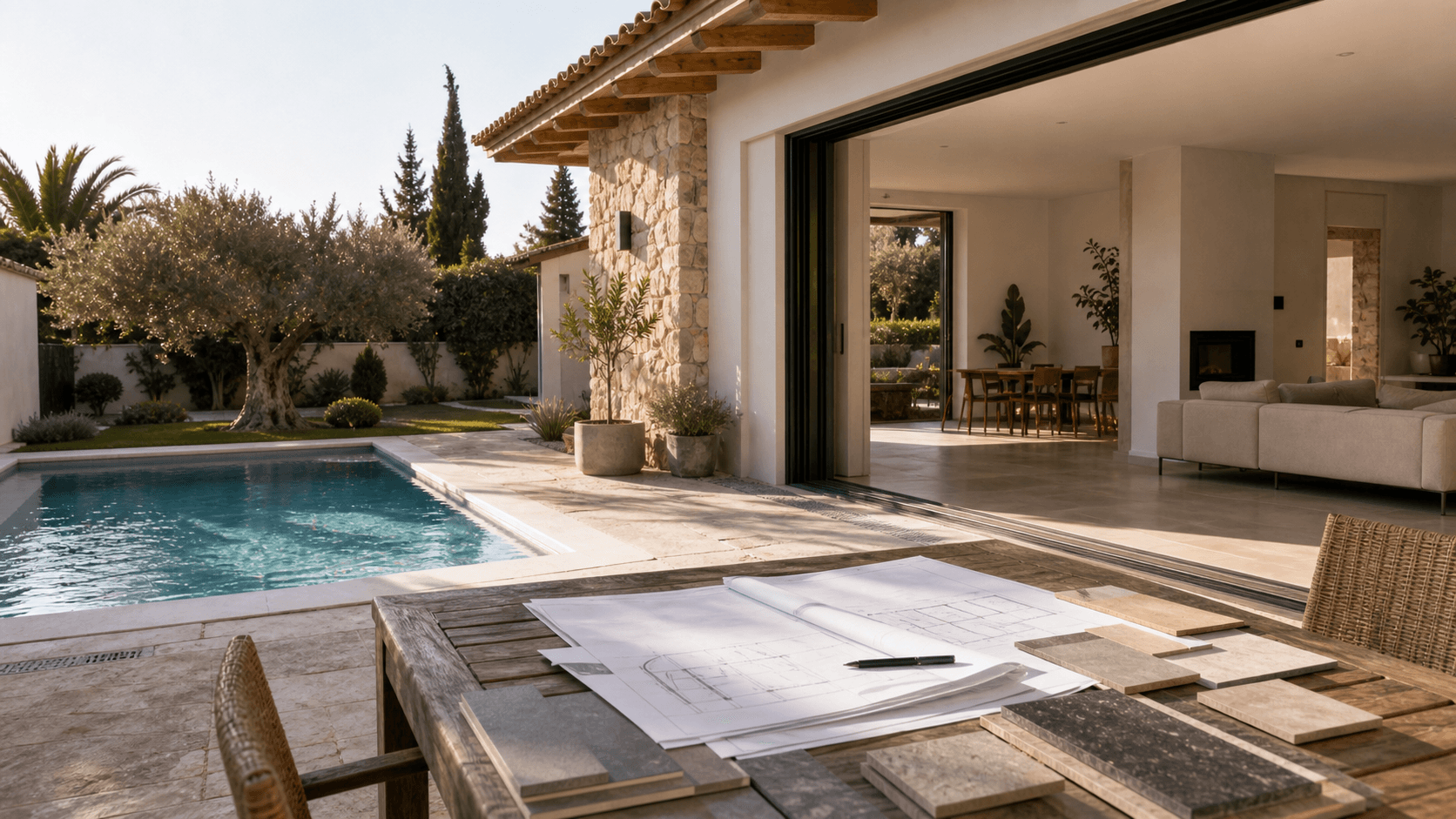
Complete interior
New layout, kitchen, bathrooms, flooring, joinery and finishes, worked out for a house with several storeys and a lot of floor area.
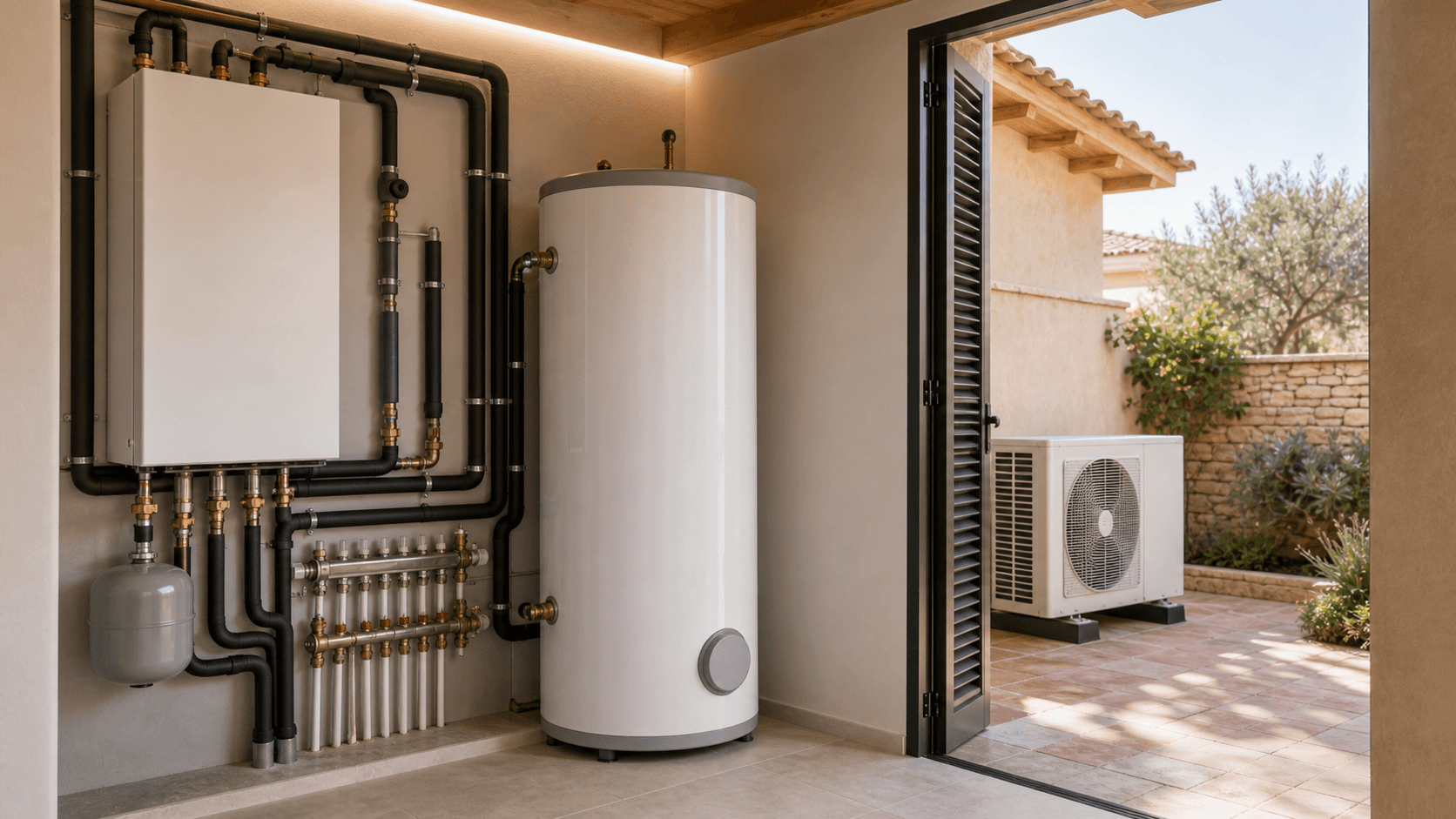
Services and climate
Plumbing, electrics, air-source heat pump and underfloor heating sized for a detached house, where the energy loss is greater than in a flat.
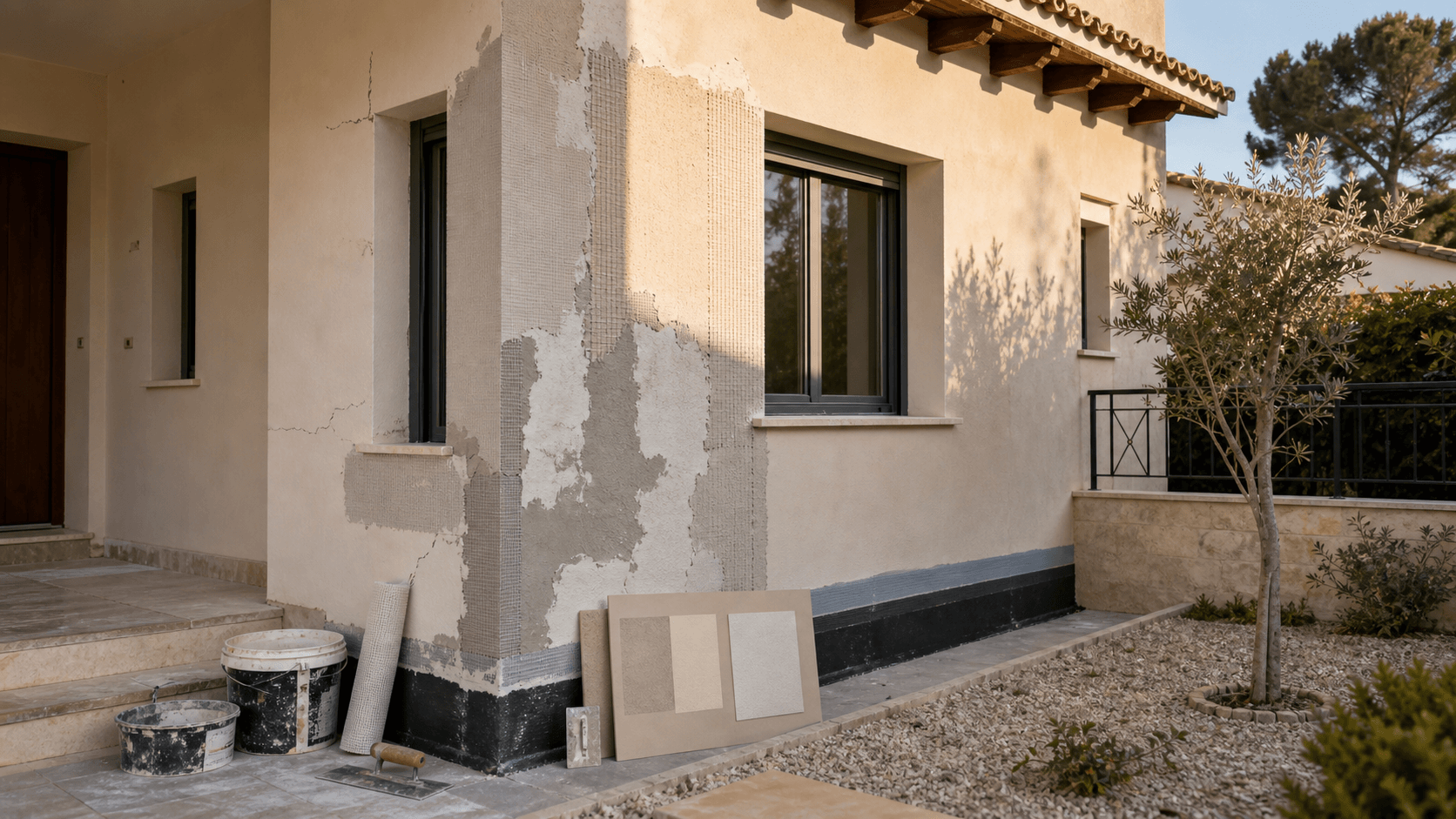
Façade and envelope
Insulation, waterproofing, cladding and paint: the outer skin of the villa protects everything you have spent inside it.
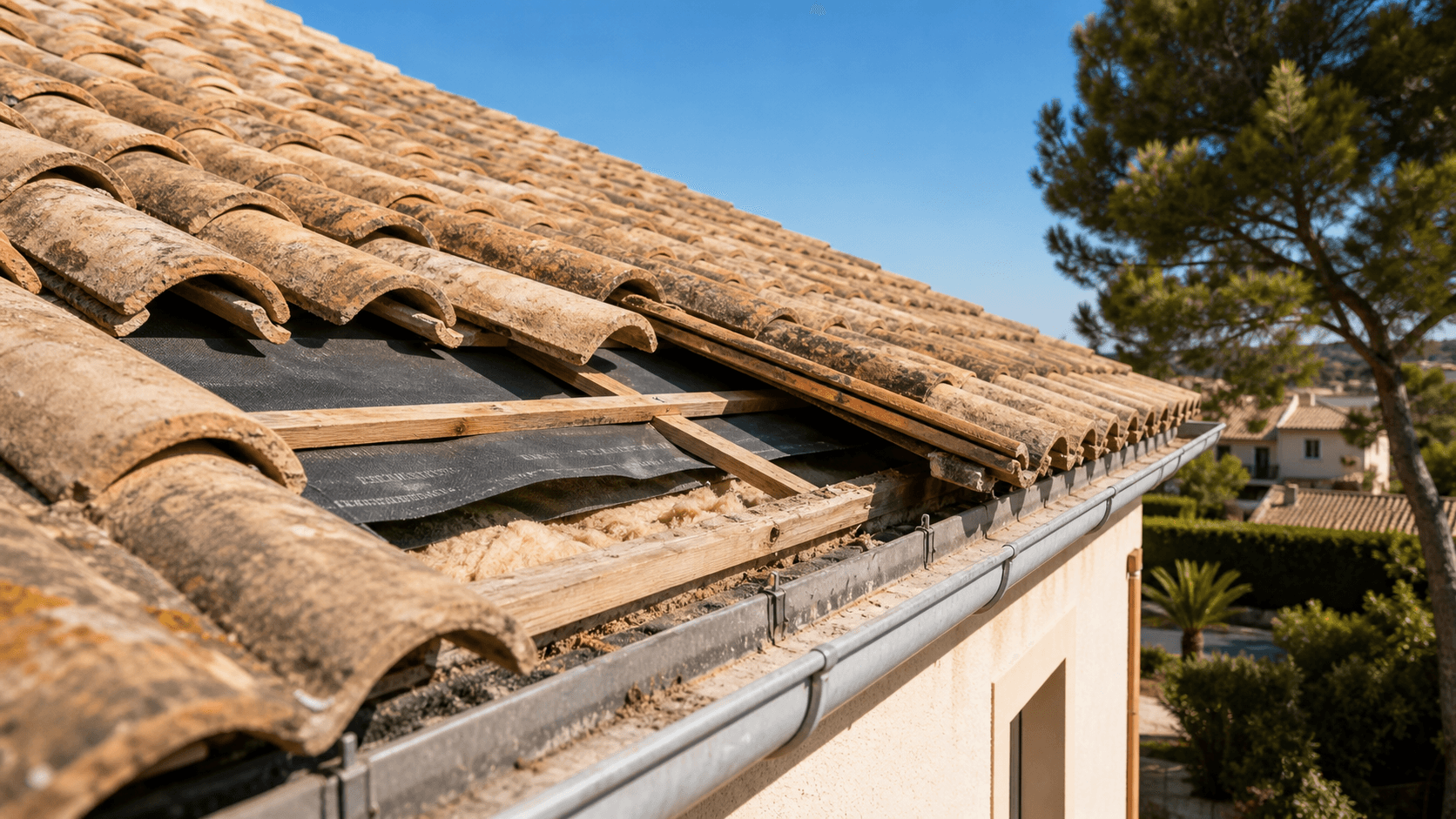
Roof and tiling
We inspect and repair flat roofs, pitched roofs and downpipes before touching the interior: one leak ruins any new finish.
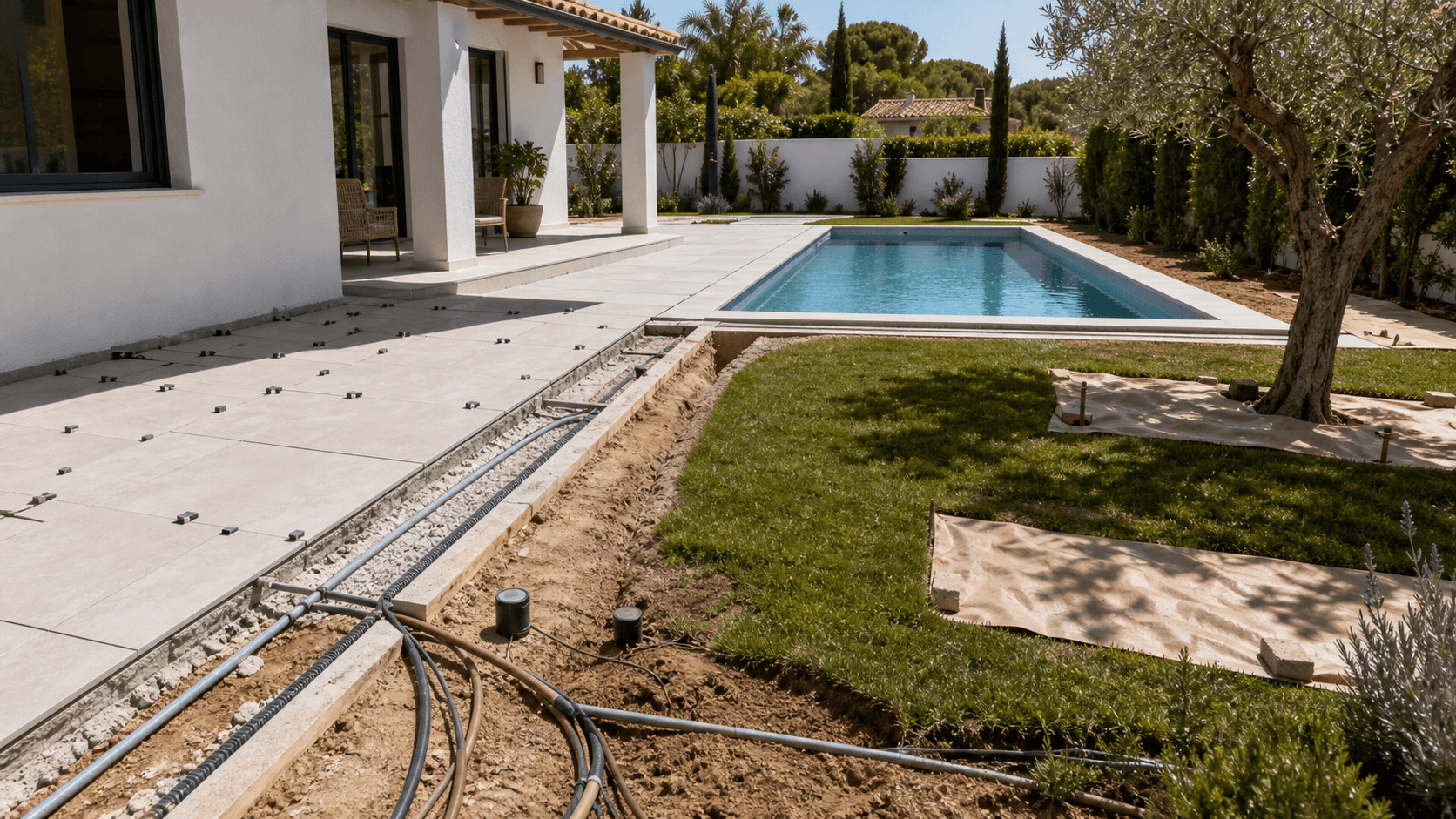
Pool and outdoor space
Pool, terrace, porch and garden, coordinated with the interior and with each other so we never break up paving that has just gone down.
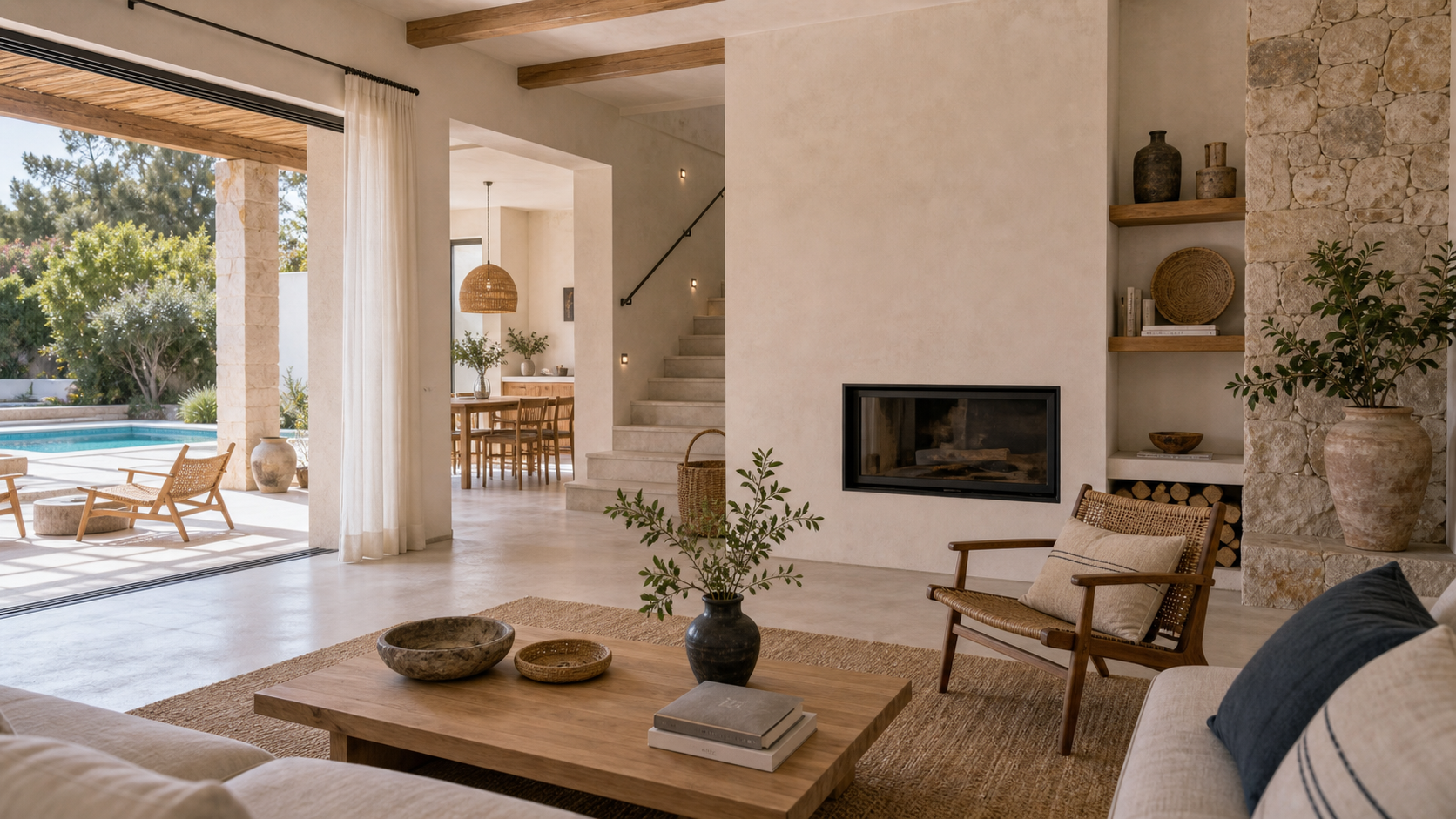
Interior design and finishes
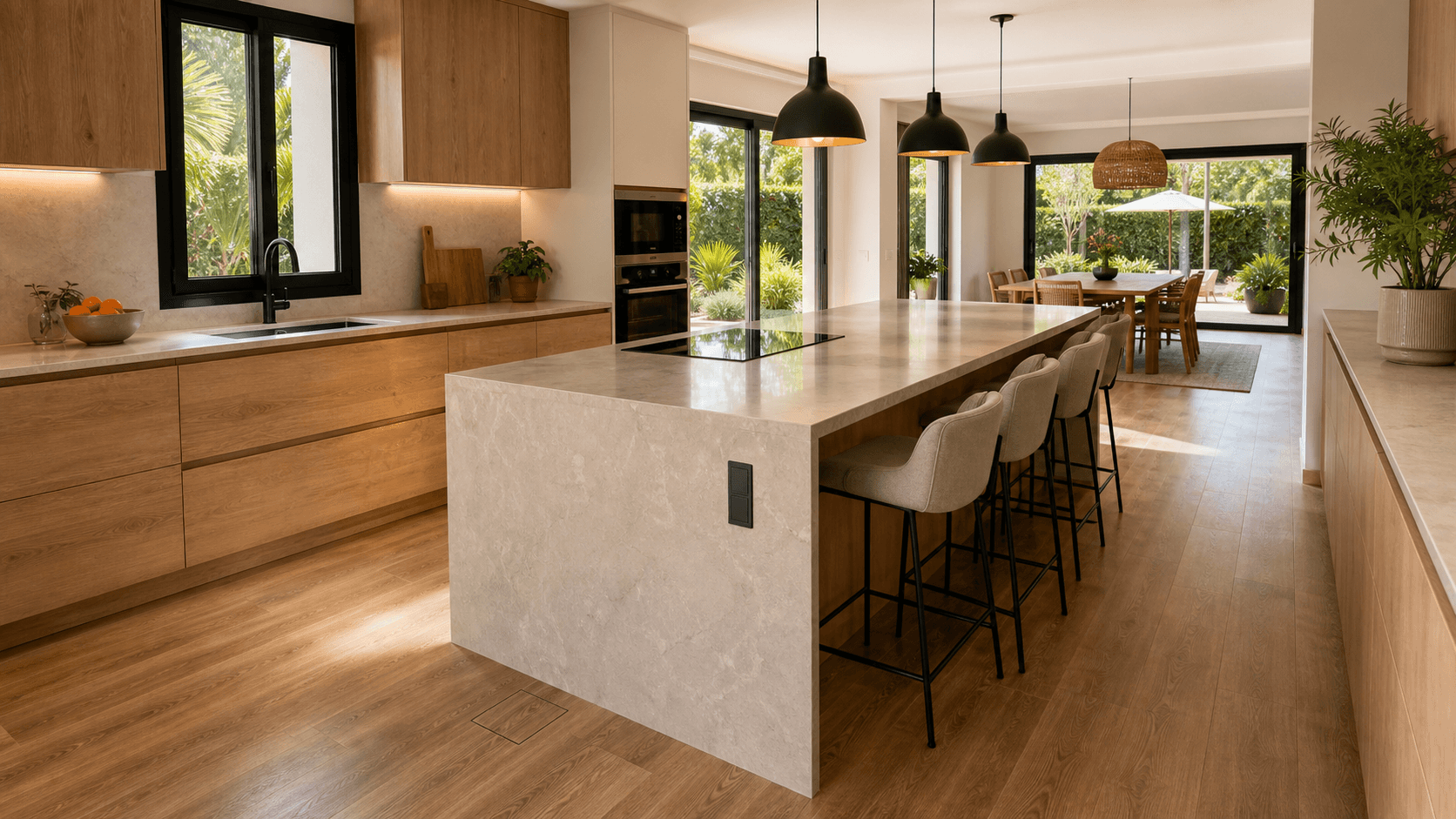
Wood, natural stone, layered lighting and the details that give a villa a Mediterranean feel that does not date.
Just one part of the house? We have separate pages for kitchen renovations and bathroom renovations, and if the pool is what really bothers you, start with concrete pool construction.
The villa difference
Indoor-outdoor flow: what sets a great villa apart
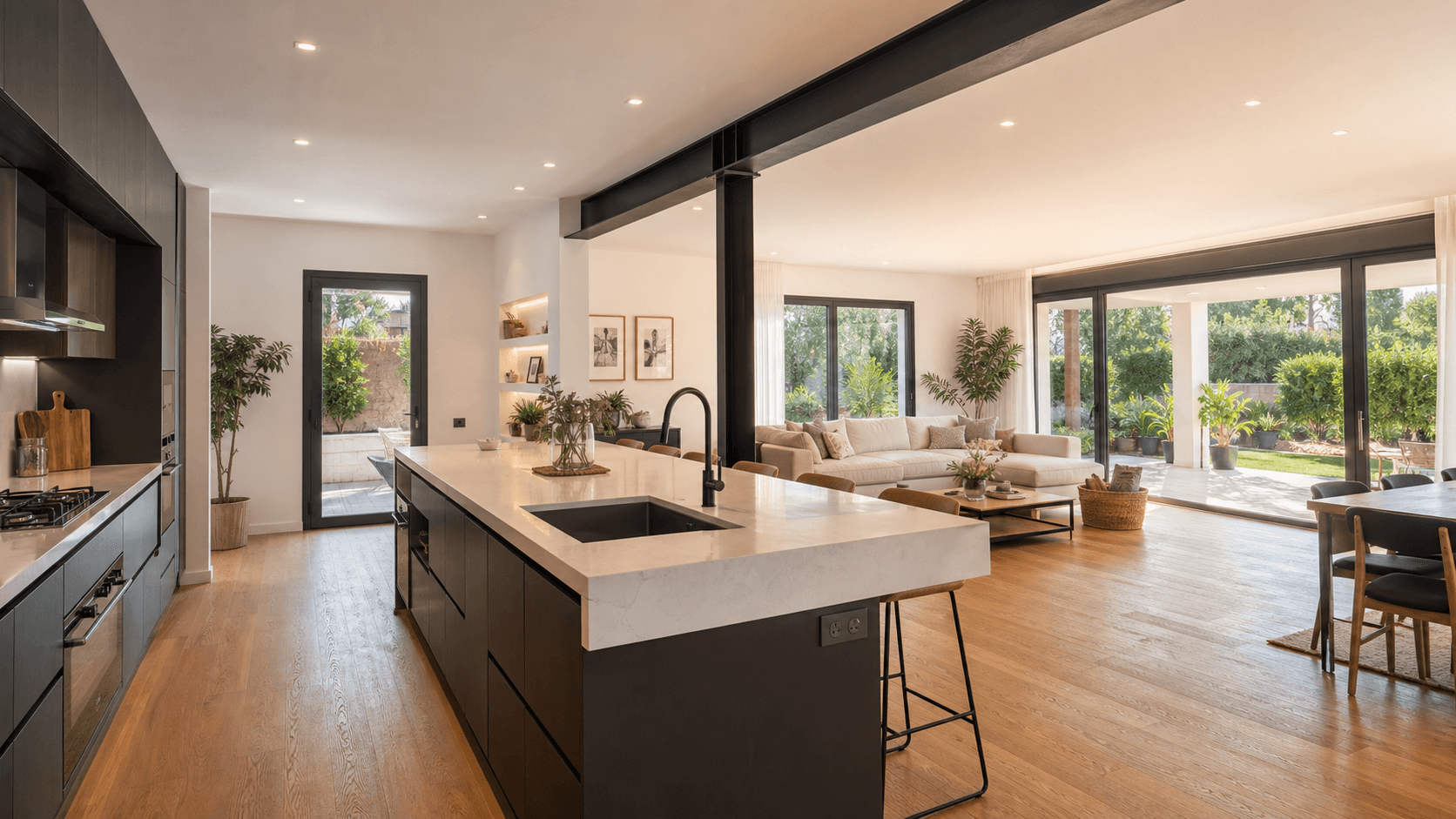
Life in a villa happens outside for much of the year. That is why what really transforms a detached house is not a new kitchen on its own, but erasing the line between inside and out. The living room running onto the terrace, the kitchen looking over the pool, the indoor floor and the porch speaking the same language. It is the difference between a villa that has been renovated and one that has been repainted.
Wide openings and a single floor level
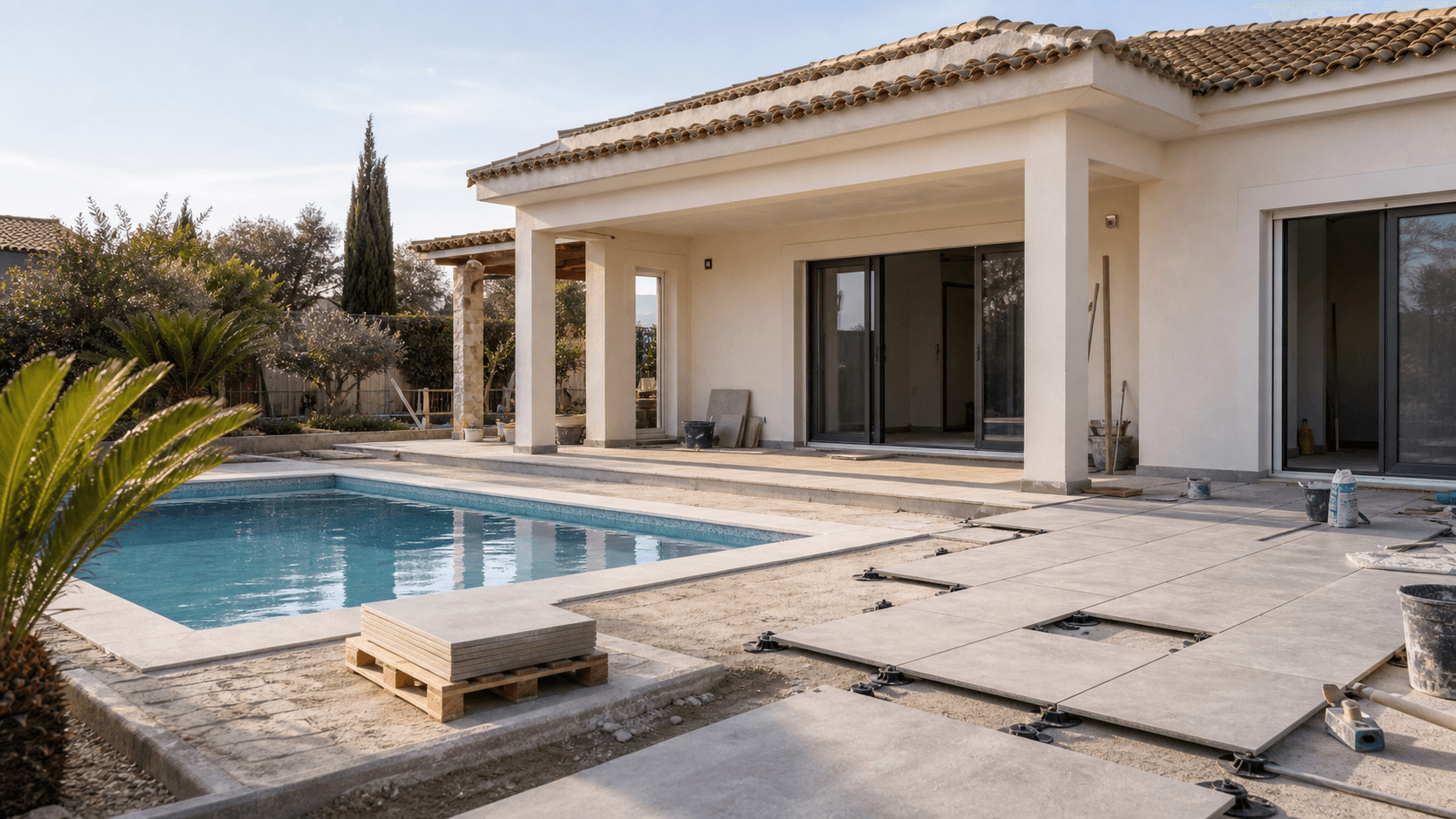
Getting that flow means widening the openings onto the garden — large picture windows, or sliding doors that vanish into the wall — and choosing floors that carry from the living room to the terrace in the same tone and on the same level, with no step to break the transition. A porcelain tile rated for indoor and outdoor use solves both areas with one material and almost no upkeep.
The pool as part of the house, not an afterthought
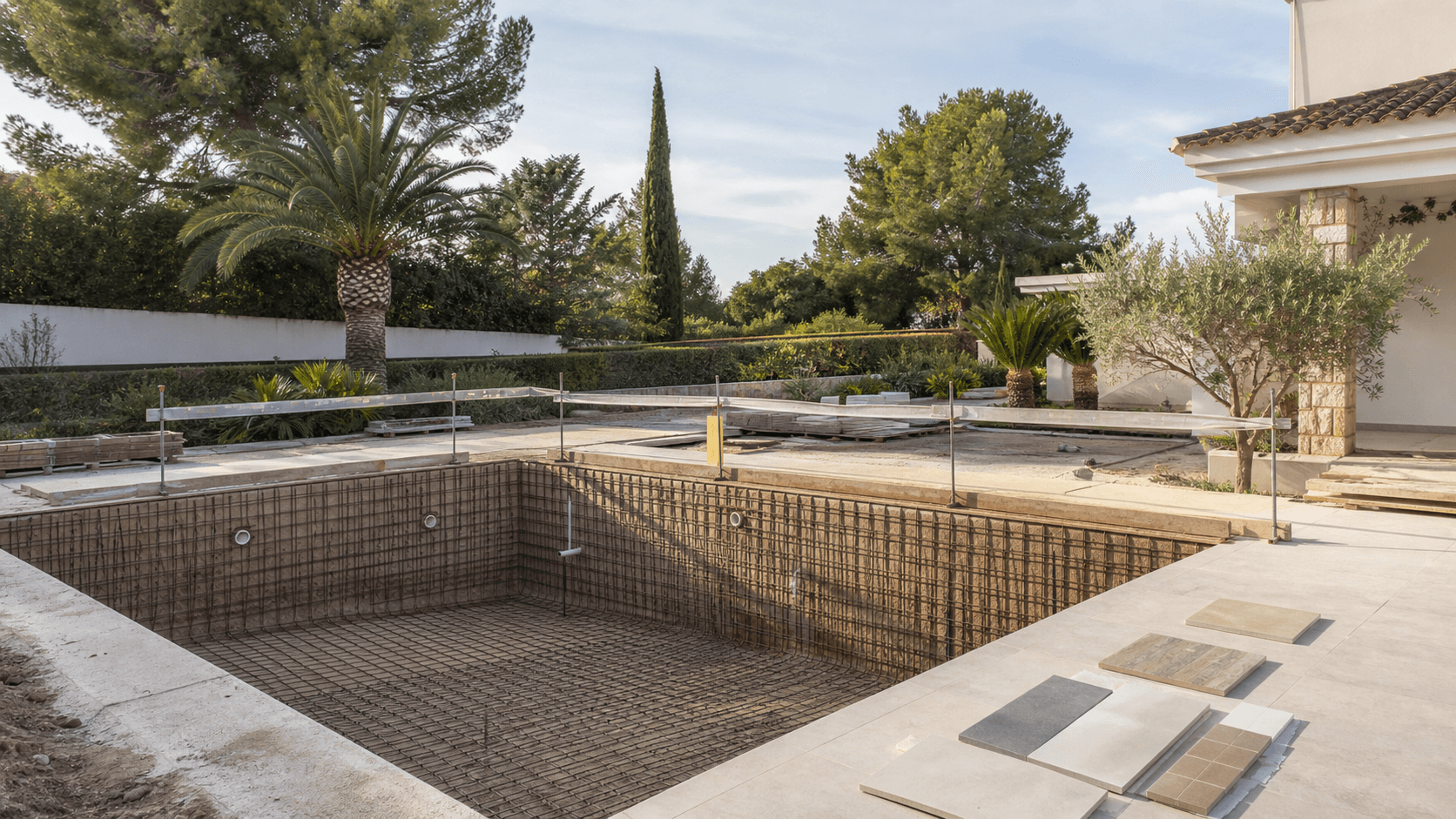
In a villa the pool is not a piece of furniture you drop in at the end: it decides access routes, paving, services and views. Planning it alongside the interior lets you line the living room up with the water, find a proper home for the plant room and lay non-slip poolside paving that matches the rest. You can see how we build them on our concrete pool page.
Shade, orientation and daytime zones
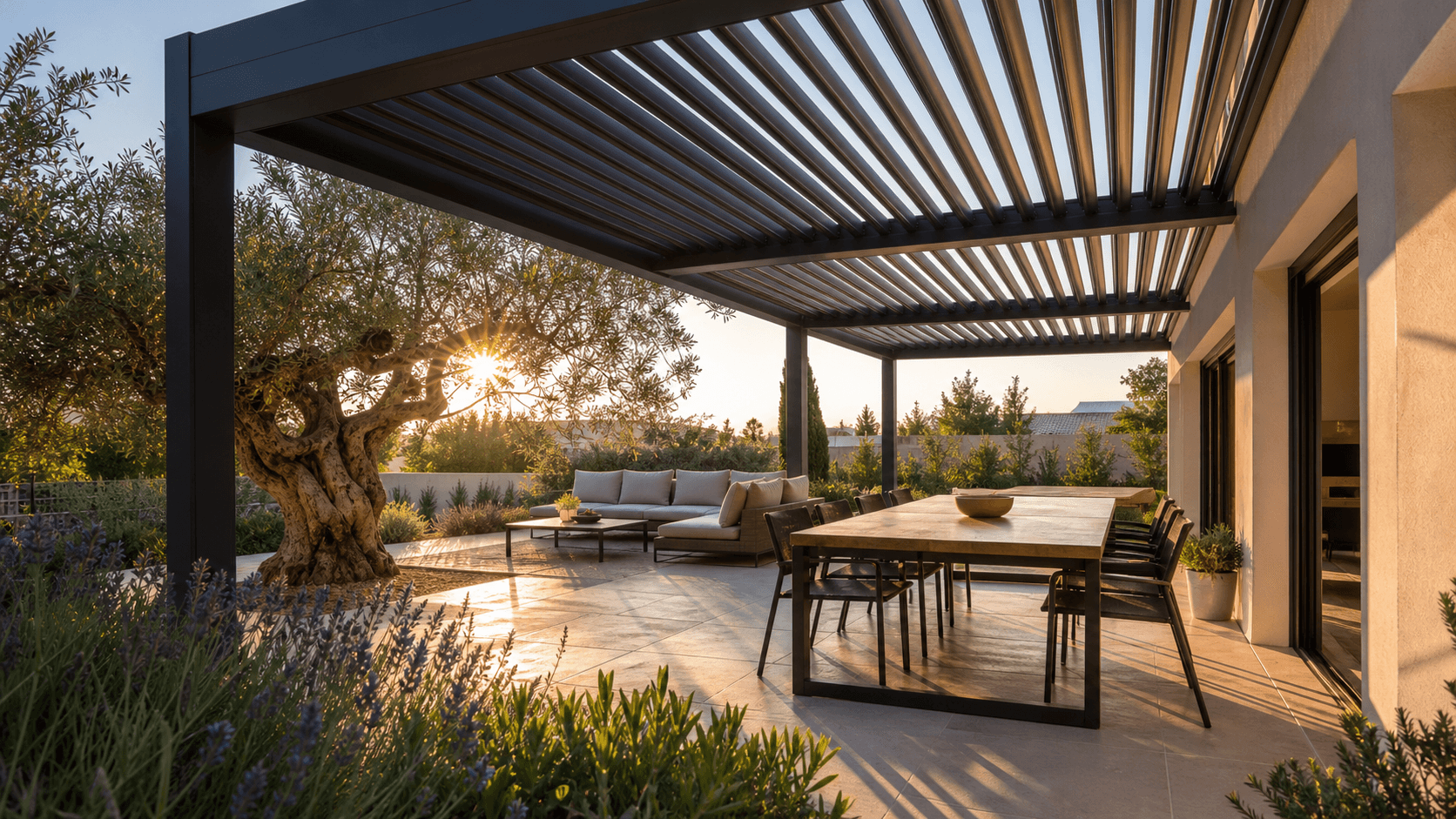
The Valencia sun is a gift and a problem in equal measure. A good villa project handles shade with pergolas, porches and planting in the right places, turns the daytime rooms towards the light without cooking the house, and creates outdoor corners that actually get used. It is not decoration: it is what makes the house liveable all year.
02 Your villa
Choose your situation
Every villa starts from a different place. These are the four we are called about most often on the estates of Valencia and the Camp de Túria. Pick the one that looks most like yours.
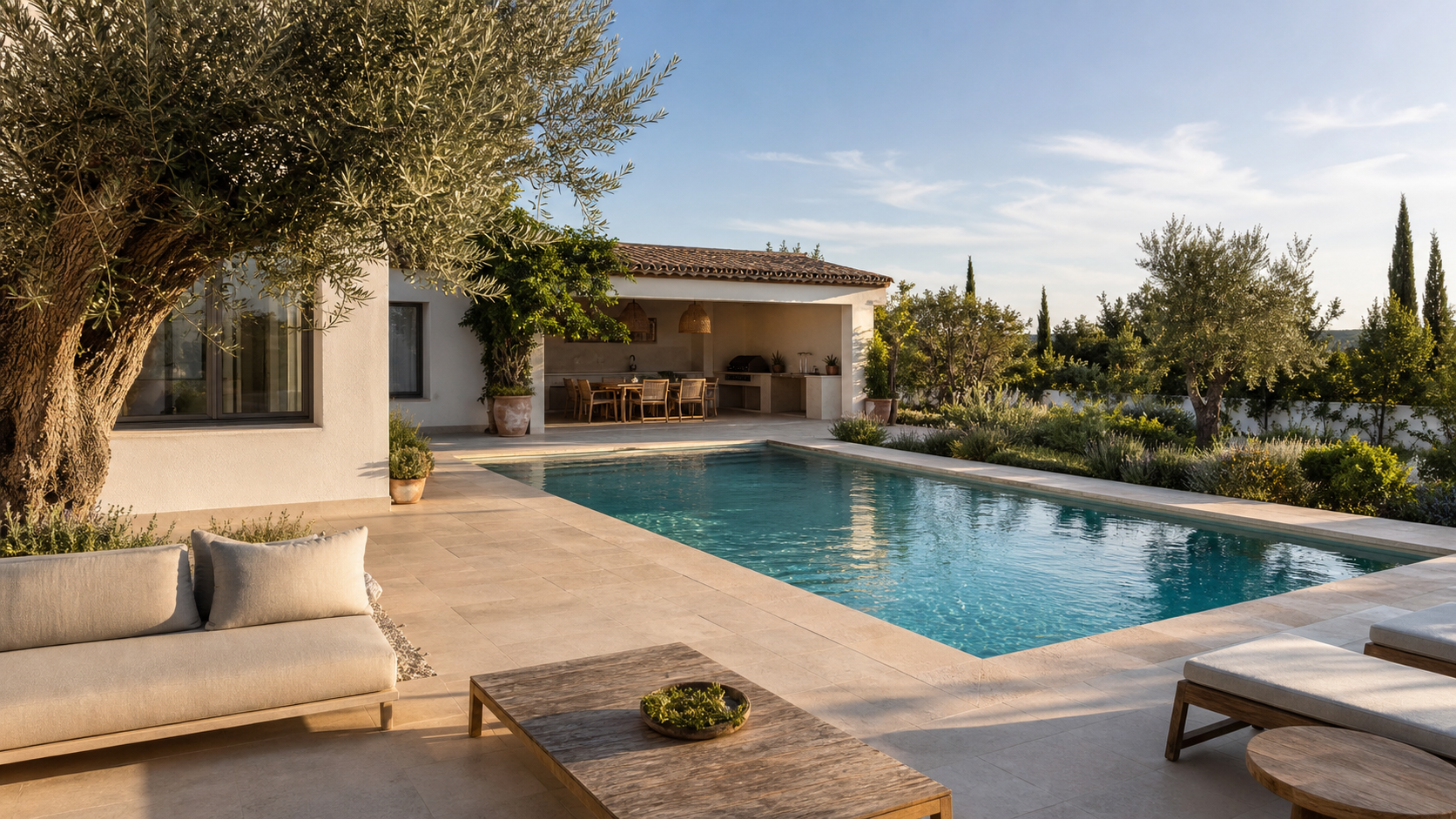
1980s–90s villa
Plenty of floor area, a closed-off layout and services at the end of their life. The job: open it up, insulate it and start the wiring and plumbing again.
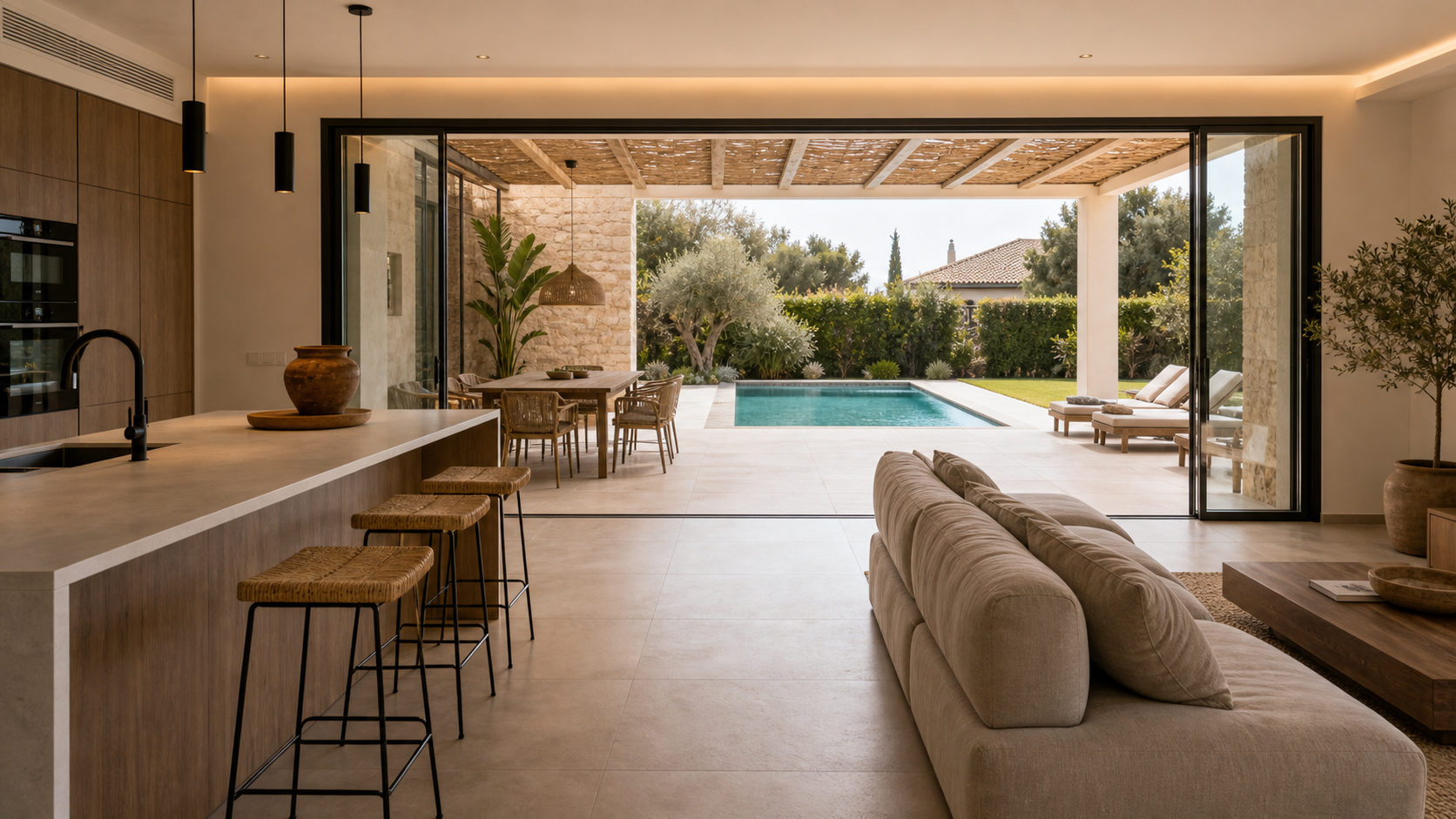
Villa with an old pool
Outdoor space that matters as much as the house. The job: renew pool, paving and terrace alongside the interior, so none of it is done twice.
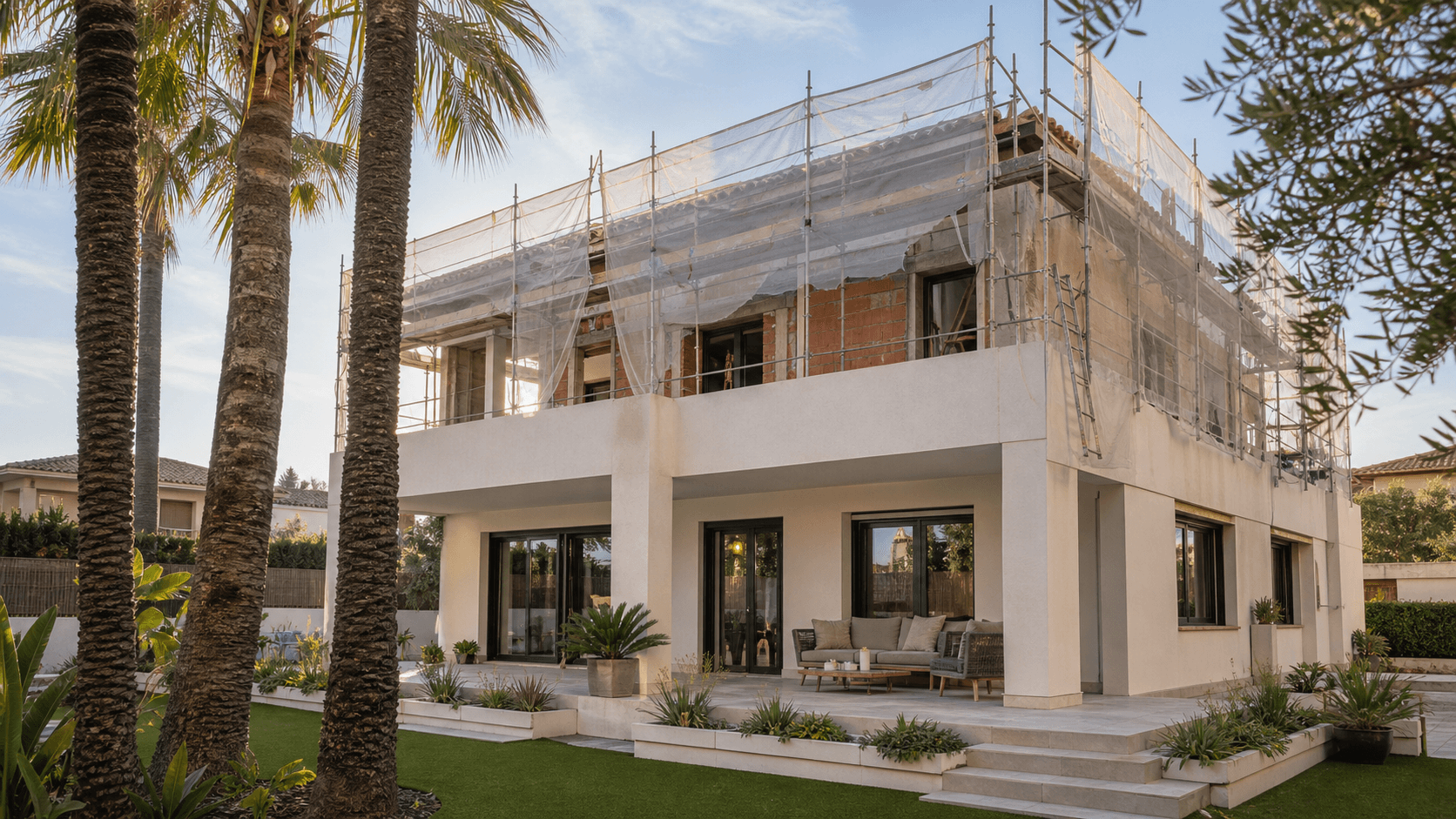
High-end villa
A large house where you want home automation, a heat pump and serious materials. The job: run many trades at once and still finish flawlessly.
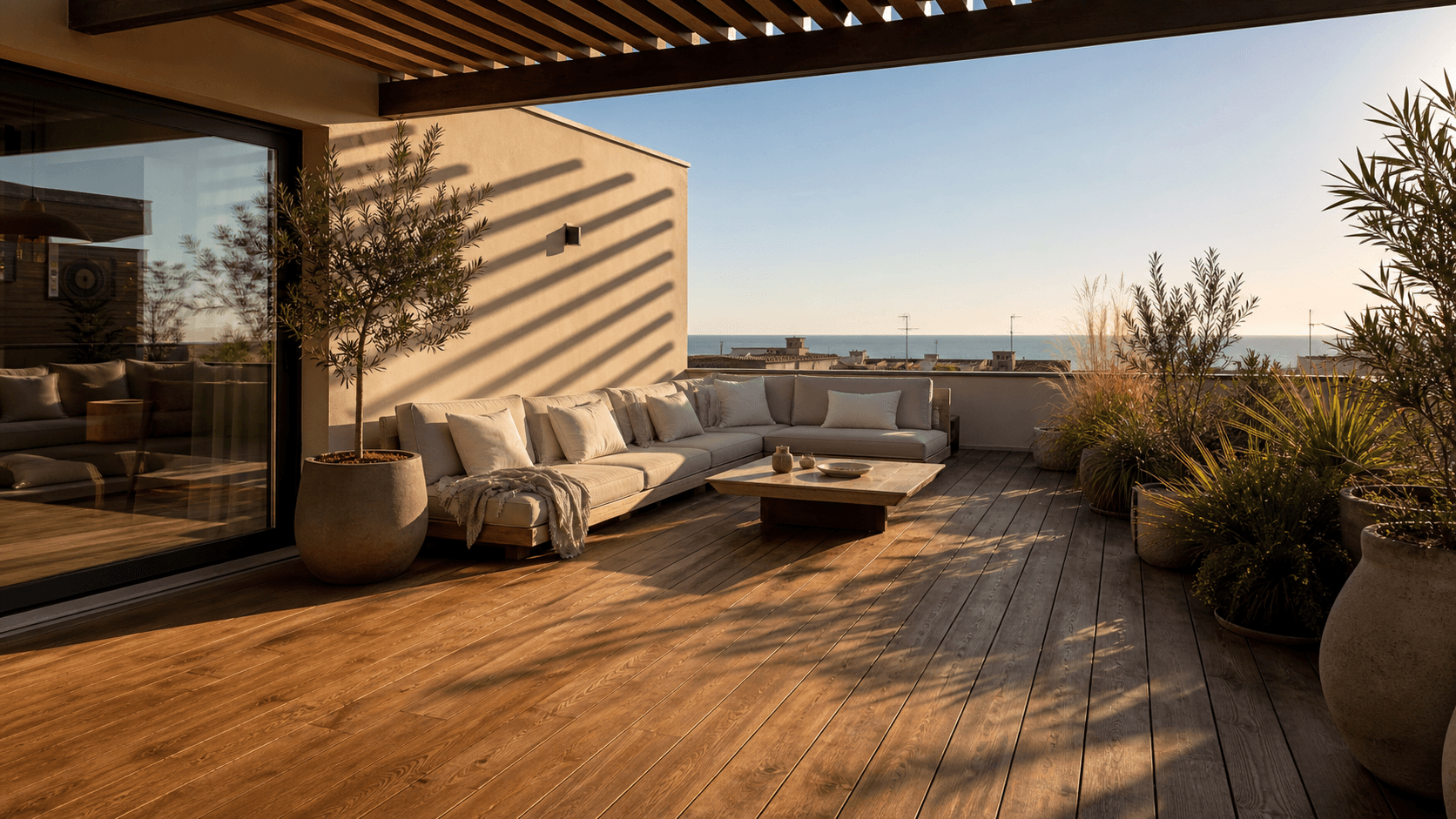
Townhouse or semi-detached
Less garden, same approach. The job: create flow through a small patio or terrace and make every outdoor metre count.
What always turns up
What a 1970s–80s villa usually needs
Most of the detached houses on these estates went up between 1970 and 1995. They were built solidly, they sit on plots nobody lays out any more, and they share the same short list of problems — whether you signed for yours last month or have lived in it for twenty years.
- The electrics. A consumer unit sized for a house with a fraction of today’s appliances, circuits with no earth, and a supply that trips the moment the oven and the air conditioning run together. It is the first thing an electrician looks at and usually the first thing we replace.
- Insulation and the roof. Cavity walls with nothing in the cavity, and a roof that has done fifty summers. This is where a villa quietly loses money every month, and it is far cheaper to put right while the house is already open.
- External joinery. Single-glazed aluminium with no thermal break, shutters that jam and frames that whistle in the wind. New windows change the temperature, the noise and the light in one move.
- Damp on the terrace and the flat roof. The original waterproofing has a working life, and once it is over the stain turns up on the ceiling below. Repairing that after you have laid a new floor costs several times what it costs before.
- The original pool. A concrete pool from that period usually still has a sound shell; it is the pipework, the plant and the coping that are finished. Whether it is worth repairing or rebuilding is decided standing next to it, not from a photograph — our pool work covers both.
That is the usual list, not a diagnosis of your house. Nobody can tell you what yours needs from the kerb: we come out, look at the roof, the consumer unit, the terrace and the pool, and only then does a figure go on paper.
One contact, one language
Working with Batecs in English
Batecs is a Spanish building company: Spanish team, Spanish licences, Spanish suppliers. What is in English is everything that reaches you — the site manager who runs your villa and the person who writes your quote both speak it, so nothing about your own house arrives second-hand.
- One point of contact. Whoever walks round your villa on the first visit is whoever is still answering the phone on handover day. Not a switchboard, and not a new name every fortnight.
- Your quote, line by line. Interior, envelope and outdoor space are itemised separately and talked through with you before you sign anything, so you can see what is in and what is not.
- Town hall paperwork, prepared and submitted by us. The structural work goes in under a building licence (licencia de obra); the lighter items under a responsible declaration (declaración responsable); the pool nearly always on a file of its own. Every document is talked through with you in plain terms before it is lodged.
- Decisions put to you in writing. Anything that moves the scope or the price is costed, written down and agreed before a tool comes out of the van. Nothing important gets settled in a corridor conversation you could not follow.
The paperwork itself stays in Spanish, of course: a Spanish town hall issues its licences in Spanish and that is not going to change. Our job is to make sure you know precisely what each line commits you to before you sign it. The full argument is set out on our page for English-speaking builders in Valencia.
03 The premium method
The right order means you don’t pay twice
In a villa, order is everything. First the assessment of structure, roof and services, because there is no point in a beautiful living room under a roof that leaks. Then the interior work and the building envelope. And last the outdoor space and the pool, once the machinery and the rubble can no longer spoil paving that has just been laid.
Skip that sequence and you get exactly the overruns people describe to us: a trench for the pool cut across a garden planted a month ago, a finished terrace lifted to run a pipe, a paved drive a digger then has to cross. One site manager holding the phases together stops one trade undoing another’s work, and keeps the price and the dates where they were agreed.
04 The investment
How much it costs to renovate a villa in Valencia
No two villas are the same, but there are market ranges that help you get your bearings before you ask anyone for a quote. These are indicative and cover the interior and the building envelope; the outdoor space and the pool are quoted separately.
| Level of renovation | Indicative price | What it usually includes |
|---|---|---|
| Refresh, mid-range | €700–€1,100 per m² | Interior renewal, new services, bathrooms and kitchen in full, joinery, basic insulation and good finishes. |
| High-end full renovation | €1,100–€1,700+ per m² | Complete reconfiguration, home automation, heat pump and underfloor heating, fine materials and interior design drawn for the house. |
| Outdoor space: terrace, garden, pool | Quoted separately | Concrete pool, non-slip paving, pergolas, irrigation and planting, priced on area and scope. |
Indicative market ranges for Valencia in 2026, for orientation only. They are not a quote and not an offer. As a worked example, a 200 m² mid-range villa would land somewhere around €140,000–€220,000 for interior and envelope, with the outdoor space on top. What your own house costs depends on your own house.
What moves the price
In a villa the price turns on the floor area, because these are large houses over several storeys; on the starting condition of the structure and the roof; on how much of the building envelope you take on, since insulation and façade count for far more here than in a flat; and above all on the outdoor space, where a concrete pool or a full garden can be as big a line as an entire storey of the house.
Which is why we would rather give you a fixed price after the site visit, itemised, with the outdoor space costed on its own line, than a price per square metre that turns out not to match your villa. The figure you sign is the figure you pay. If something extra turns up behind a wall, it is costed and put to you in writing before any work starts on it.
Getting the most from the money
How to invest wisely in a villa without runaway costs
In a large house every decision is multiplied across a lot of square metres, so getting the important ones right saves a great deal. After 35 years on villas in this area, this is what we tend to tell people who want a good result without overspending.
Do not cut corners on the envelope. Façade and roof insulation, terrace waterproofing and the pool shell are the villa’s “invisible structure”. Saving there is the most expensive economy of all: a leak forces you to lift paving you have just paid for, and thin insulation turns up on the bill every single month.
Finishes and outdoor furniture are where you can flex. There are porcelain tiles, joinery and pergola systems today that give you most of the effect for a fraction of the money. And a treat — a special cladding, an outdoor kitchen — can wait for a second phase, as long as the project leaves room for it.
Renovating in phases is perfectly respectable. In a villa the usual route is interior and services now, pool or garden later. The one condition is that the project allows for it, so the second phase does not break up work that is already finished.
Want a figure tailored to your villa?
Tell us the floor area, the condition it is in and what you want to end up with, inside and out. We reply within 24–48 hours, no obligation.
Get my villa quote05 The Batecs method
How we run your villa renovation
From the first visit to turnkey handover, with one point of contact for the inside of the house and for everything around it.
Site visit and assessment
We go through the structure, the roof, the services and the outdoor space, and listen to how you actually want to live in the house.
Project and proposal
We fix the scope, the quality levels and the phases, with an itemised price and interior and outdoor space kept on separate lines.
Licences and paperwork
We prepare and submit what your town hall requires, the pool included: it almost always goes in on a file of its own.
Coordinated build
Interior, envelope and outdoor space in the right order, with our own in-house team and one site manager on the job.
Quality control
We check each phase as it closes and keep you posted while the work runs, rather than at the end.
Turnkey handover
We go through the finishes inside and out, and hand the villa back clean and ready to use.
All that coordination is for one thing: that no trade undoes another’s work, and that the house — and everything around it — is finished at the same time, with no loose ends dragging on for months. The method, phase by phase and in writing, is on how we work.
When you are not in Valencia
Renovating while you’re abroad
A good share of the villas we look after belong to people who are only here for part of the year. How the job gets built does not change one bit. How you hear about it changes completely.
You get photographs as the job moves: what closed this week, what starts next, and anything we have opened up and found that changes the picture. The choices that genuinely want your own eye — a tile, a tap, whether that wall goes — happen on a video call, with the room in front of you rather than a paragraph describing it.
Somebody has to open the house, take in materials and let the trades through the gate. That somebody is us, and it is the same site manager every week. Anything that falls outside the quote is costed and approved before it happens, so no invoice ever arrives that you have not already seen. And at handover the finished work is photographed and documented, inside and out, before you fly.
06 The decision
A single site manager vs. hiring separate trades
In a villa, with that many fronts open at once, the difference is not the day rate. It is who answers for the whole thing fitting together — which is what a turnkey renovation actually buys you.
You coordinate inside and out
- The builder, the pool specialist and the gardener never speak to each other.
- Trenches and access routes are redone because nobody planned for them.
- When something goes wrong, each trade blames the one before.
- The outdoor space is left half done when the money runs out.
- You cannot know the total until the last invoice arrives.
We answer for the whole
- One team responsible for interior, façade and outdoor space.
- The phases in the right order, so nothing is dug twice.
- One fixed price, with the outdoor space itemised inside it.
- House and surroundings handed over finished, on the same day.
- The company that has been on site here for 35 years is the one that comes back.
07 Our work
Villa renovation projects
A sense of the kind of detached house we take on completely across the estates of Valencia and the Camp de Túria.
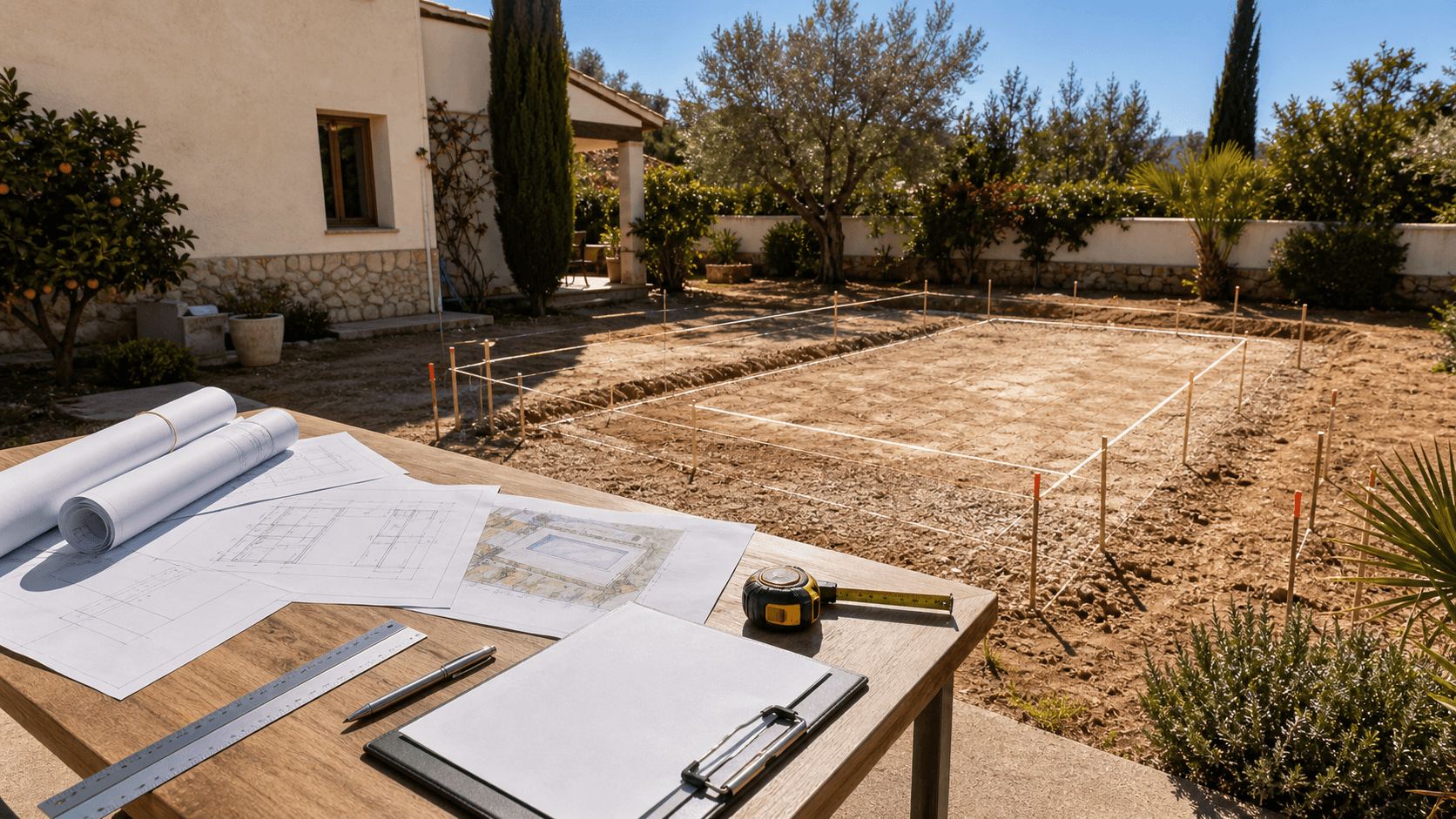
Mediterranean stone villa
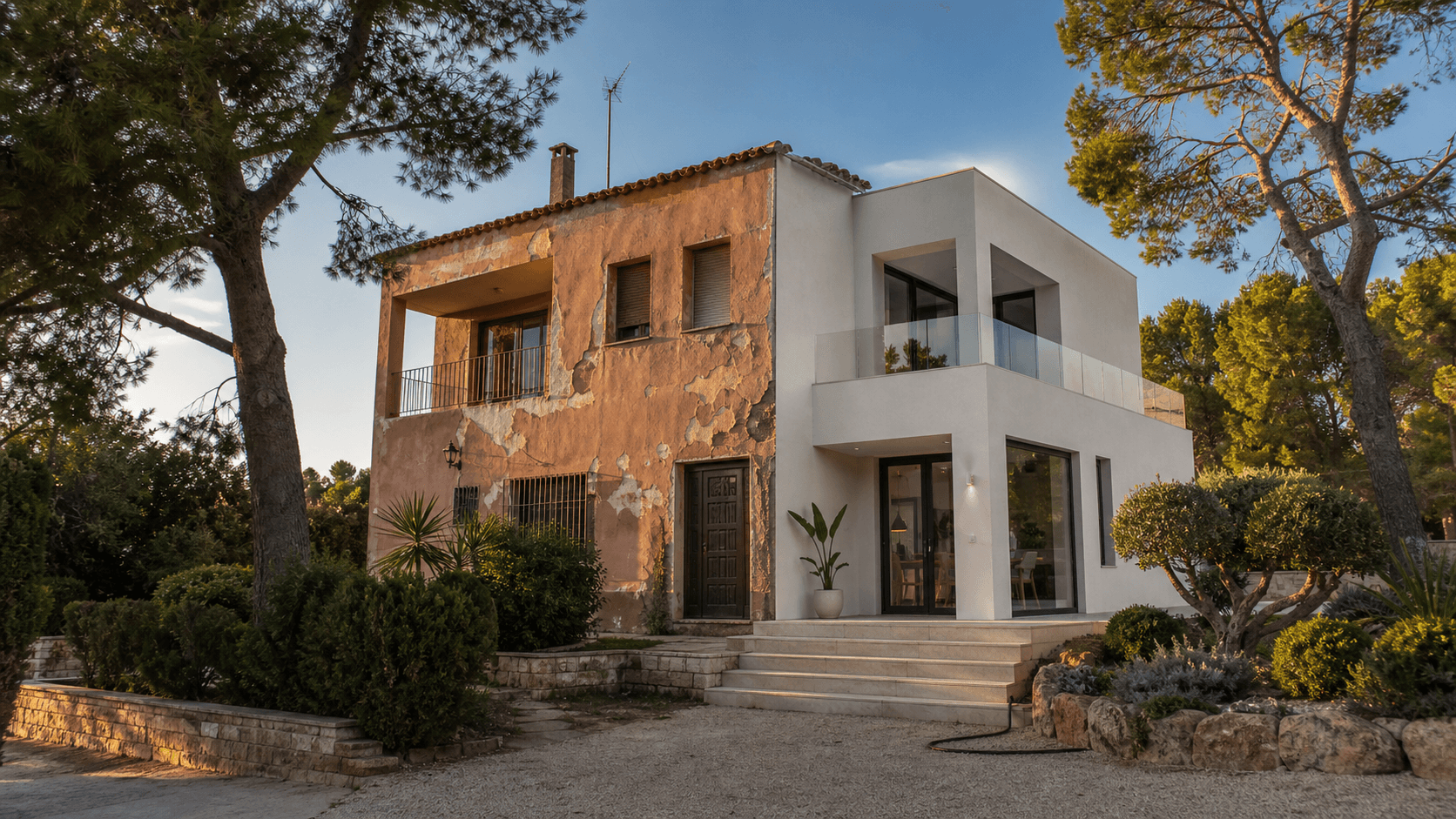
Full renovation of a villa clad in natural stone: ground floor reconfigured, services replaced and the insulation brought up to standard. The brief was a Mediterranean feel that would not date, and a house that is bright and cheap to look after.
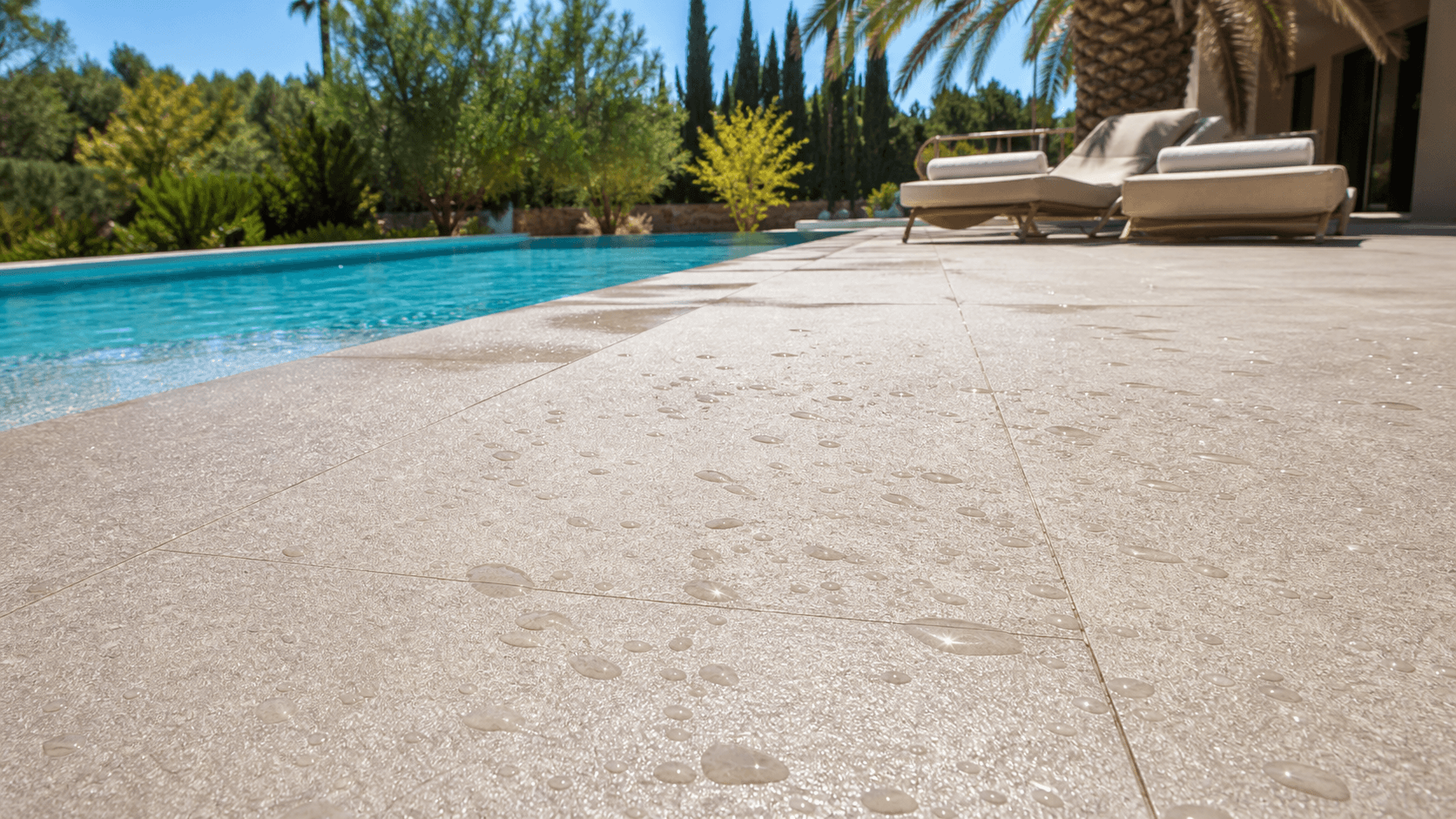
Outdoor space with a renewed pool
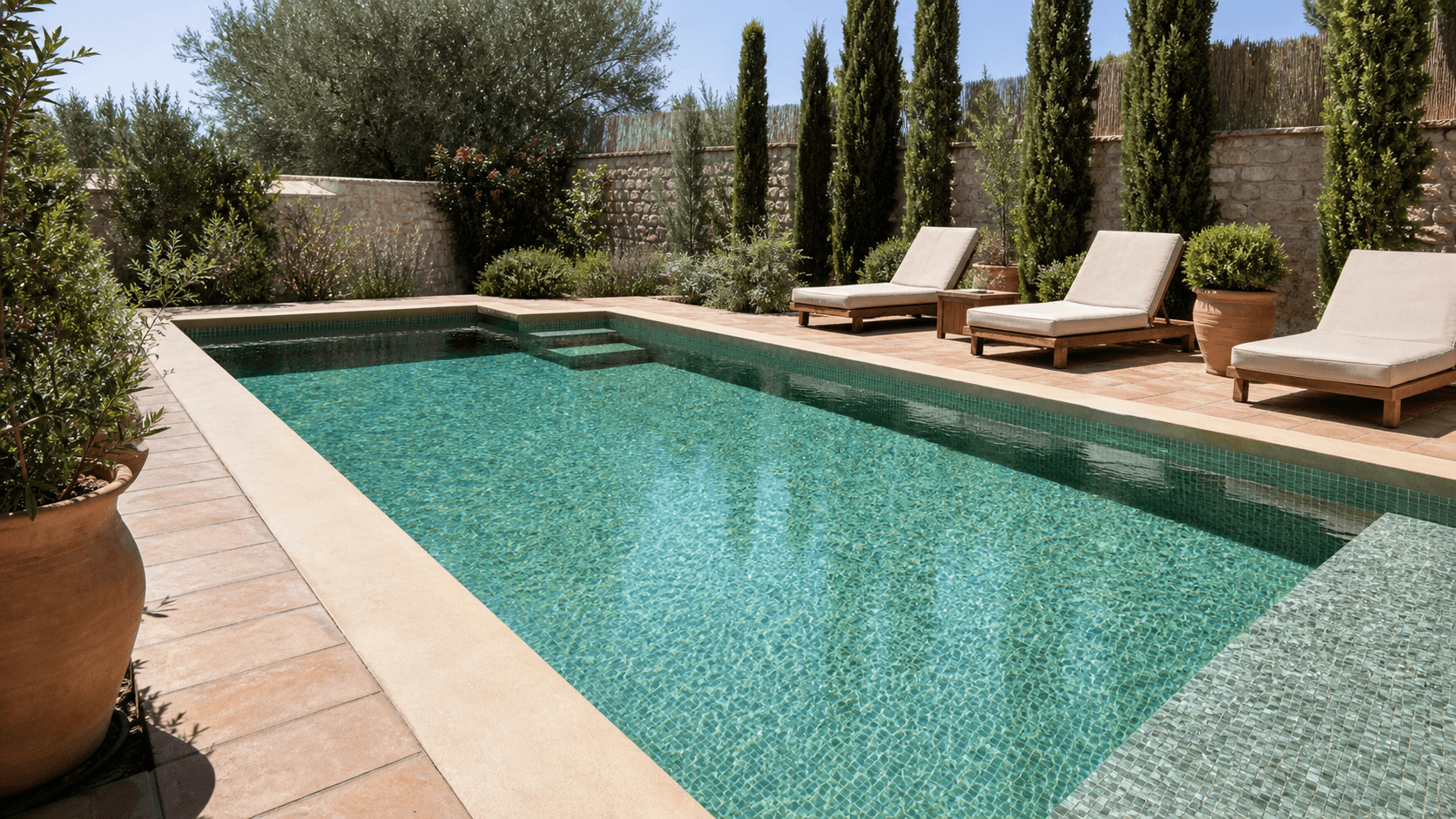
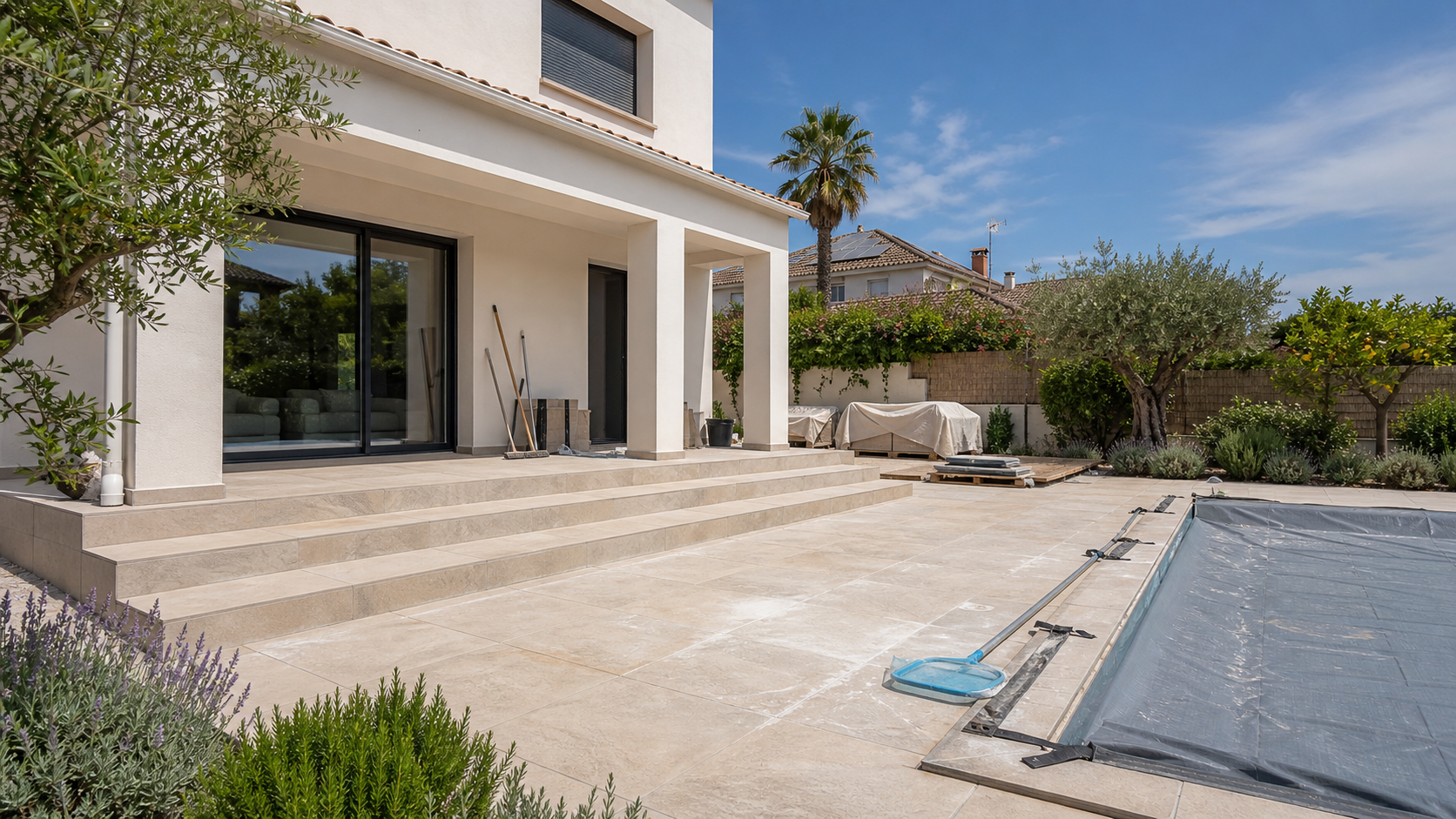
The pool surroundings renewed at the same time as the interior work: shell waterproofed, non-slip paving around it and a porch under a timber pergola. The terrace floor was unified with the interior so there is no visible transition.
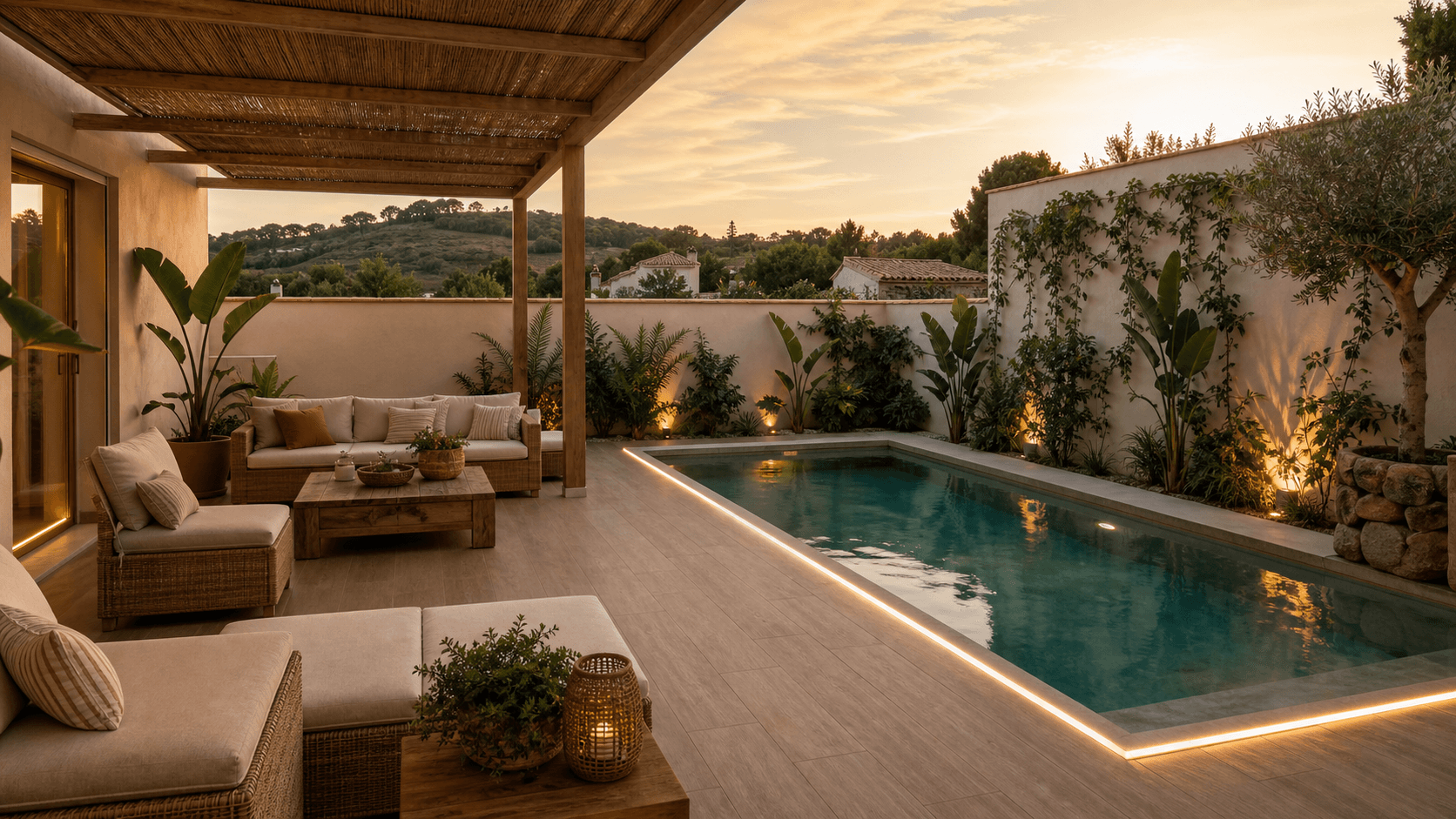
Porch and outdoor daytime area
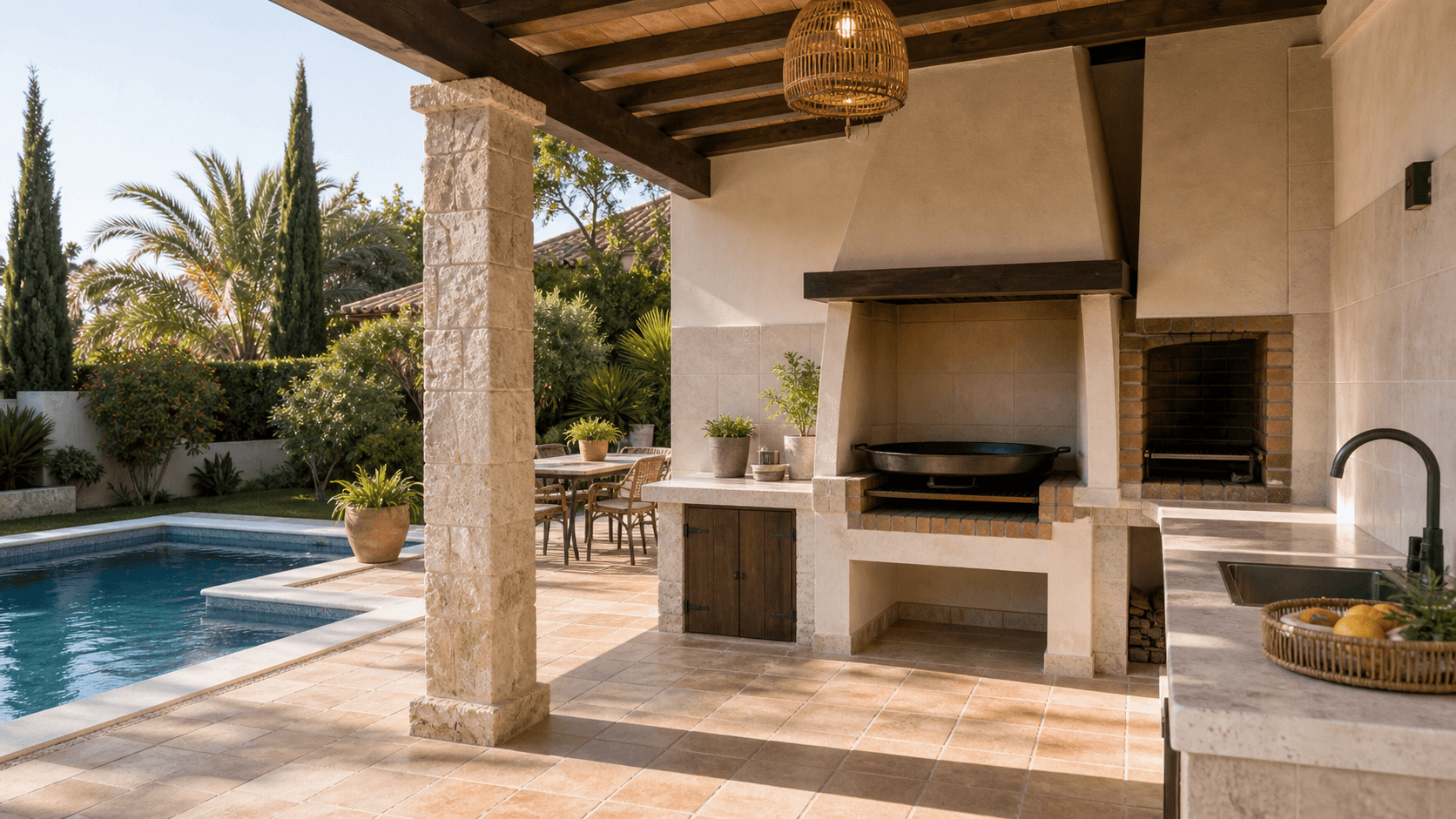
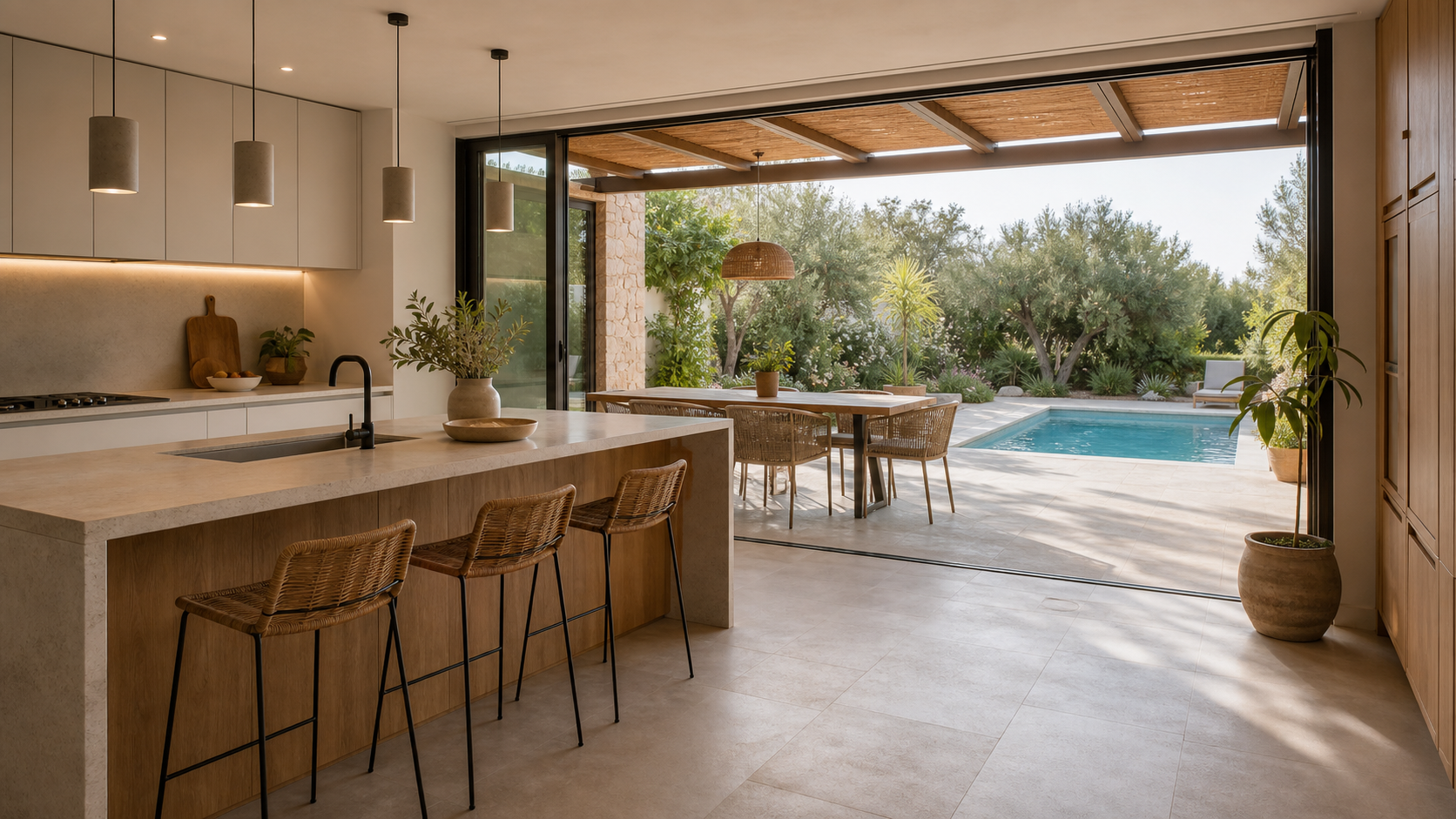
An open-air daytime area built under a pergola with timber beams, tied to the living room through wide openings. The family gained an outdoor room they use most of the year, with shade and a clear run out to the garden.
These are the house types we work on around here. There are more of them, room by room, in our projects.
08 Quality levels
Materials and finishes for a villa
We steer you towards materials that earn their place — not only how they look, but how they last and how little they ask of you in a house this exposed to the weather.
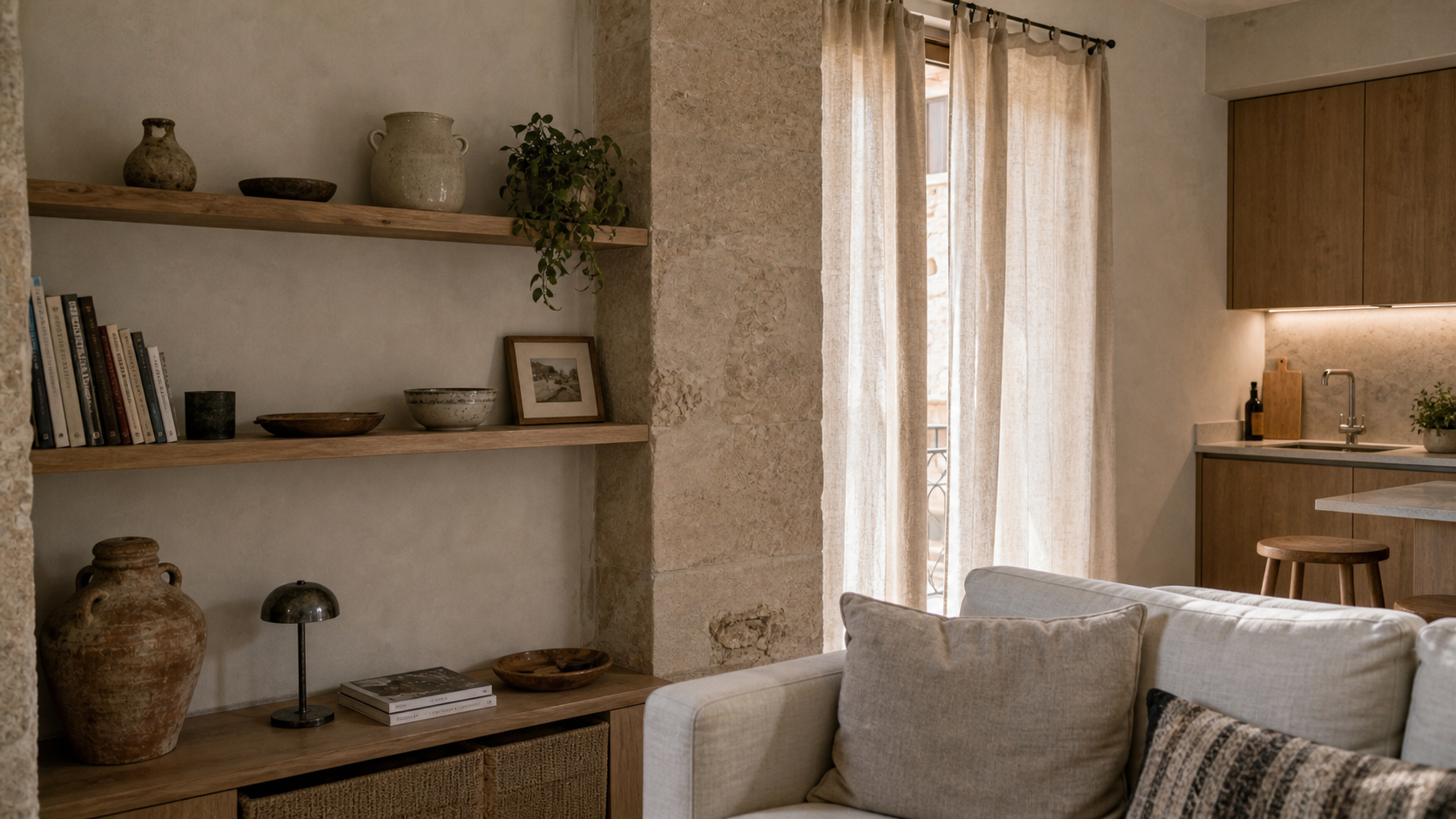
Stone and wood
Natural stone cladding, treated timber beams and pergolas: the Mediterranean language that ages best on a villa.
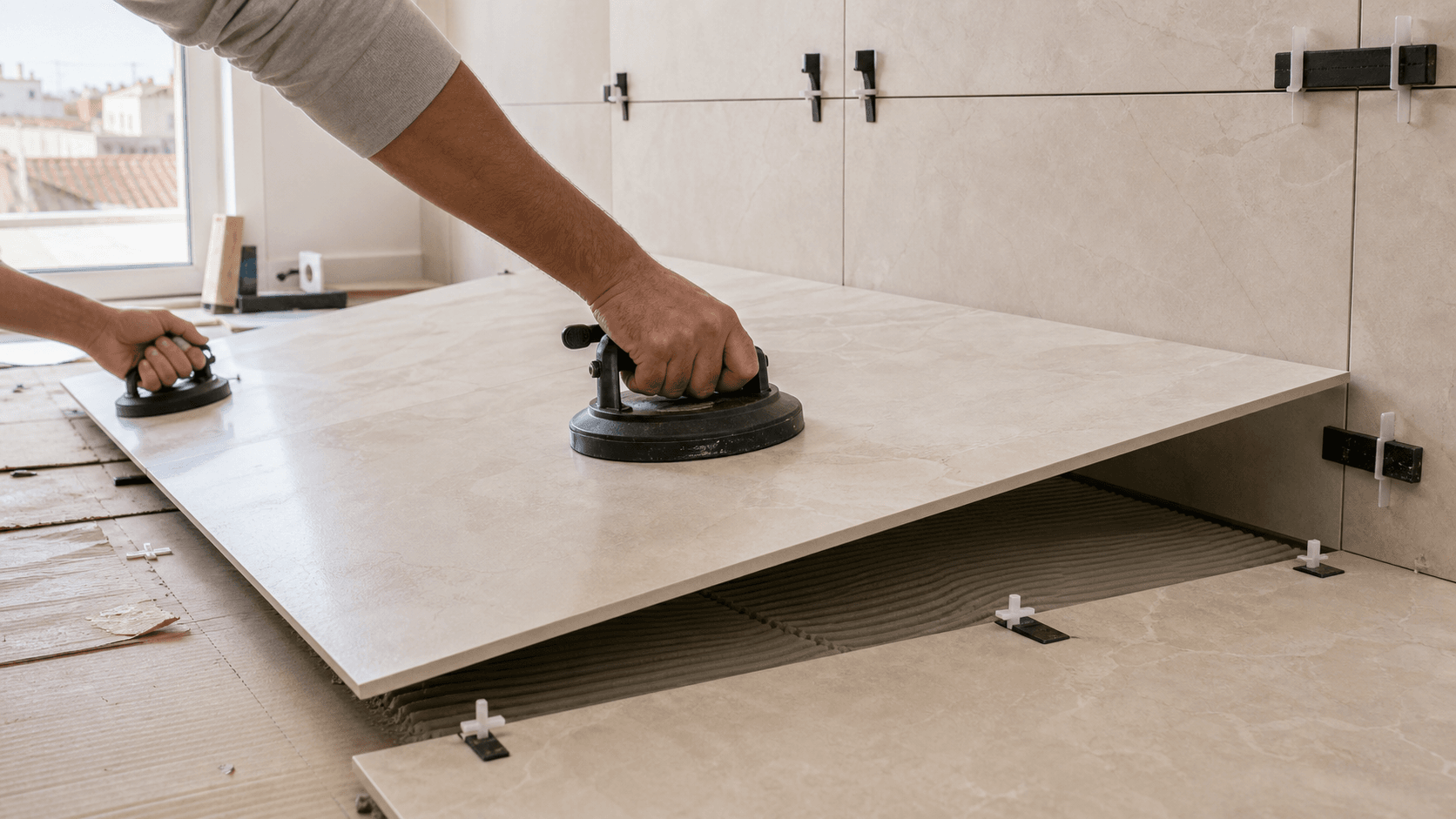
Continuous flooring
Large-format porcelain rated for indoors and out, carrying the living-room floor to the terrace without changing material.
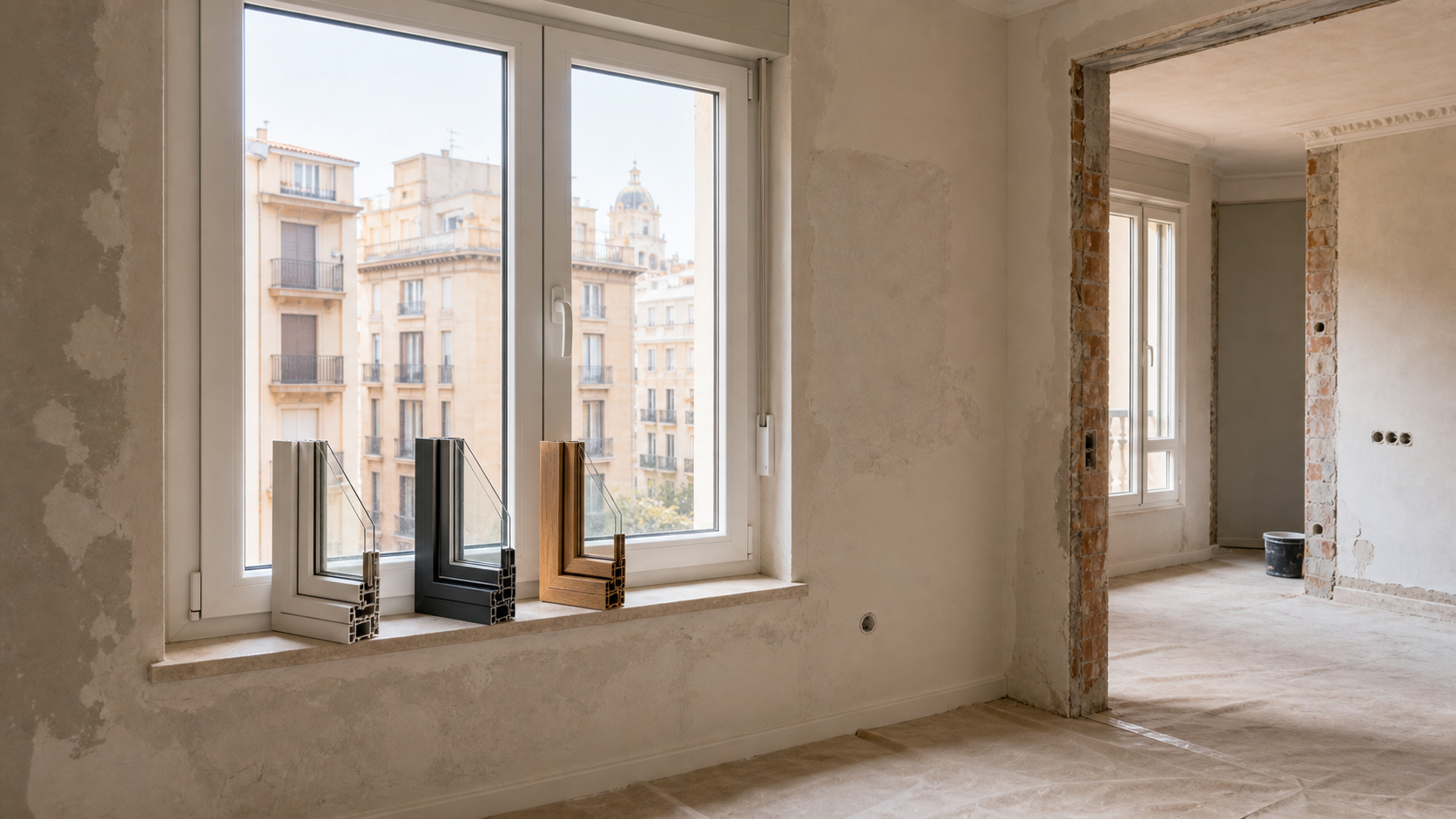
Joinery and openings
Large windows and sliding doors with a thermal break: more light, better insulation and a proper run out to the garden.
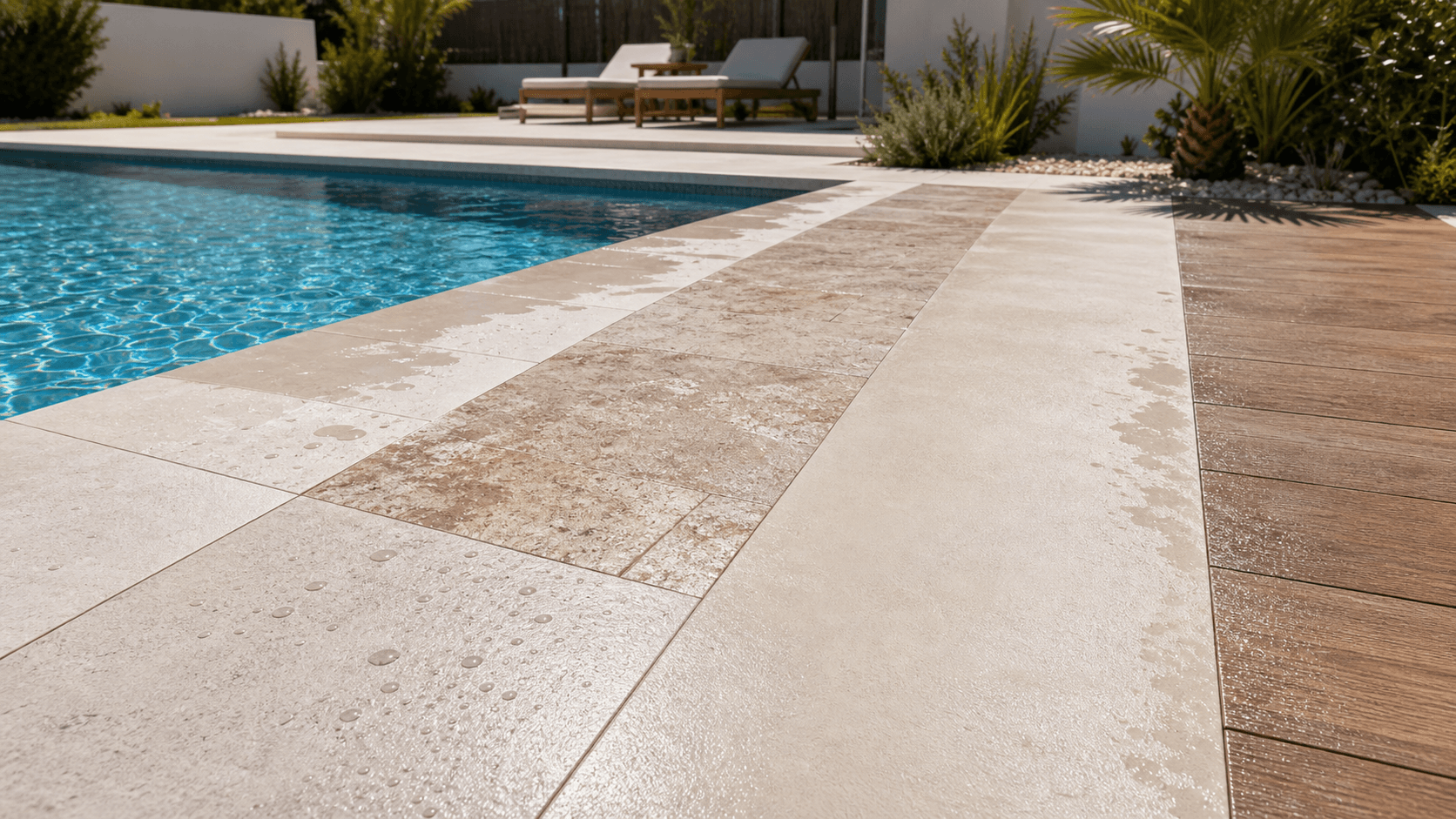
Outdoors and pool
Non-slip paving, pool shells finished in porcelain or glass mosaic, and poolside areas laid out for everyday use.
Heat pump and climate
Air-source heat pump, underfloor heating and ducted air for a large house that stays comfortable all year without punishing bills.
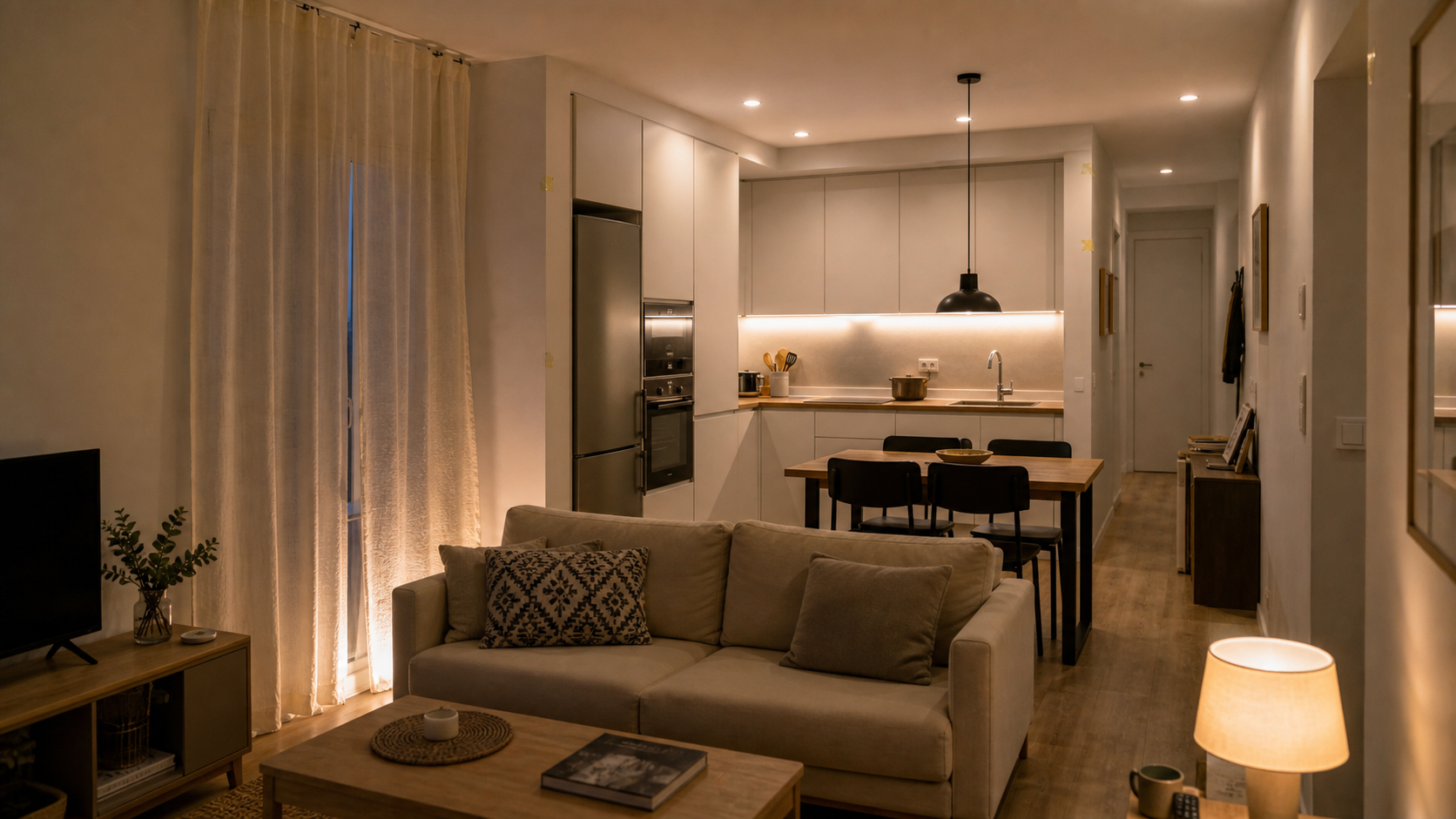
Lighting
Layers of light indoors and out — general, task and ambient — so the villa looks right at any hour of the day.
More than looks
The villa that also saves
A villa loses more energy than a flat for a simple reason: far more of it touches the outside. Four façades, its own roof and a great deal of glass. You feel that on the bill in January and again in July, and it is also the largest single improvement available to you. A renovation is the moment to take it, because the house is already open.
Reinforcing the insulation on façade and roof, swapping the joinery for thermal-break frames with double glazing, and replacing an old boiler with an air-source heat pump and underfloor heating brings the running cost down in a way you notice. In a detached house, with that many more square metres to heat and to cool, what it adds up to over the years is on a different scale to a flat.
It is not about spending more. It is about spending where it shows: in comfort, in quiet and in a smaller bill. We will tell you which of those improvements are worth doing in your villa, and which of them can safely wait for a second phase.
09 Before you start
Mistakes worth avoiding when renovating a villa
- Planning the interior and the outdoor space separately, then digging the same trench twice.
- Renovating inside without first checking the roof and the façade for leaks.
- Leaving the pool and the garden until the end without allowing for them in the project.
- Trimming the insulation and the waterproofing, which are the two most expensive things to redo.
- Hiring separate trades with nobody responsible for making inside and out agree.
- Forgetting that the pool almost always needs a permit of its own from the town hall.
Gallery
Villas renovated by Batecs
Interior, outdoor space and pool on the same houses. Open any image to see it full size.
Coverage
The towns where we renovate villas
We are on these estates most weeks: La Eliana, where we are based, La Cañada, San Antonio de Benagéber, Bétera and the rest of the Camp de Túria, plus Valencia city and l’Horta. Our base sits in the middle of the school belt, so a villa there is ten minutes away rather than an hour.
The estates where we work most weeks
Also within twenty minutes of the yard
Straight answers
Frequently asked questions about villa renovations
How much does it cost to renovate a villa in Valencia?
As an indicative market reference, the interior and the building envelope usually land between €700–€1,100 per m² for a mid-range renovation and €1,100–€1,700 per m² or more for a high-end project with home automation, a heat pump and fine materials. The outdoor space — terrace, garden and pool — is quoted separately. As a worked example, a 200 m² mid-range villa would be somewhere around €140,000–€220,000 for interior and envelope, with the outdoor space on top. After the site visit you get a fixed written quote, itemised, and that is the figure you pay.
I have just bought a 1970s–80s villa. What will need doing?
Almost always the same short list: the consumer unit and the wiring, insulation on the façade and the roof, the external joinery, the waterproofing on the terrace or flat roof, and the original pool — the pipework and the plant far more often than the shell itself. Beyond those five, it depends entirely on how the house has been looked after, and nobody can tell you from a photograph. We come out, look at those five things, and a figure goes on paper afterwards rather than before.
Do you handle the pool and the outdoor space too?
Yes, and it is one of the things we are known for. Pool, terrace, porch and garden are coordinated with the interior work and sequenced so nothing is dug twice or lifted after it has been laid. The outdoor space is a separate line inside the same quote, so you can see exactly what it costs. The build itself is described on our concrete pool construction page.
Why renovate the interior and the outdoor space as a single project?
Because a villa’s services, access routes and paving cross between inside and out. Plan the interior on one side and the pool on the other and you end up lifting a finished terrace to run a pipe, or cutting a trench across a garden planted a fortnight earlier. Designing it together avoids those overruns and delivers the indoor-outdoor flow that actually transforms the house.
How long does a villa renovation take?
It depends on the floor area and the scope, but a medium-sized villa with interior and outdoor work usually runs 12–20 weeks. The proposal comes with a phased programme and dates we can keep to, and we sequence interior, envelope and outdoor space so the whole house is handed over together rather than in instalments.
Do I need a licence to renovate the villa and for the pool?
Most villa renovations need either a building licence or a responsible declaration, depending on the scope and on the town hall, and the pool almost always goes in on a file of its own. We prepare and submit the paperwork and tell you what each document says and roughly how long it typically takes. Requirements vary from one town hall to the next, so the specifics are always confirmed with yours.
Can I enclose my terrace or build an extension?
Usually yes, but it is a different kind of job. Enclosing a terrace or adding a room changes the built volume of the house, so it goes to the town hall on its own file rather than riding along with the renovation, and it needs drawings from a technician. One honest warning: obtaining the licence and finishing the work does not by itself update your title deed or the Land Registry entry. That is a separate procedure, and it is worth raising with your lawyer before you start.
What happens if the previous owner did work without a licence?
It is a common find on older estates: a porch closed in, a room added under the terrace, a pool that never appeared on any file. What matters first is what the work actually is and when it was done, and that is assessed by a technician — an aparejador (building surveyor) or an architect — who inspects it and reports. From there the town hall decides what can be regularised and what cannot. We are builders, not lawyers: we will tell you plainly what we can see on site and put you in front of the right technician, but the legal side is theirs.
Can I live in the villa during the works?
It depends on the scope. In a full renovation of the whole house it is rarely comfortable, but a villa is easier than a flat: you can work floor by floor, keep part of the house liveable and leave the outdoor space until the end. We look at that with you on the visit and plan the phases around it.
Do you work on the estates around La Eliana and Bétera?
Yes. We renovate villas most weeks on the estates of La Eliana, where we are based, and in La Cañada, San Antonio de Benagéber, Bétera, Godella, Rocafort and Llíria, as well as in Valencia city. We know the house types of each estate, the way the plots were laid out and how each town hall handles this kind of work.
How do I make the villa cooler in summer and cheaper to run?
Four things, in this order: insulation on the roof and the façade; external joinery with a thermal break and double glazing; real shade where the sun lands in the afternoon, whether that is a pergola, a porch or planting; and then an air-source heat pump with underfloor heating or ducted air. A villa loses far more than a flat because so much of it touches the outside, which is exactly why the gain is bigger here. We will not put a percentage on it, because the honest answer depends on your house — we will tell you which of the four is worth doing first in yours.
Do you take on high-end villas with home automation and premium materials?
Yes. Home automation, heat pump, underfloor heating, natural stone, joinery made to measure and interior design drawn for the house. The difficulty in those projects is never the material: it is having eight trades on site at once and still handing over a flawless finish. That is what the single site manager is there for.
What guarantee does the villa renovation carry?
We answer for the work carried out and for the materials, under current Spanish law. And because the people on site are our own team rather than a rotating cast of subcontractors, anything that needs adjusting afterwards — inside or out — we come back and sort ourselves, instead of passing you on to somebody else.
Which areas do you renovate villas in?
Valencia city, La Eliana and the towns of the Camp de Túria and l’Horta. Most of our villa work lands in La Cañada, San Antonio de Benagéber, Bétera, Rocafort and Godella, and we also build in Llíria, La Pobla de Vallbona, Paterna, Riba-roja de Túria, Moncada and Alboraya.
In short
A villa renovation in Valencia treats the detached house as one job — interior, façade, roof, terrace, garden and pool — under one site manager and one fixed written quote. We build it with our own in-house team, in the order that stops you paying for the same work twice, and hand it over turnkey, managed in English from quote to handover.
As an indicative market reference the interior and envelope sit between €700–€1,100 per m² (mid-range) and €1,100–€1,700 per m² (high end); the outdoor space and the pool are quoted separately. The real figure for your villa comes after the site visit.
Related projects
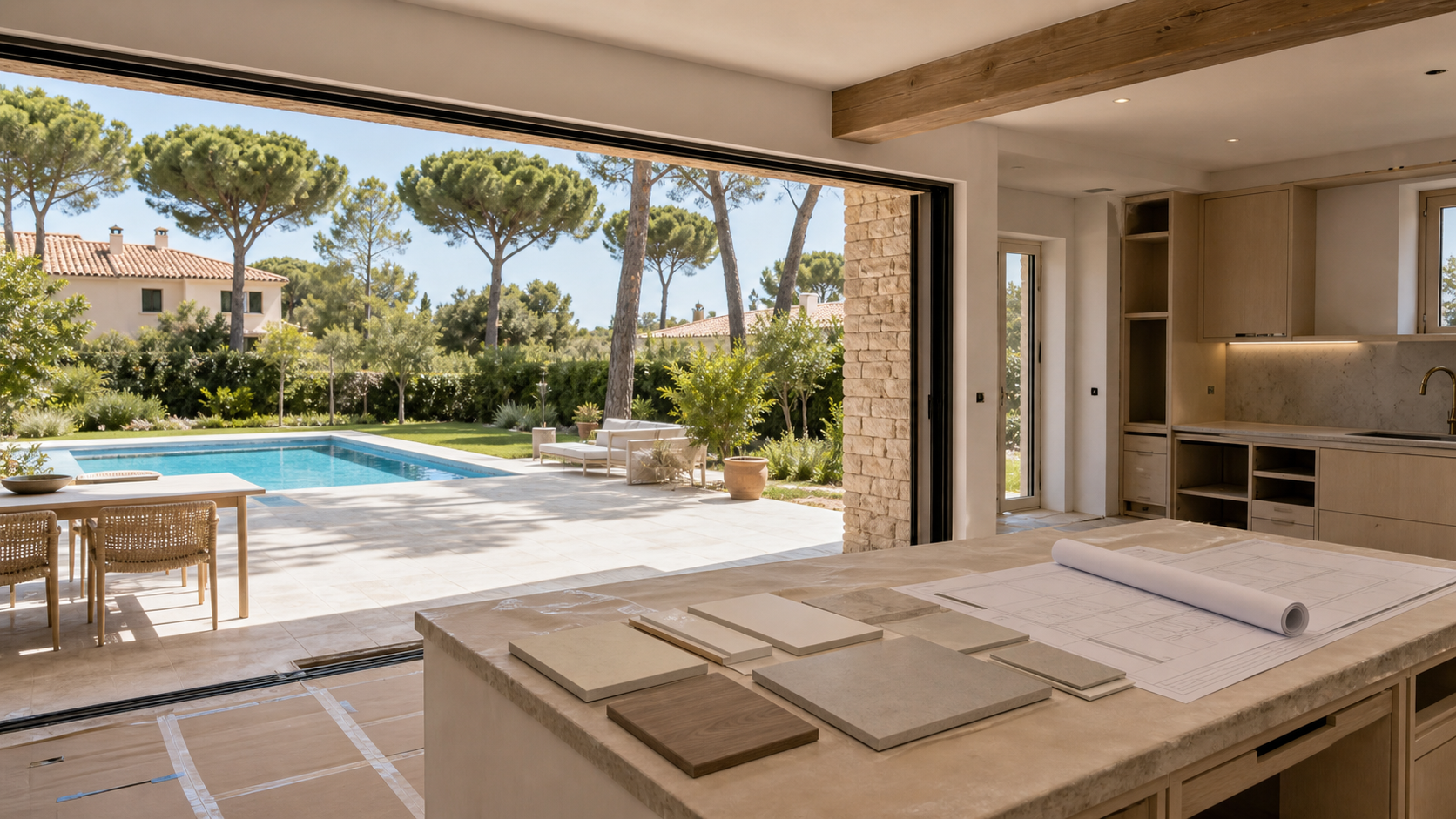
Villa projects we have finished nearby
Open any of them to see how the job was put together.
Let’s talk about your villa
Let us look at the whole house, inside and out
Send us the floor area, the year it was built and what is bothering you most. We will come and see it, and you will get one quote for the house, the terrace and the pool — not three. We reply within 24–48 hours, with no obligation.
+34 632 224 555+34 962 742 447info@batecs.es
Book my site visitBesides villas we take on full home renovations, concrete pools, kitchens, bathrooms, partial renovations and interior design. There is finished work to look through in projects, and if your house sits on one of the estates, in La Cañada, San Antonio de Benagéber and Bétera.