Kitchens · Valencia
Kitchen renovations in Valencia, with bespoke design and a fixed price
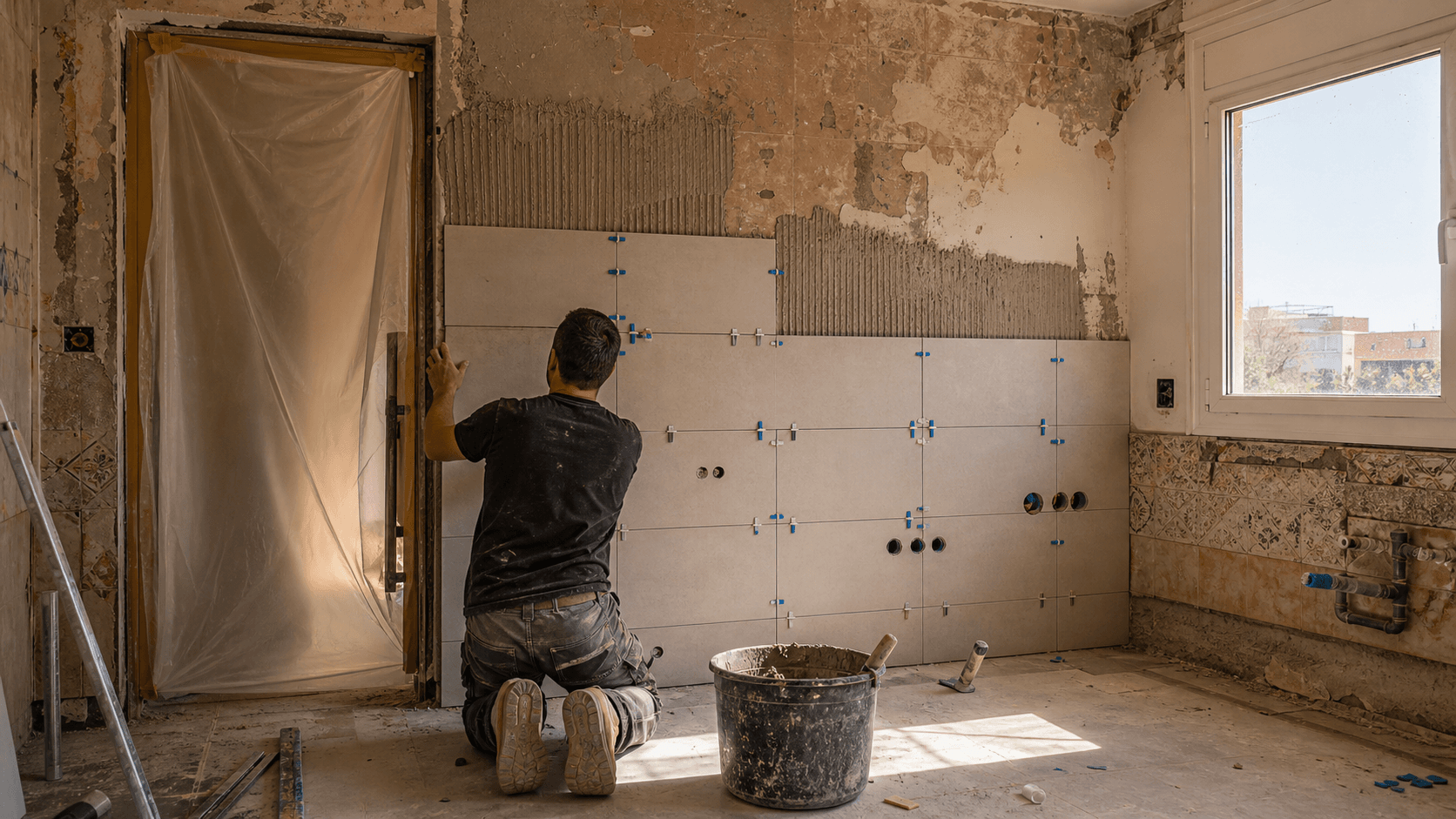
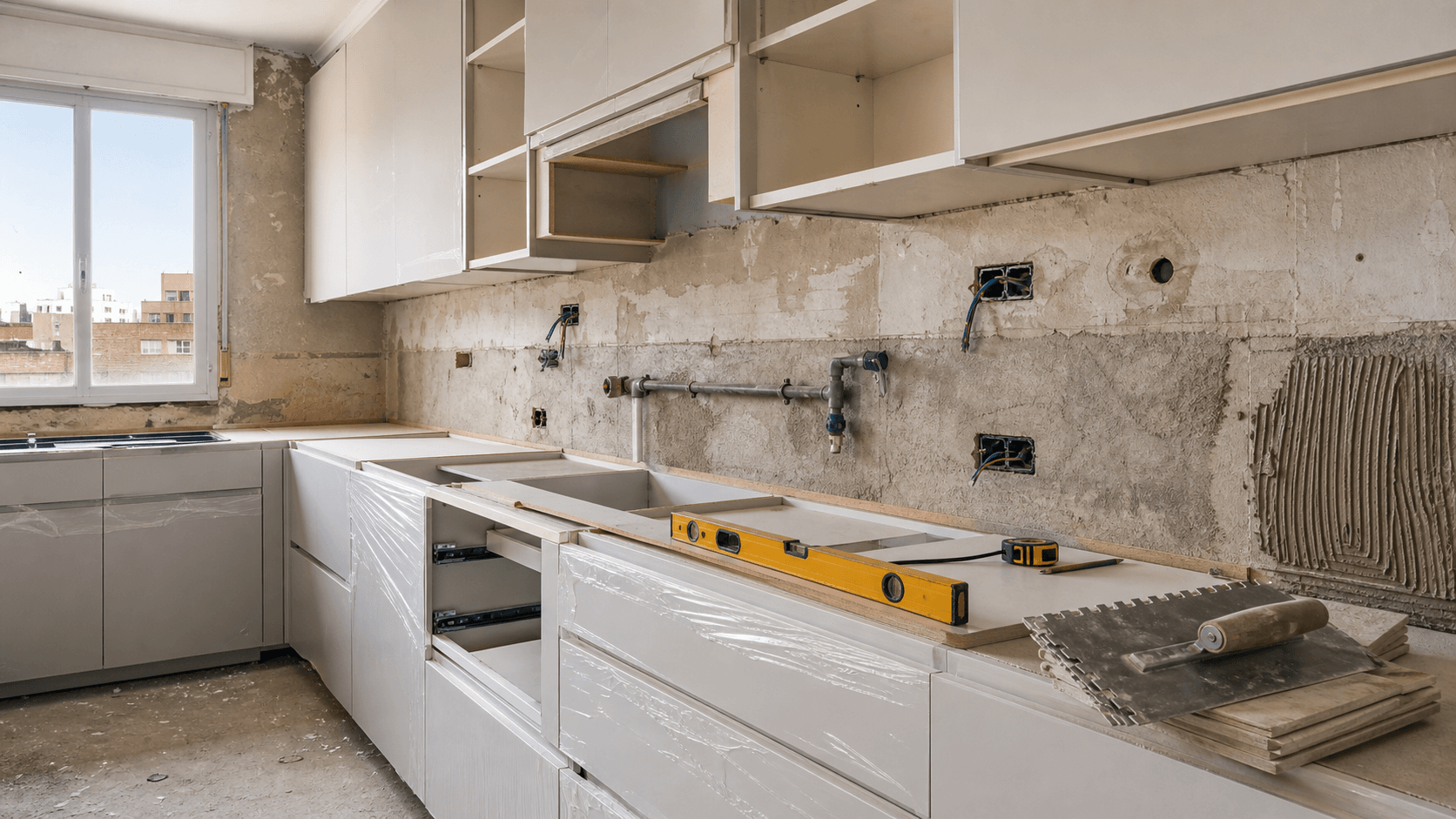
The closed 1980s kitchen, opened up and rebuilt: layout, units, worktop, appliances and services under one site manager, on a price agreed in writing before we start. Batecs has been building around La Eliana for 35+ years, and the whole job is planned and explained to you in English — including the days you will be without a hob.
Price my kitchenCall · +34 632 224 555The kitchen is the room you use most and the one you can least afford to lose for a month. It is also the most technical room in the house: plumbing, electrics, gas, extraction, cabinetry and appliances all land in the same few square metres. When one of these jobs goes wrong it is almost never a badly hung door. It is a lack of coordination between trades.
Kitchens have been part of our work here for more than 35 years, from flats in the city centre to villas out across the Camp de Túria, and we go about them the opposite way round to the usual arrangement. Instead of you chasing a plumber, an electrician, a kitchen showroom and a tiler who never speak to each other, one site manager sets the order of the phases, brings each trade in on the right morning and keeps you in the picture. You choose the layout and the finishes. We answer for the room being handed back when we said, at the price we agreed, with the fewest possible days without a working kitchen.
Most of the kitchens we rebuild belong to people who are living in the house while we do it, so the plan matters as much as the design. Whether you want to open the kitchen into the living room, get more out of a small one or replace the lot with materials that last, this is the service that holds it together: design, services, units, worktop and a kitchen handed back ready to cook in. If the work runs past the kitchen door, look at our full home renovations; if it is strictly this one room, a partial renovation is the tidier way to do it.
01 Everything under one contract
What a kitchen renovation includes
One project, from the first skip to a room you can cook in — not a run of separate fixes booked in whatever order the trades happen to be free.
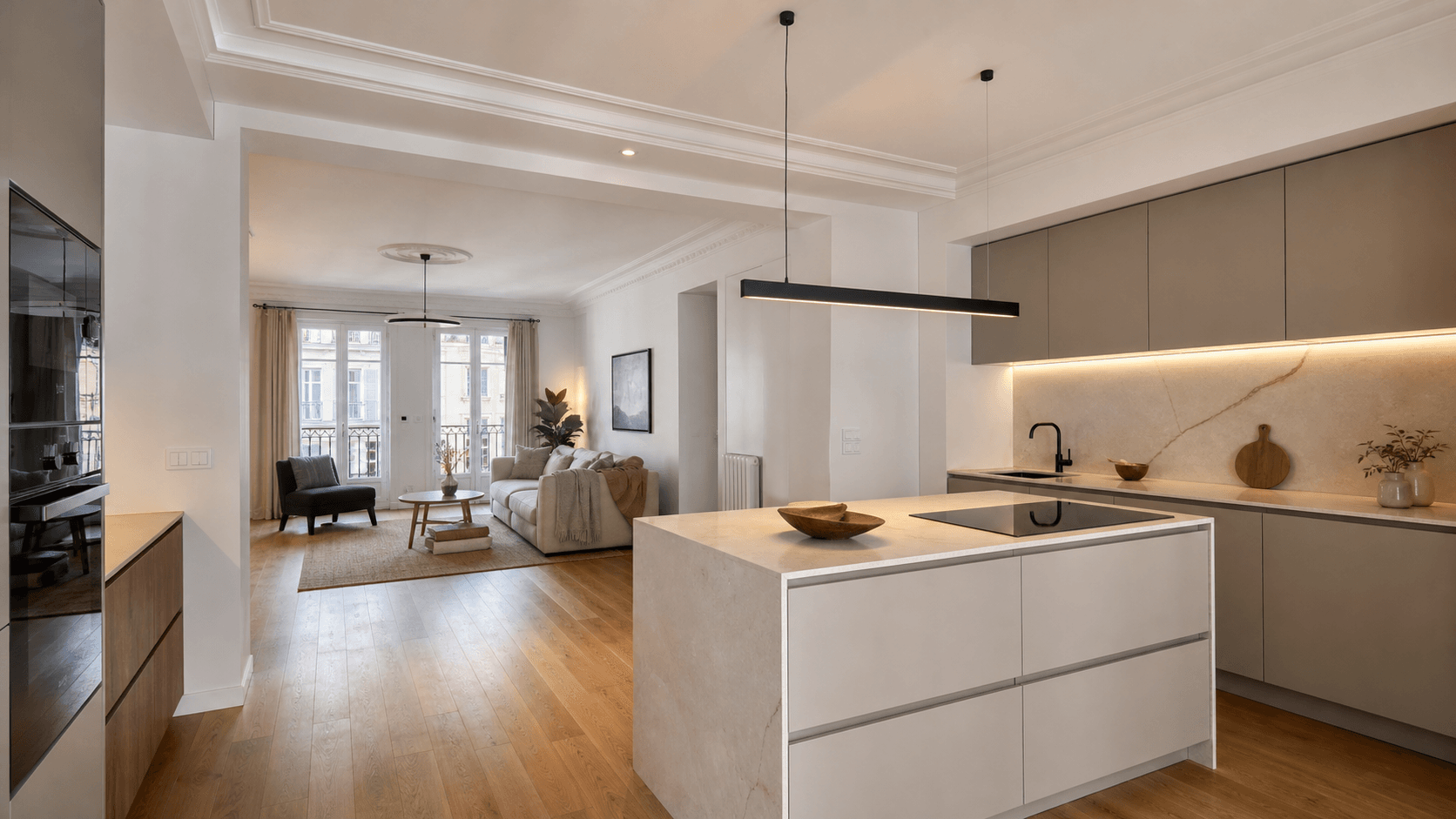
Layout and building work
We move the kitchen around — or take down the wall to the living room — to gain worktop, storage and daylight, with the structural side checked before anything comes out.
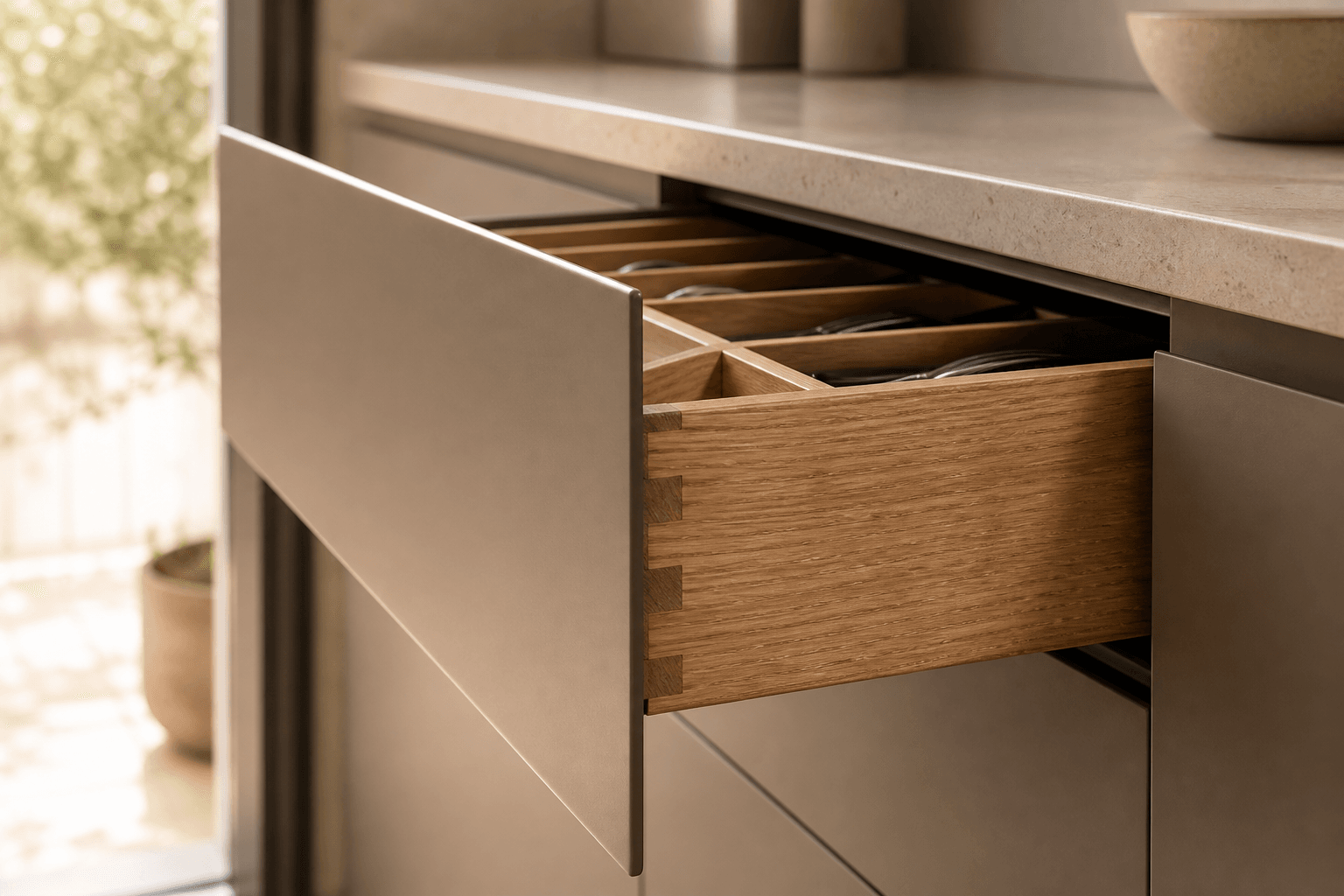
Bespoke units
Cabinetry built to your measurements, with runners and hinges that survive daily use, and a layout drawn around the way you cook.
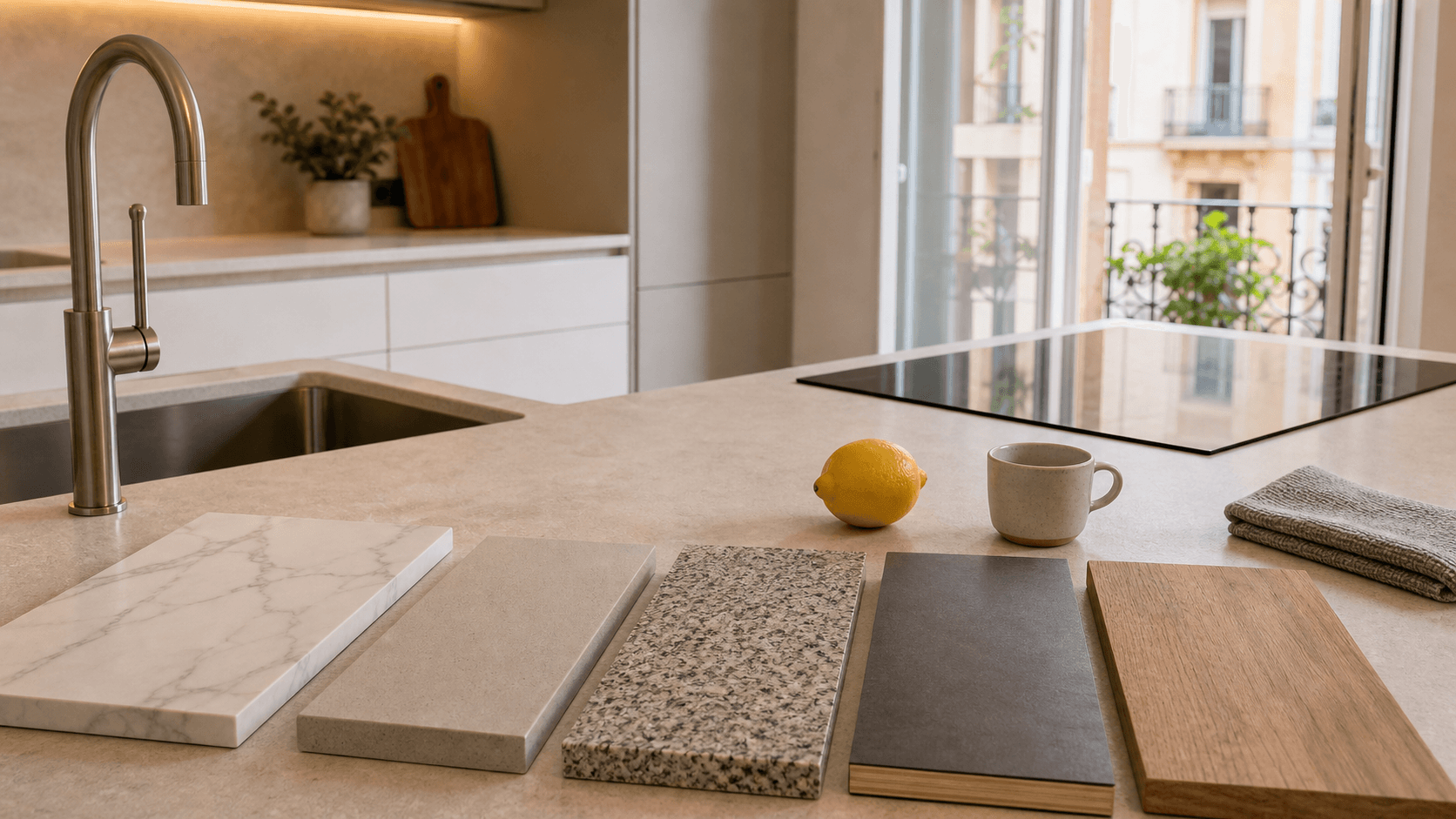
Worktops and splashbacks
Quartz, Dekton, porcelain or granite. We match the worktop and the splashback to how you cook, how much cleaning you want and what you have to spend.
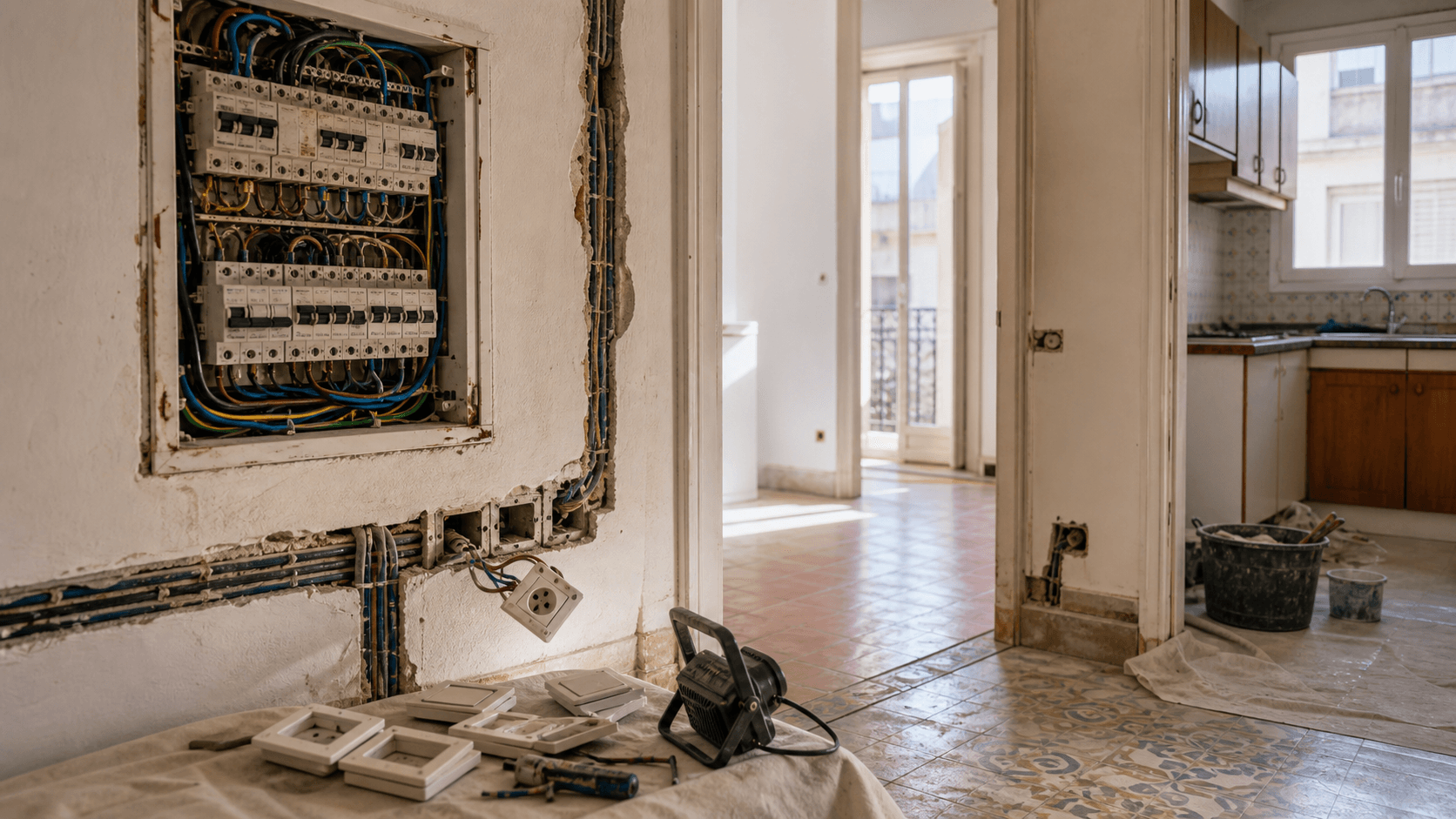
Full services
New plumbing, electrics and extraction, with the water and power points put where you will use them, brought up to the standard the room now has to meet.
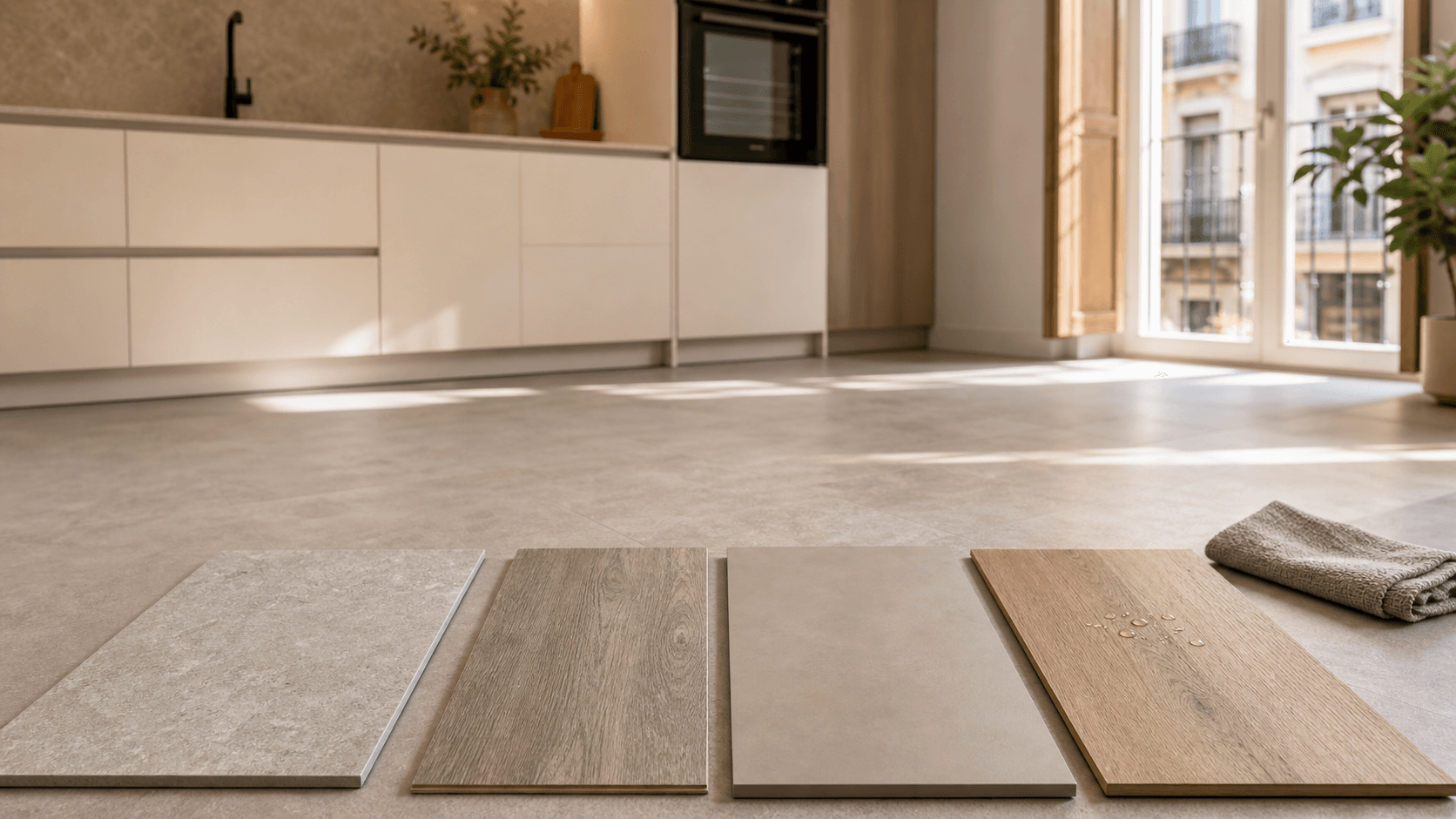
Flooring and tiling
Floors and wall finishes that take spills, heat and traffic, chosen so the kitchen sits comfortably with the rest of the house rather than shouting at it.
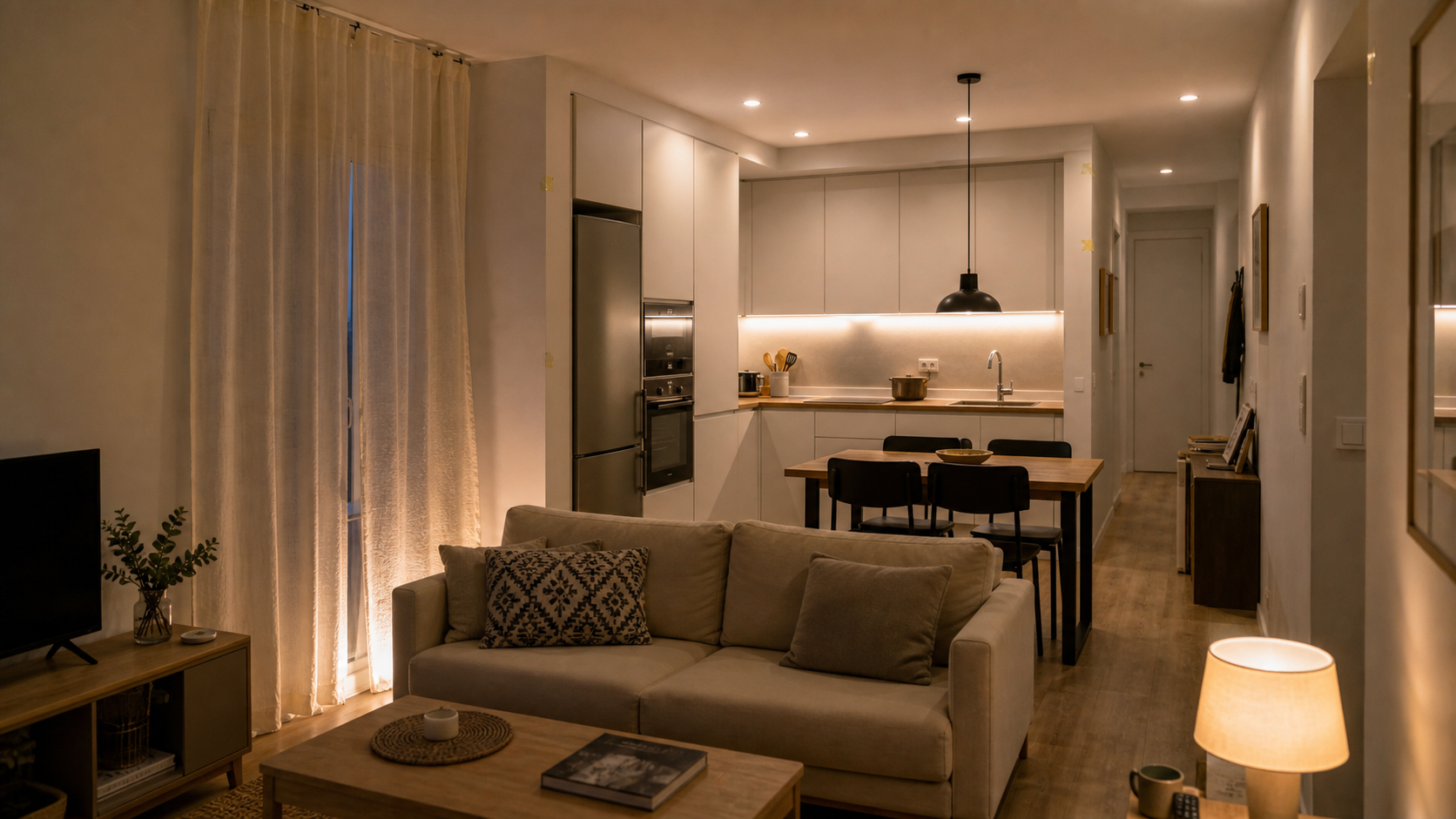
Lighting and details
Ambient, task and accent light, plus the small details — a plinth, a socket where you need it, a soft-close drawer — that separate a fitted kitchen from a good one.
Doing the bathroom in the same run? There is a page for bathroom renovations, and taken together the two rooms usually make one job rather than two. Where the whole house needs a scheme, that is interior design.
By layout
Kitchen layouts: L-shaped, U-shaped, island, peninsula or open-plan diner
There is no perfect layout for every home. It depends on the square metres, on where the light comes in and on how you cook. These are the ones that work best in the flats and villas around Valencia, and when each is worth choosing.
L-shaped kitchen
The most forgiving choice in a flat. It uses two walls in a corner, keeps a decent work triangle between sink, hob and fridge, and leaves floor free for a table. It suits almost any room and it is where most renovations start.
U-shaped kitchen
Three runs of worktop and a lot of storage. Worth having if you cook properly every day and the room can take it, because nothing is more than a step away. It needs width for the central passage to feel comfortable; in a narrow room it closes in.
Island kitchen
The one everybody asks for. An island buys worktop, storage and a place for people to stand while you cook. It needs clear floor on every side — 90–100 cm is the comfortable minimum — and, if it carries a hob or a sink, water, waste and power have to be run out to it under the floor. It comes into its own in open-plan rooms and in villas.
Peninsula kitchen
The answer when an island will not fit. A peninsula joins the wall at one end, marks where the kitchen stops inside an open room and doubles as a breakfast bar, without demanding clearance on four sides.
Open-plan diner kitchen
Building the eating into the kitchen itself — a table, a raised bar — is one of the most requested changes we get. It puts family life in the room and makes every metre work twice, particularly once the kitchen opens onto the living room.
02 Your kitchen
Choose your situation
Every kitchen starts somewhere different. These four cover most of what we are asked to do around Valencia, whether you moved in last month or twenty years ago. Pick the one that looks like yours.
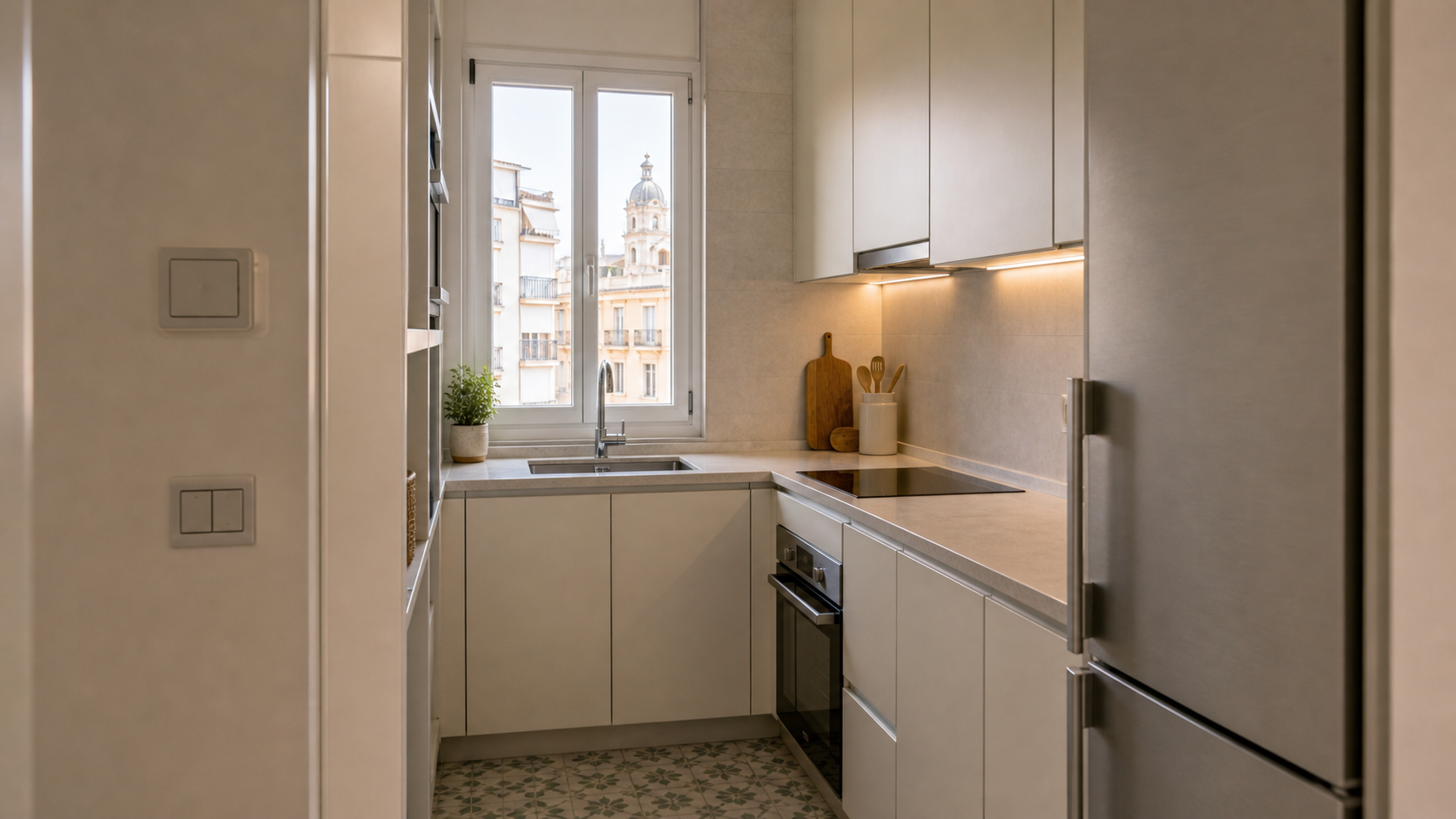
Small kitchen
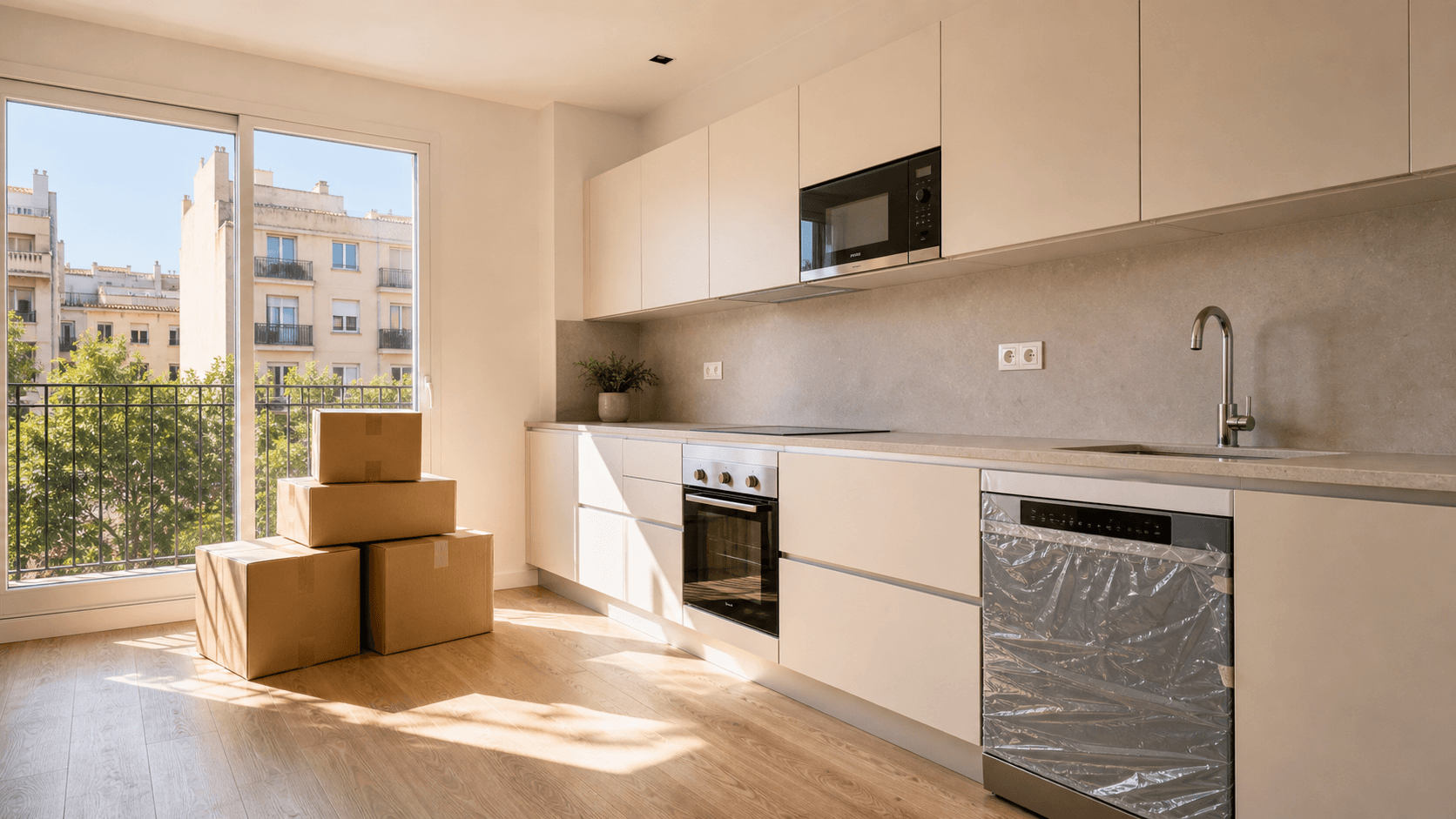
A few square metres in a flat. The job: finding storage and worktop without the room closing in on you.
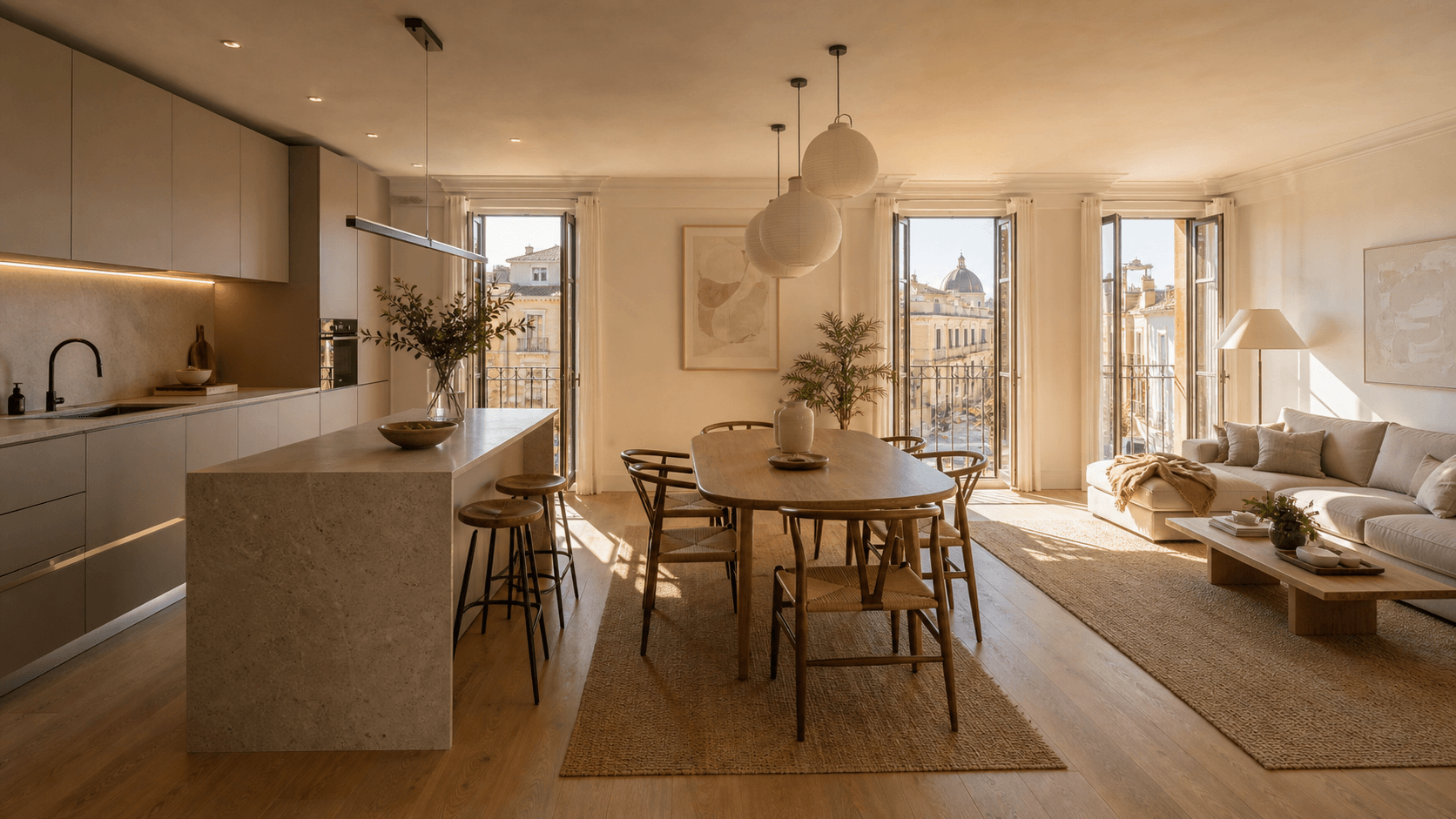
Kitchen open to the living room
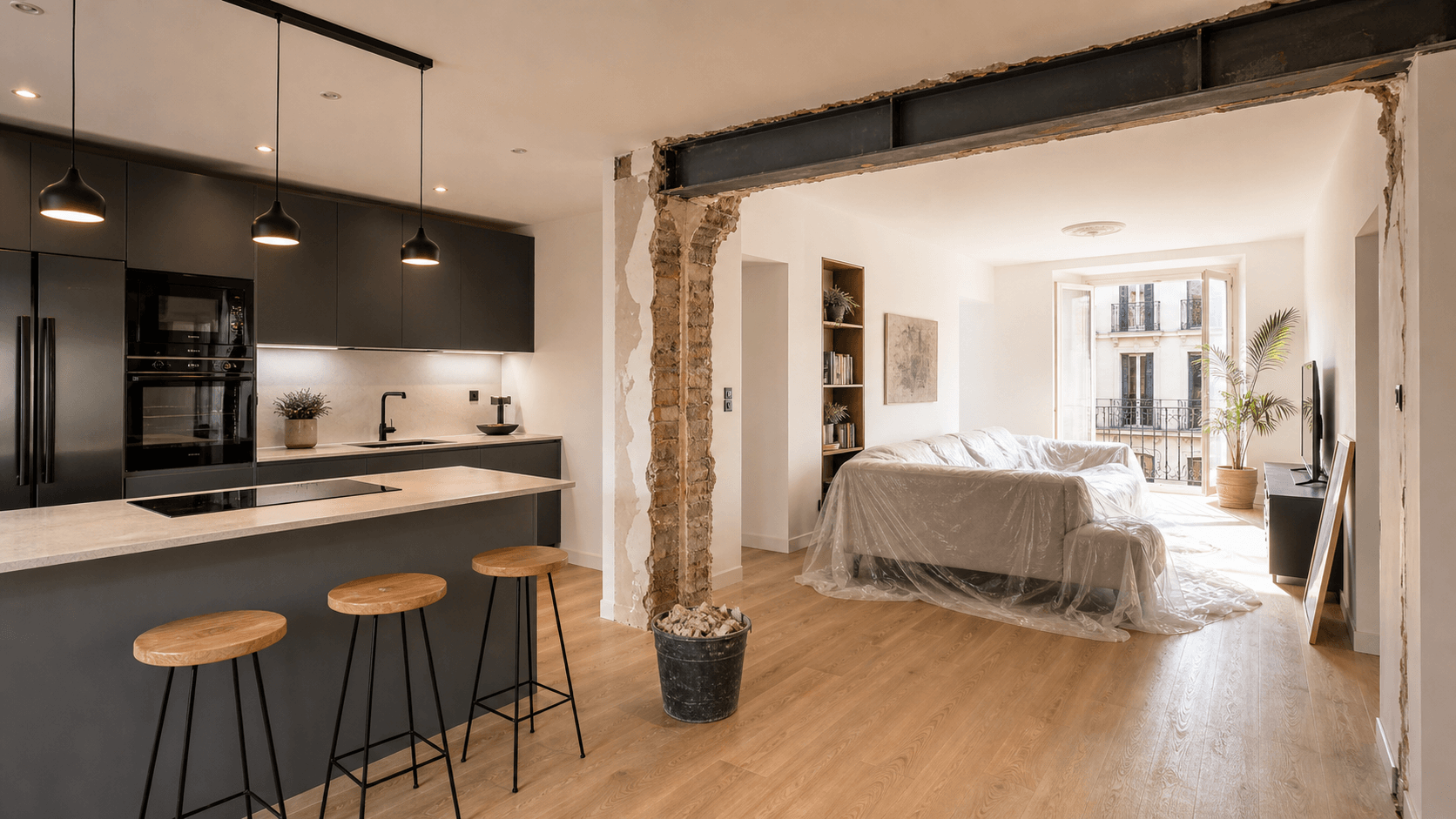
You want the wall gone and one room instead of two. The job: the light, the cooking smells and whatever that wall is holding up.
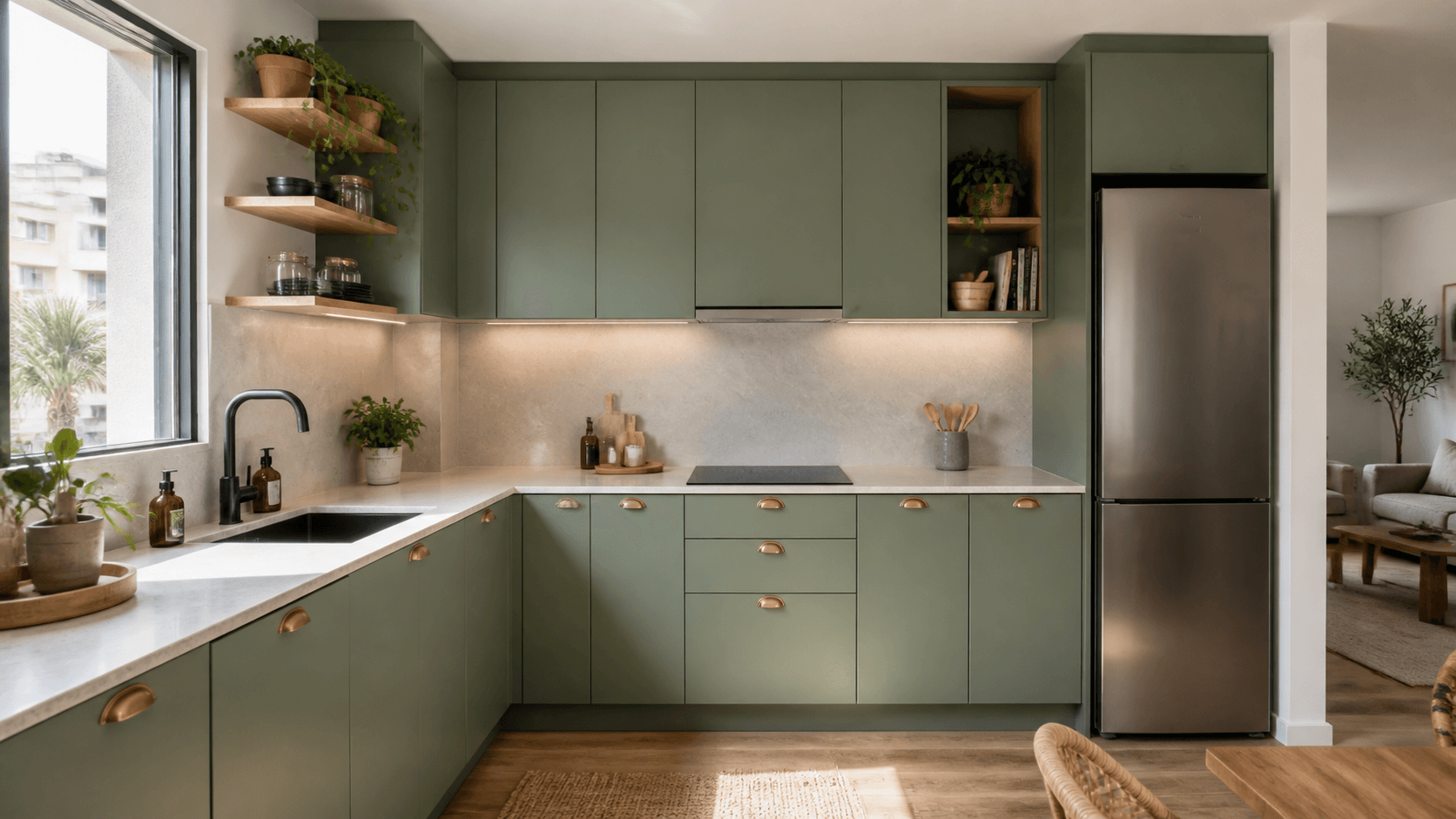
L-shaped or U-shaped kitchen
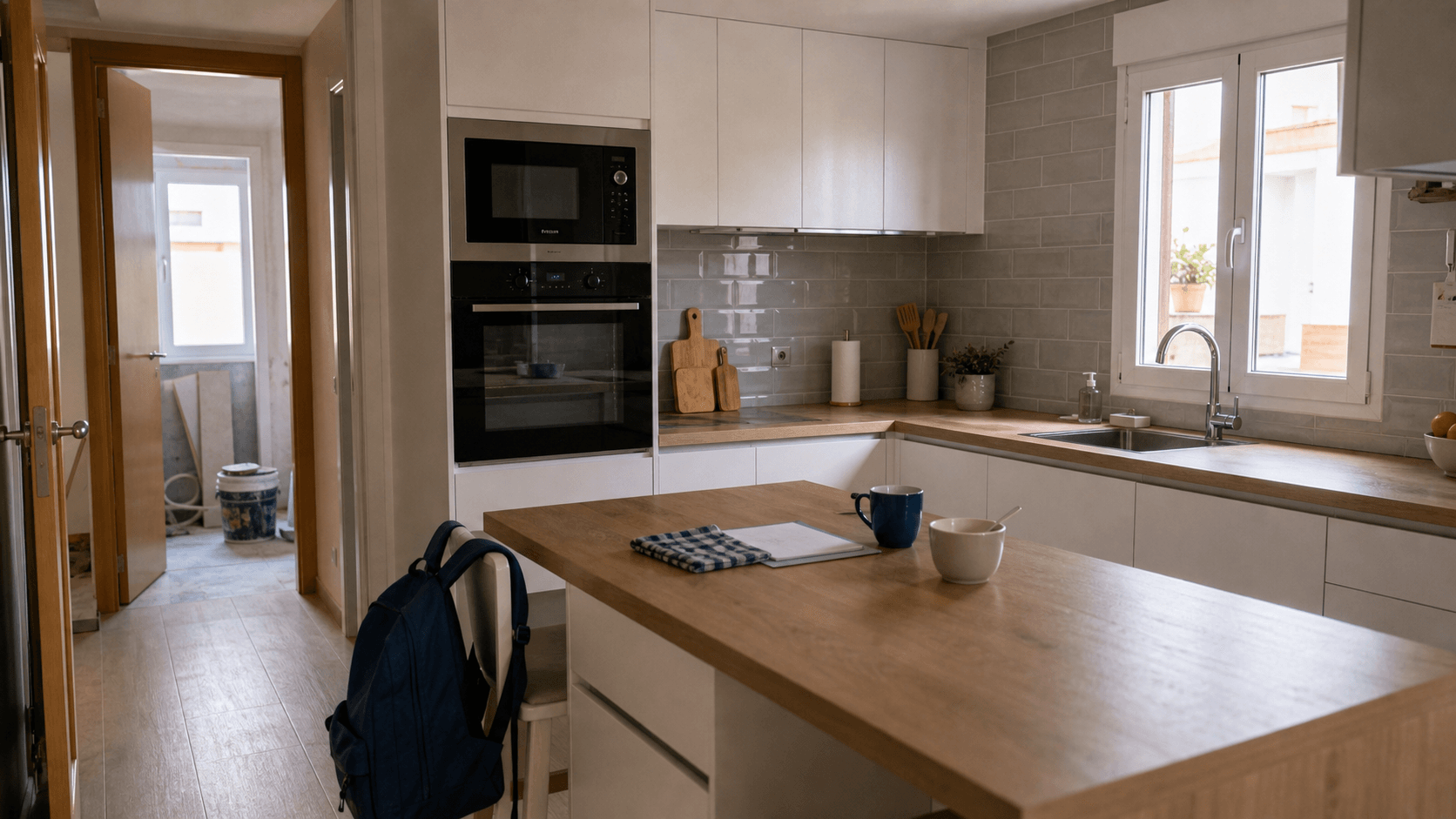
A closed kitchen stripped back and rebuilt. The job: the work triangle and squeezing real storage out of the walls you have.
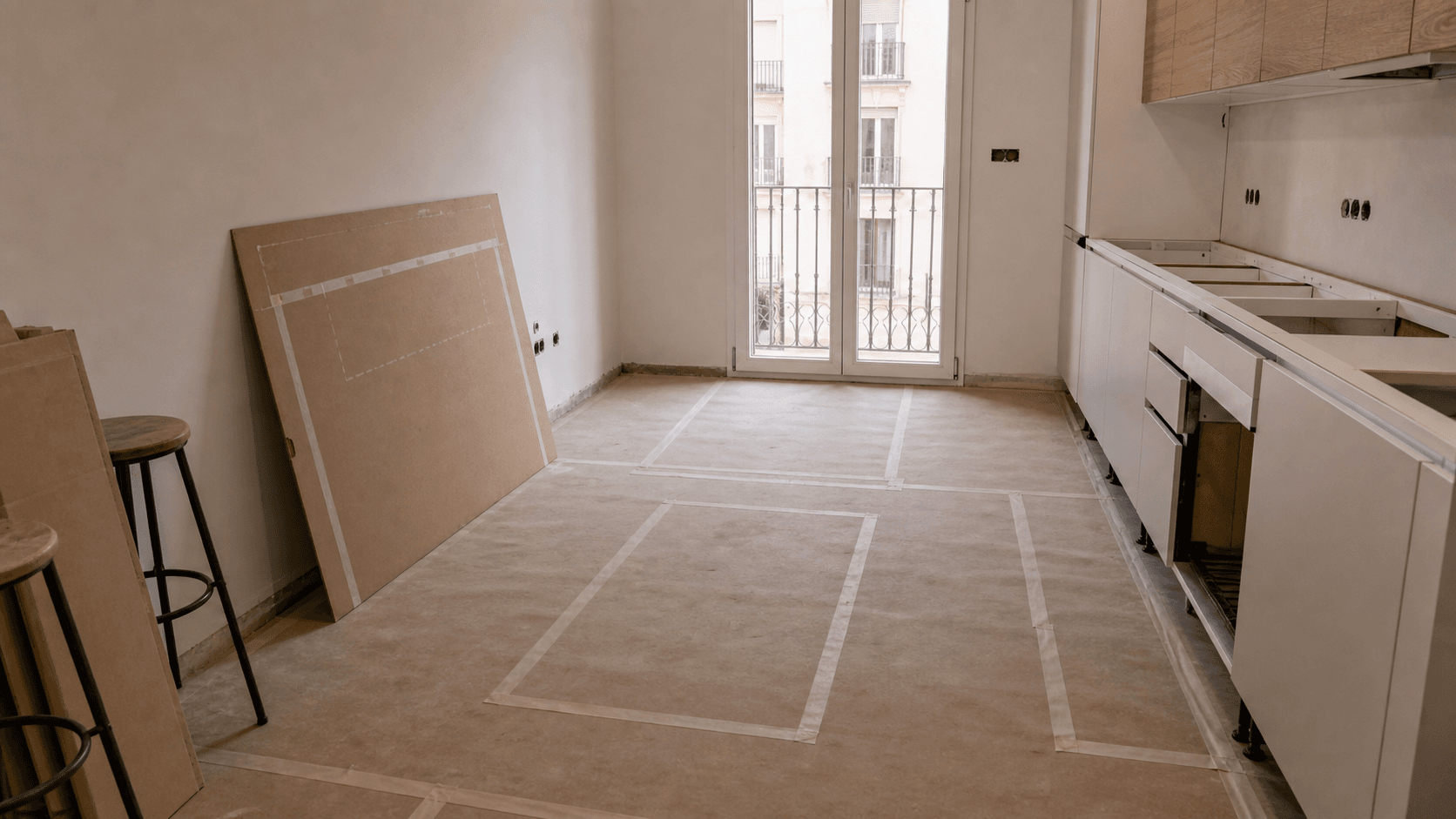
Island kitchen
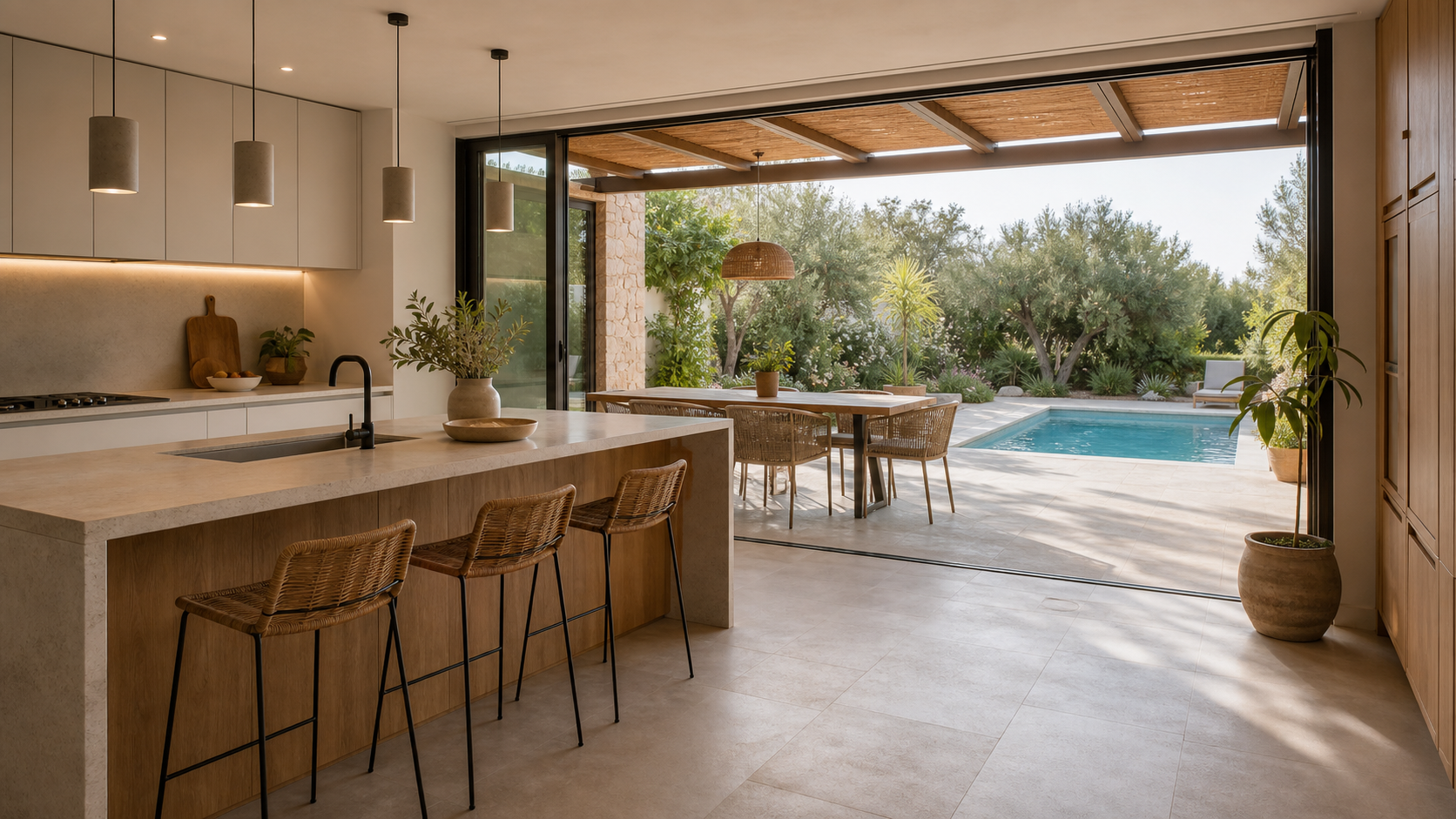
A generous room, usually in a villa. The job: getting water, waste and power out to the island and leaving proper space around it.
03 The question everybody asks
Can the kitchen be opened up to the living room?
Nine times out of ten, yes. What decides it is the wall. If the wall between the kitchen and the living room is not load-bearing, taking it out is a straightforward morning. If it is load-bearing, that is not the end of the idea: it comes out and a beam or lintel takes the load instead, with the structural calculation done by a technician and the paperwork lodged before anyone starts.
What you gain is daylight from one façade to the other, a room that feels twice the size and somewhere the family can be together while one of you cooks. What you have to solve, in exchange, are two things: getting cooking smells out of the house, which is a question of the right extractor and the right outlet, and the fact that mess and noise are now on show. An island or a peninsula acting as a filter, plus lighting done in layers, is usually the answer.
We check the wall on the site visit and tell you plainly what opening it up means in your flat or your villa — what it costs, what it needs and, occasionally, why we would leave it where it is. No promises made from a photograph.
Opening the ground floor of a detached house is a bigger job than opening a flat: see how we handle a villa renovation as one project.
04 What it costs
How much a kitchen renovation costs in Valencia
No two kitchens land in the same place, but there are market ranges worth knowing before you ask anyone for a price. Treat the figures below as a guide, not a quote: the real number comes after the site visit.
| Level of renovation | Guide price | What that usually buys |
|---|---|---|
| Entry level | €6,000–€10,000 | Standard units, a compact or laminate worktop, basic appliances and simple tiling, with the layout left exactly where it is. |
| Mid-range | €10,000–€18,000 | Bespoke units, a quartz or porcelain worktop, decent appliances, new floor and tiling, and the plumbing and electrics renewed. |
| High end, or opened into the living room | €18,000–€30,000+ | A new layout or a wall removed, an island, a premium worktop such as Dekton or large-format porcelain, high-specification appliances and designed lighting. |
Indicative market ranges in Valencia for a medium-sized kitchen of roughly 8–12 m². They are a reference point, not an offer, and they do not commit either of us to anything. What your own kitchen costs depends on the room, its size and the finishes you pick.
What moves the price
Four things move it more than anything else: the square metres, whether the layout changes or a wall comes down, the level of the units and the worktop, and how far the services have to be rerun. Swapping doors and a worktop is a different animal from a room stripped to the brick. Appliances then sit on top, and they are the one line you control entirely.
This is why we would rather come and look at the room than send you a catalogue figure that will not survive contact with your kitchen. After the visit you get one price, broken down line by line, and that price is what you pay unless you ask us for something else in writing.
Where the money should go
How to save on your kitchen without giving up what matters
Saving on a kitchen is not buying the cheapest of everything. It is knowing which lines deserve the money and which do not. This is the advice we give anybody working to a firm number who would rather not be regretting it by year three.
Do not economise on what you cannot see, or on what gets hammered daily. The pipework, the wiring and the worktop are the structure of a kitchen. A cheap worktop stains, scratches and swells the first time water sits in a joint, and replacing it means lifting units you have already paid for. That is the most expensive saving on this page.
Splashbacks and appliances are where you can flex. There are wall finishes and unit ranges with genuinely good value in them, and you can start with sensible appliances and treat yourself later to the induction hob or the oven tower. Nobody needs to lift a tool to swap an appliance three years from now.
Leaving the plumbing where it is saves real money. Keep the sink and the waste on the wall they are on and you avoid chasing floors and rerouting drainage. Moving the sink or the hob to the far side of the room pushes the figure up; sometimes the room is worth it, but you should know the number before you decide, not after.
In your own language
A kitchen job you can follow, in English
The company is Spanish and so is the team that will be standing in your house. What is different is that everything reaching you — the measurements, the price, the dates, the decisions — reaches you in English, from somebody who was on the job that morning.
- One name and one mobile number. Whoever measures the room on the first visit is whoever tells you the day the worktop is being templated, and whoever picks up when the new fridge turns out to be two centimetres too wide.
- A quote you can actually read. Units, worktop, appliances, plumbing, electrics, tiling and making good are listed and priced separately, and we sit down and read the sheet through with you before a single thing is ordered.
- The town hall side dealt with by us. A kitchen normally goes in under a responsible declaration (declaración responsable); take a wall out and it may need a building licence (licencia de obra). We prepare the file, we lodge it, and we tell you what it says.
- Nothing agreed in a doorway. A wall that turns out to be structural, a worktop you upgrade halfway through: it gets priced, written down and approved by you before it happens. No conversation on site ever changes your invoice.
None of that makes us an English company. It makes us a Valencian builder you can hold a proper conversation with, which counts for more than it sounds when the work is happening in the room where you make breakfast. The longer version of this argument is on our page for English-speaking builders in Valencia.
Shall we put a price on your kitchen?
Send us the measurements, a couple of photographs and whatever is annoying you about the room. We come and look at it, and the quote comes back itemised, with every line explained, within 24–48 hours.
Get my kitchen quote05 How we run it
How we manage your kitchen renovation
Six stages, sequenced around a single objective: that your household spends as few evenings as possible eating off a tray in the hall.
Visit and measure-up
We measure the room properly, look at what is hiding behind the units and ask how the kitchen gets used. It costs nothing and it commits you to nothing.
Design and proposal
We settle the layout and the finishes, show you what it will look like, and price it line by line so you can see where every euro sits.
Ordering and planning
Units, worktop and appliances are ordered and the trades are booked around their delivery dates. Nothing is stripped out until the replacements are in the yard.
Coordinated build
Building work, services, tiling and the fitting of units and worktop, done by our own people with one site manager holding the sequence together.
Quality control
We go over the finishes, the joints, the levels and every water and power point, and we run the appliances before we tell you it is finished.
Handover
You get the room back clean, connected and working, with the snags closed rather than listed. Then we are still the ones who answer the phone.
The whole point of that sequence is to compress the stretch when the room is genuinely unusable. It is also why we order the units and the worktop first and only then send anybody in with a hammer. The same method, applied to a whole house, is set out step by step in how we work.
06 The decision
Open-plan kitchen vs. closed kitchen
Neither one is better. It depends on how your household lives. Here is what each side wins and what it gives away.
More light and shared living
- Daylight travels through the whole floor.
- You are with everyone else while you cook.
- An island or peninsula adds worktop and a place to eat.
- Needs a serious extractor for cooking smells.
- Washing-up and noise are permanently on show.
More privacy and order
- Smells, steam and noise stay in one room.
- You can shut the door on it and finish tomorrow.
- More wall left for units and storage.
- Often the more efficient answer in a small flat.
- Takes light and company away from the living area.
And island or peninsula? The island gives you more worktop and becomes the middle of the room, but it wants clear floor on all sides and, if it carries water or a hob, the services have to be run out to it. The peninsula buys most of the same benefits in less space, and it is the sensible choice when the room is tight.
When you are not here
Choosing a kitchen from another country
Two situations come up again and again. You have bought a house here and want the kitchen finished before the removal lorry arrives; or you are only in Valencia part of the year and would rather the noise happened while you are away. A kitchen suits both, because nearly every decision in it can be taken on a screen.
- Units, worktop and handles chosen on a video call. We walk the room with the camera, hold the samples up in the light that room really gets, and send the drawings afterwards so you can look at them without anybody waiting for an answer.
- Photographs at the stages that matter: the room stripped back, the pipes and cables in the wall, the units landed, the worktop templated. You see what we see, on the day we see it.
- Somebody to open the door. Deliveries, the worktop fitters, the utility connections: we handle all of it. You do not have to leave a key with a neighbour and hope.
When it is the whole house being handled this way and not just one room, the arrangement has a name and a page of its own: turnkey renovations.
07 Finished work
Kitchen renovation projects
Three rooms that give a fair idea of what we take on across Valencia and the Camp de Túria, with the figures each one ran to.
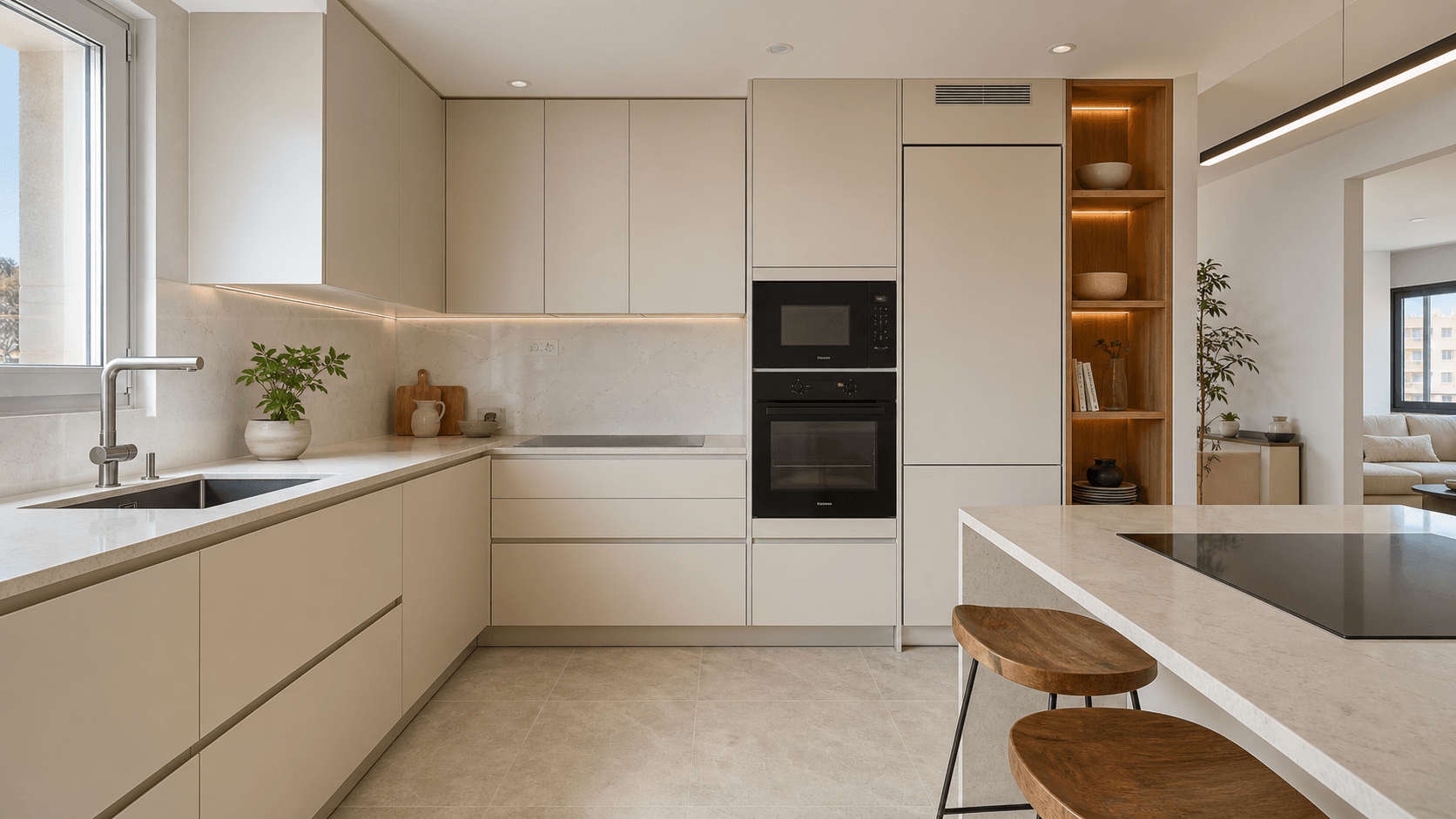
Classic white L-shaped kitchen
A closed kitchen in an Eixample flat, taken back to the brick: white Shaker fronts, a quartz worktop, integrated appliances and new tiling. We left the water connections exactly where they were to hold the figure down, and put the saving into full-height storage.
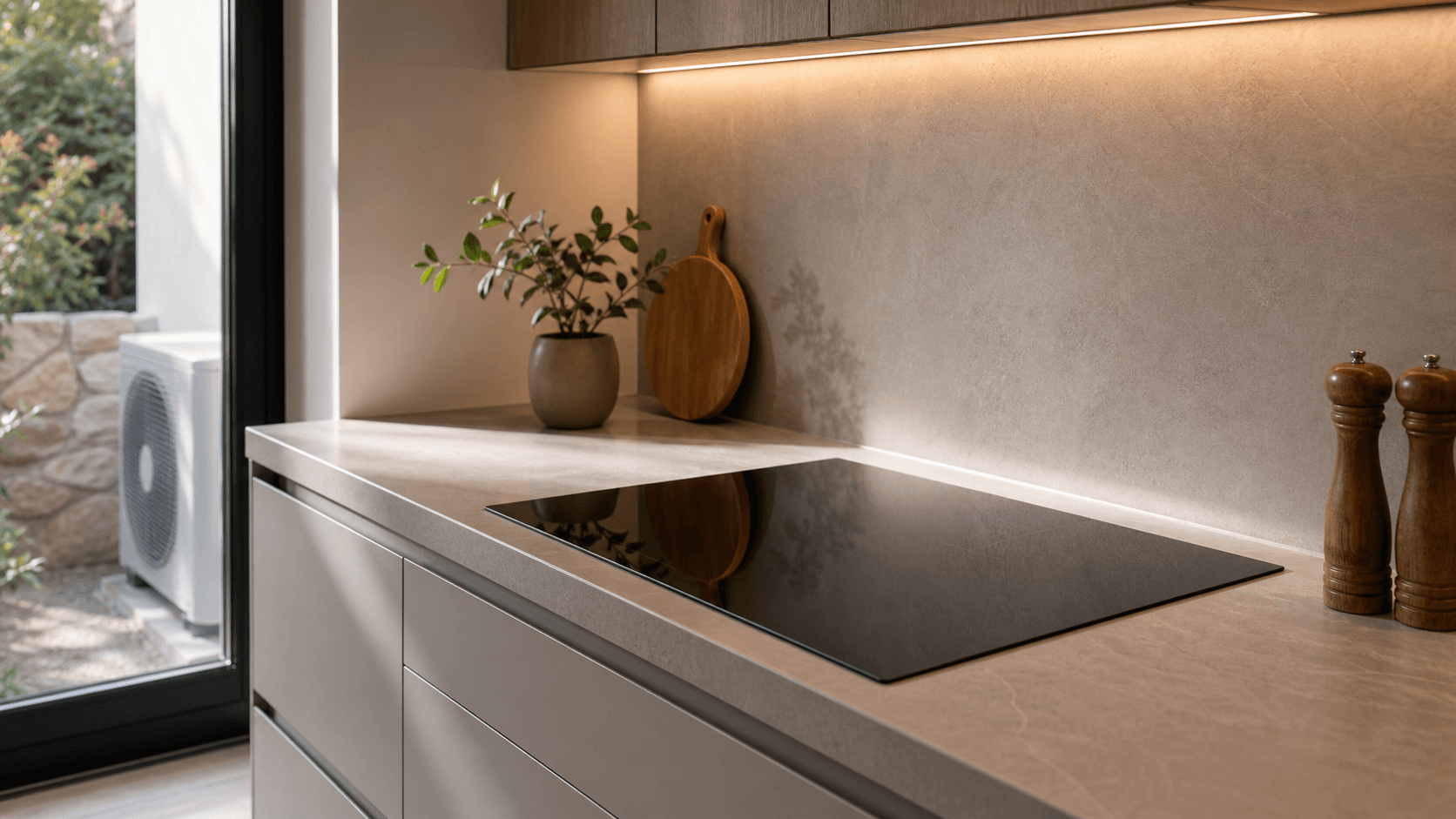
Modern handleless kitchen
Clean lines and push-open fronts with no handles, a large-format porcelain worktop and lighting under the wall units. Plumbing and wiring were renewed completely and the extraction rerouted, for a room that is quiet and wipes clean in a minute.
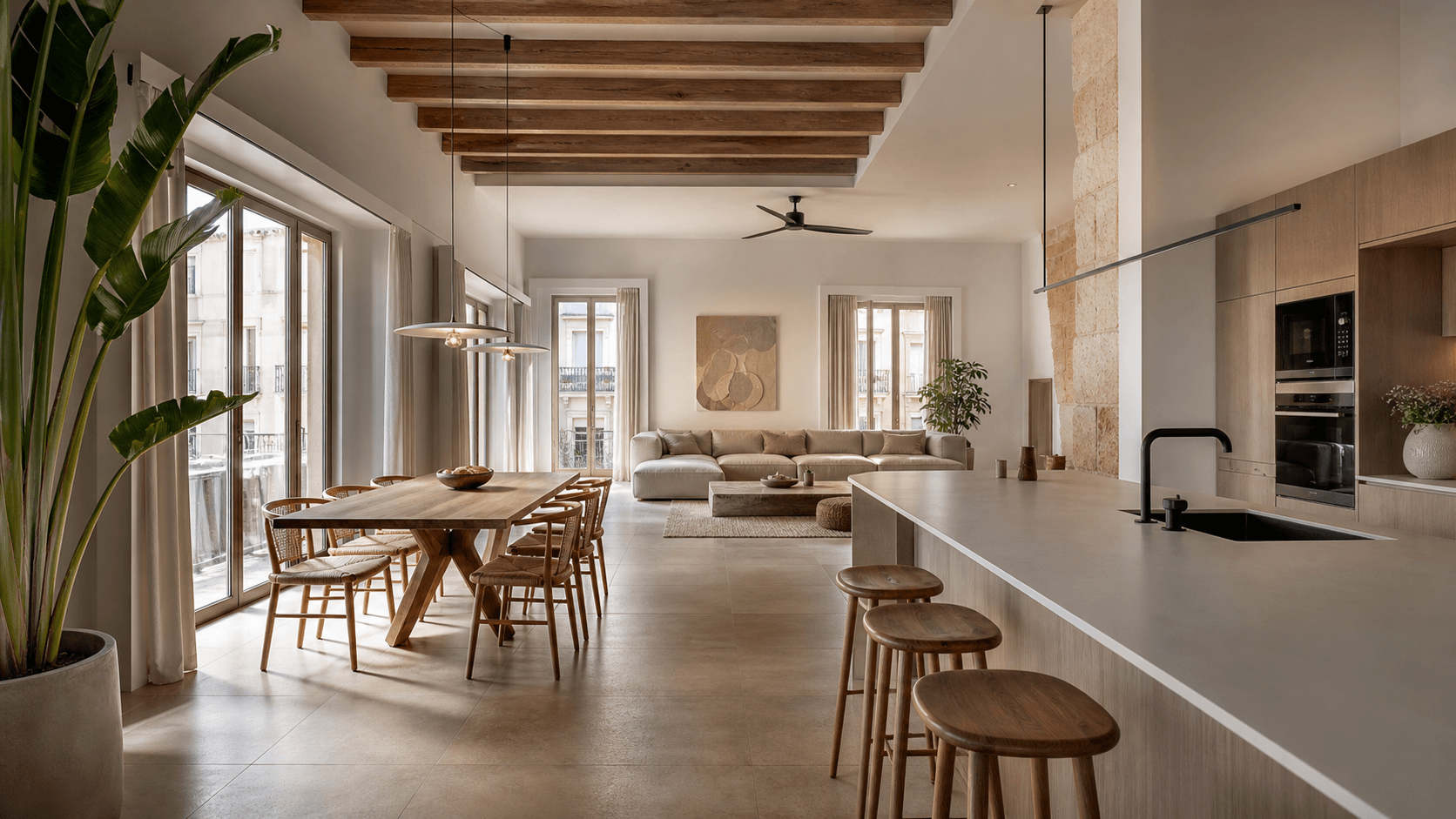
Island kitchen open to the living room
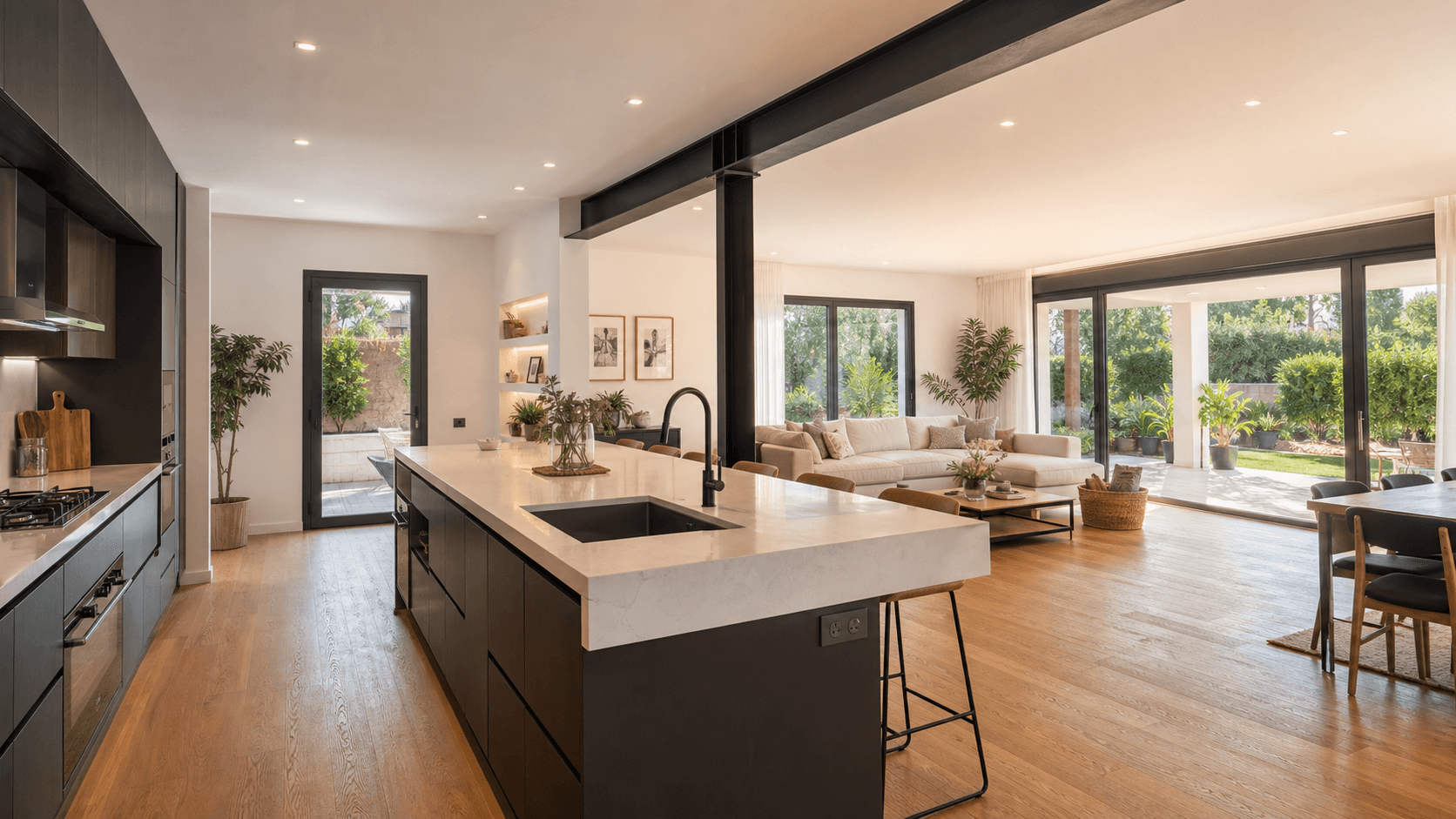
The wall between kitchen and living room came out of a villa and an island with a sink and a bar went in its place. Water, waste and power were run out under the floor, a powerful ceiling extractor went in above, and the flooring was carried straight through from one space to the other.
Each of these has a write-up of its own: the classic white kitchen, the contemporary white kitchen and the kitchen with a central island. There is more finished work, kitchens included, in our projects gallery.
08 Finishes
Materials: worktops, splashbacks, floors and lighting
We steer you towards materials that earn their place twice over: how they look on the day, and how they look after five years of a household cooking in them.
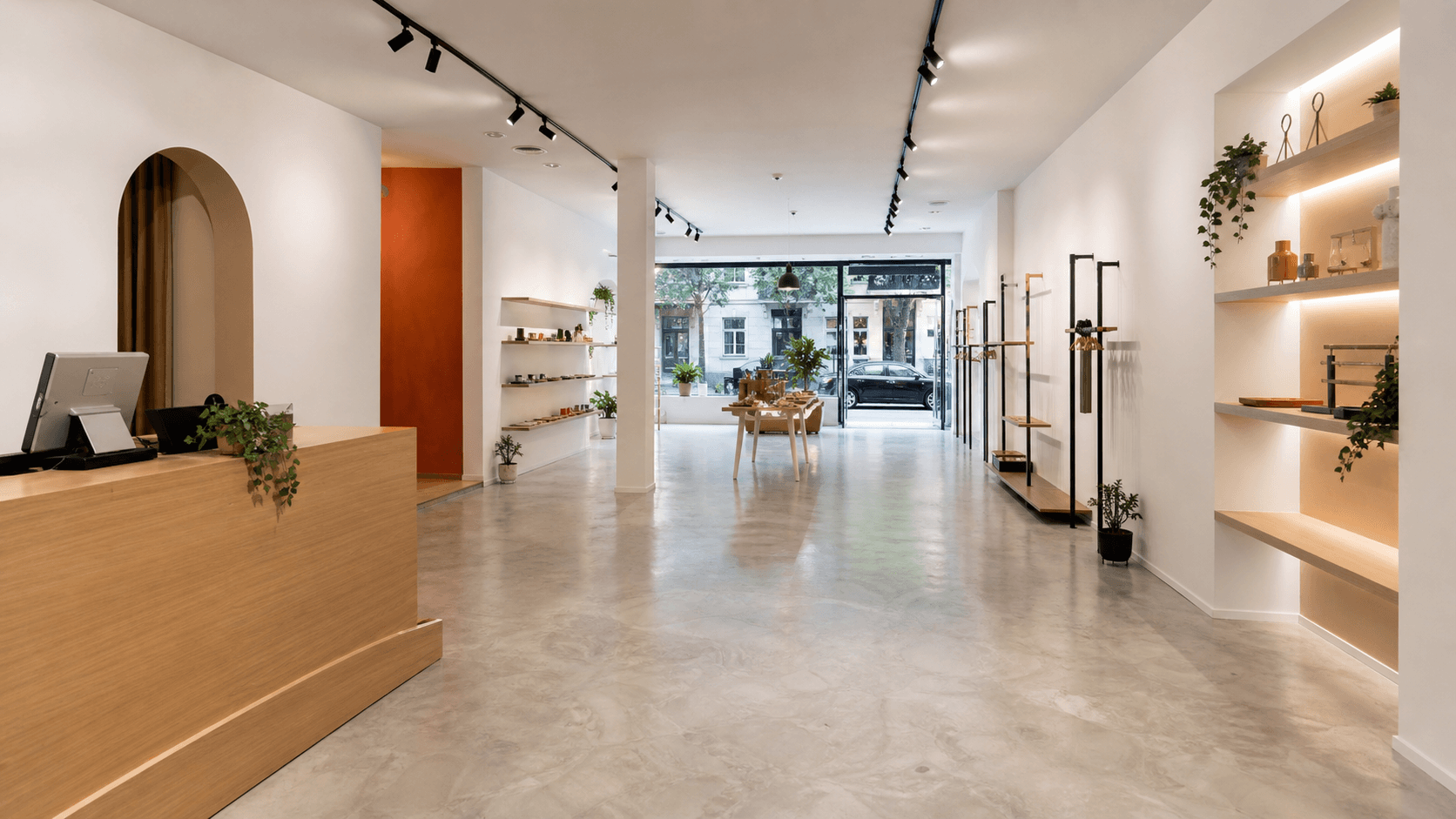
Worktops
Quartz (even-toned and undemanding), Dekton and porcelain (very hard to burn or scratch) or granite (natural, and it outlives everybody). The right one depends on how heavily you cook.

Floors
Porcelain, high-resistance vinyl or water-resistant laminate: they shrug off water and stains, they mop in seconds, and there is a non-slip grade worth asking for.
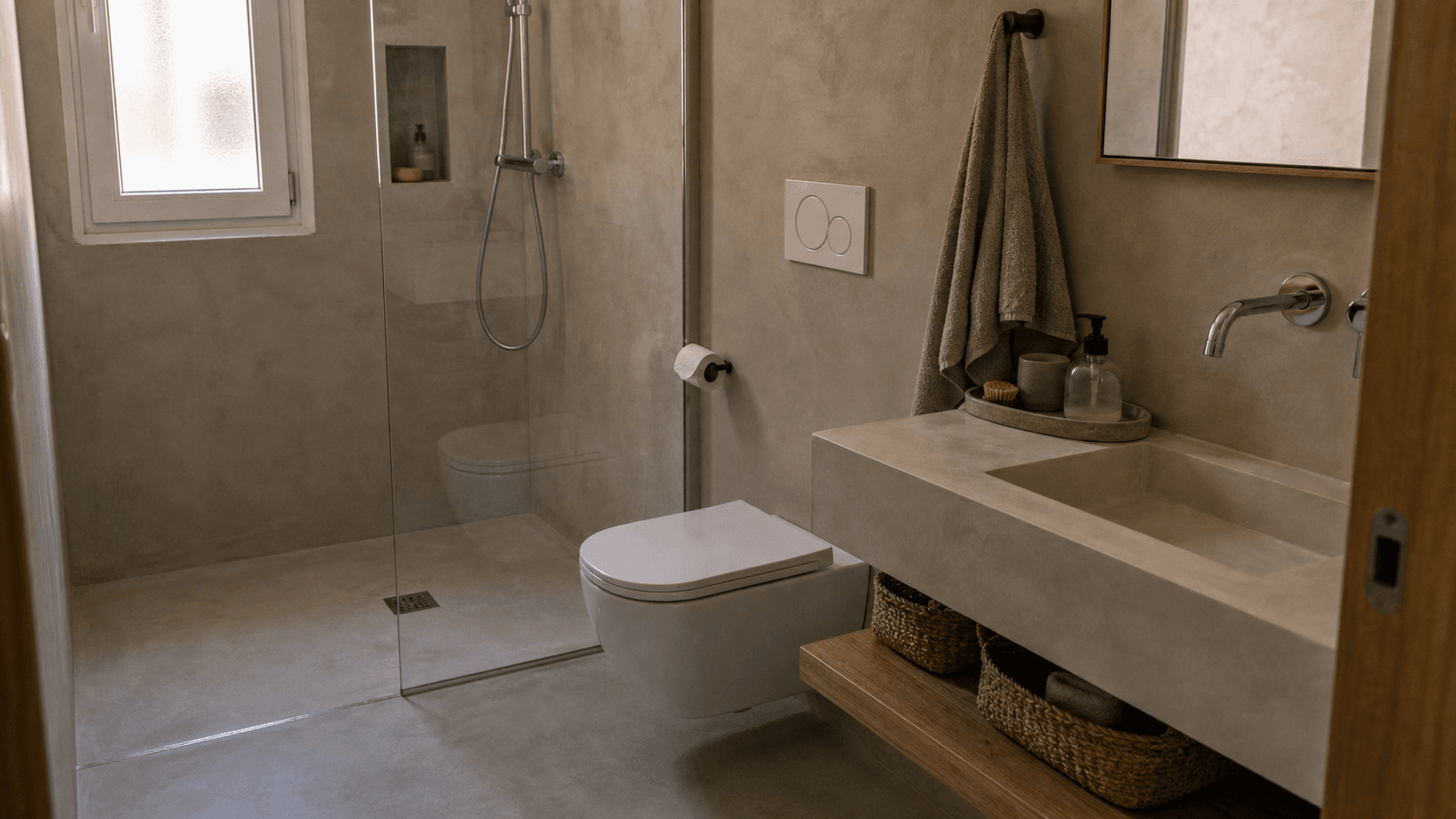
Microcement
A continuous finish for floors and splashbacks with no grout lines anywhere. Applied and sealed properly it behaves beautifully; applied badly it is a nuisance, so it is worth insisting on the detail.
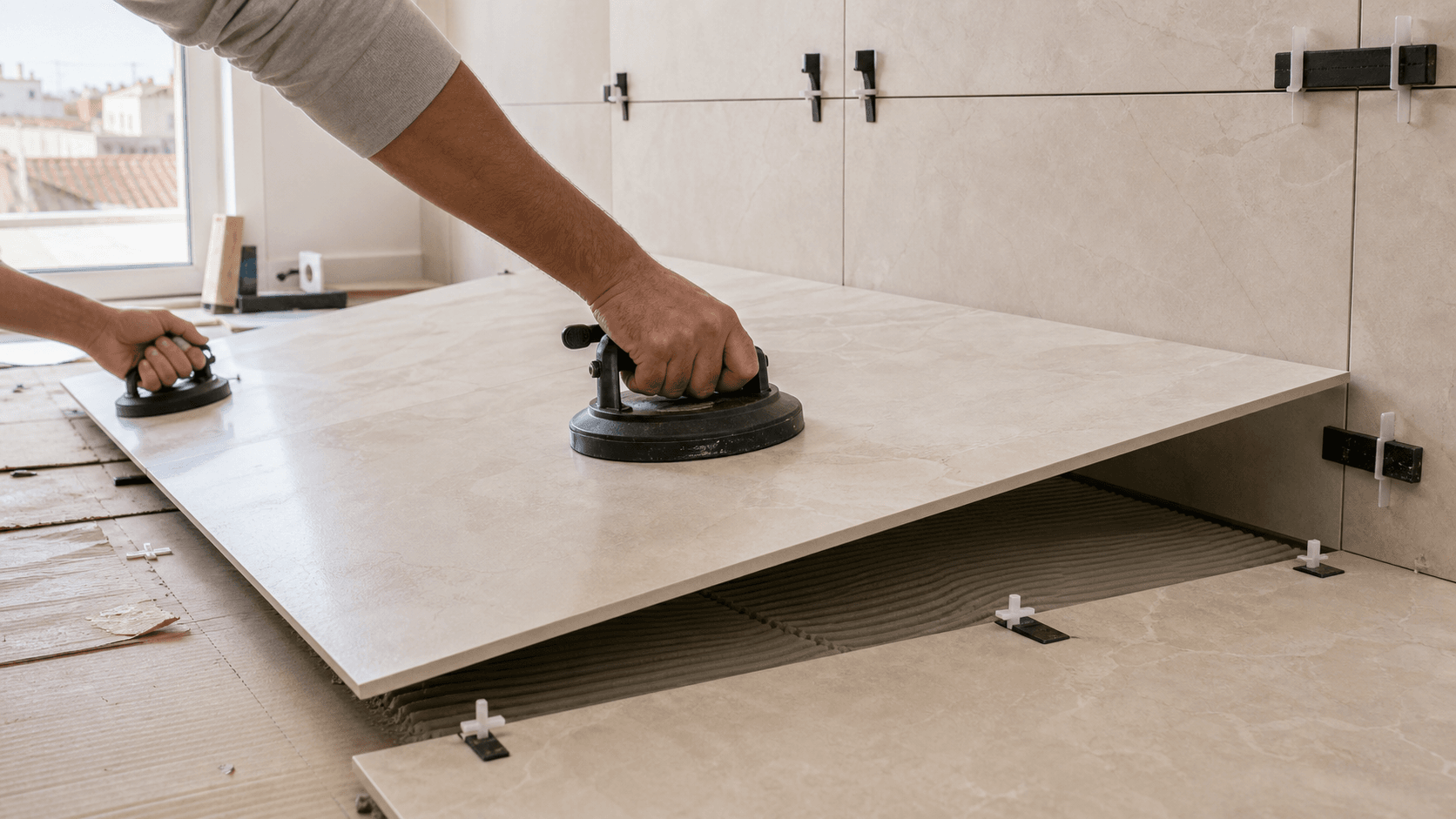
Splashbacks and wall finishes
From ordinary tiles to a single sheet of large-format porcelain running on from the worktop, which leaves nothing for grease to sit in and wipes down in one pass.
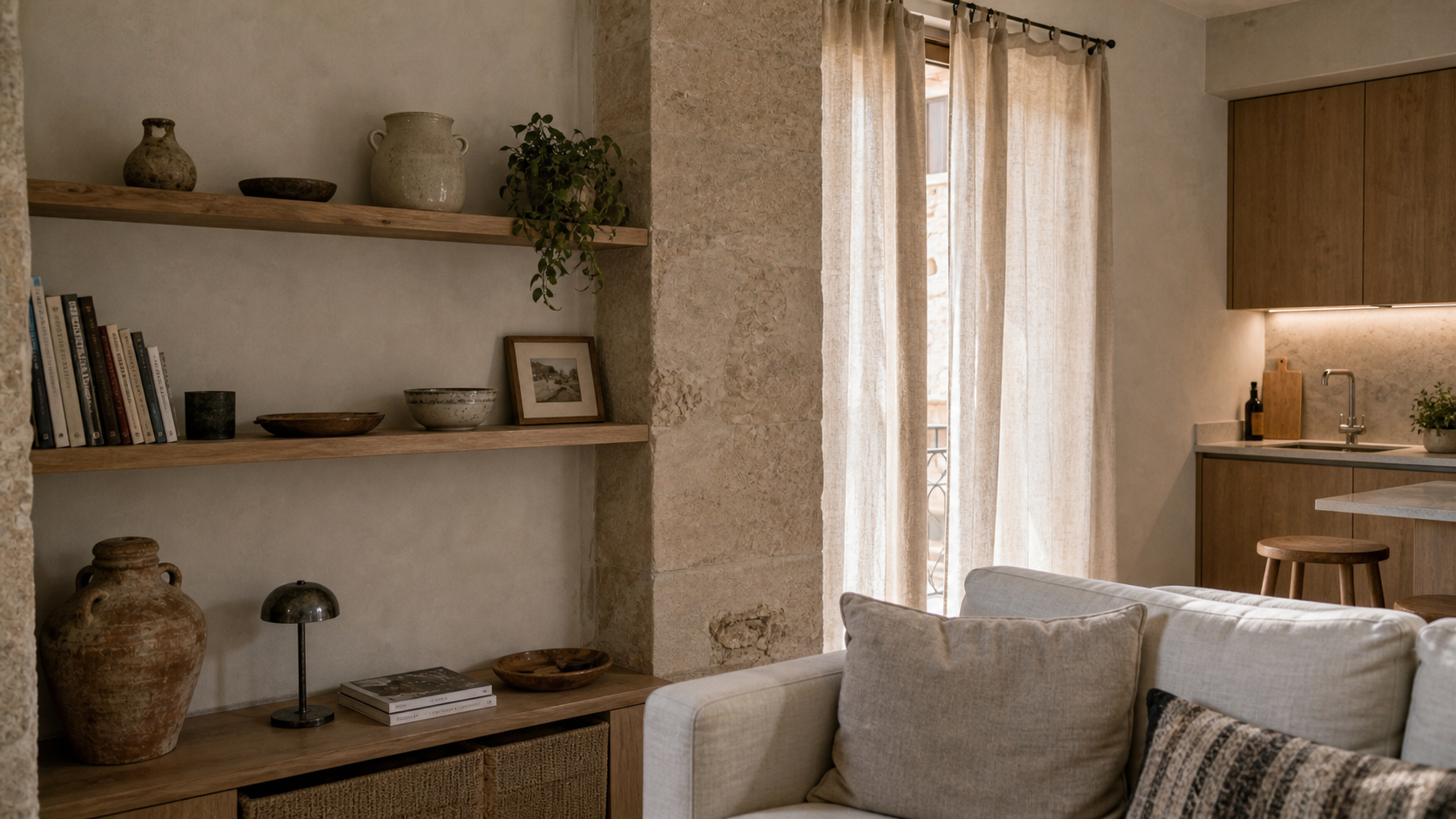
Units and finishes
Lacquer, real wood or good melamine fronts, with soft-close hardware and corner mechanisms that make the awkward cupboard usable instead of decorative.
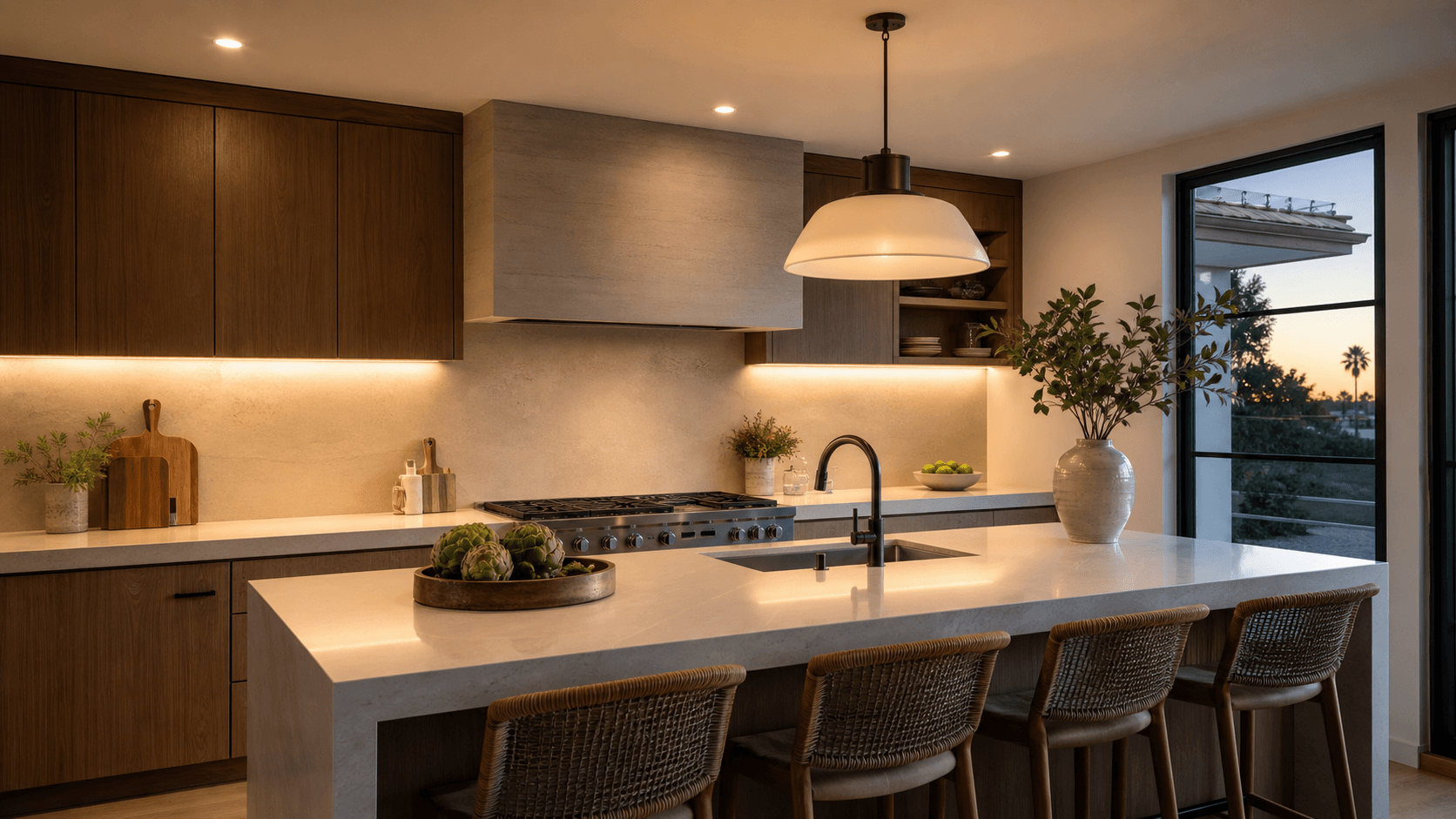
Layered lighting
Ambient light overhead, task light under the wall units where the chopping happens, and a little accent light so the room is still pleasant at ten at night.
The parts nobody photographs
Appliances, extraction and permits
A kitchen does not end at the cupboard doors. We coordinate the appliances as well — induction hob, oven, extractor, dishwasher, fridge — so that each one fits its opening to the millimetre and is handed over installed and running. Buy them yourself if you prefer: send us the specification sheets and we leave the openings, the water and the power waiting for them.
Getting cooking smells out of the building is the detail that decides whether an open-plan kitchen is a pleasure or a mistake, and it comes down to the right extractor matched to the right outlet, not to the price of the hood. On permits, a kitchen that leaves the layout and the façade alone is usually covered by a responsible declaration or a works notification. Move a wall into the living room, or change the gas, and the file grows. Either way it is ours to prepare, lodge and explain.
Neither of those things is glamorous. Both of them are the difference between a kitchen that photographs well and one that is still a pleasure to cook in on a wet Tuesday in five years.
Choosing between finishes, colours and lighting is a job in itself: our interior design service exists for exactly that, and it is drawn by the same people who then build it.
09 Before you start
Mistakes worth avoiding when you redo a kitchen
- Letting anybody strip the room out before the units and the worktop have been measured and ordered.
- Economising on the worktop, or on the pipes and cables that will spend the next twenty years behind plasterboard.
- Treating the extractor as an afterthought, particularly once the kitchen opens onto the living room.
- Ending up with three sockets for six appliances, none of them where the kettle wants to live.
- Moving the sink or the hob across the room without asking first what the plumbing will cost.
- Choosing a floor on looks alone and discovering what boiling water and olive oil do to it.
Gallery
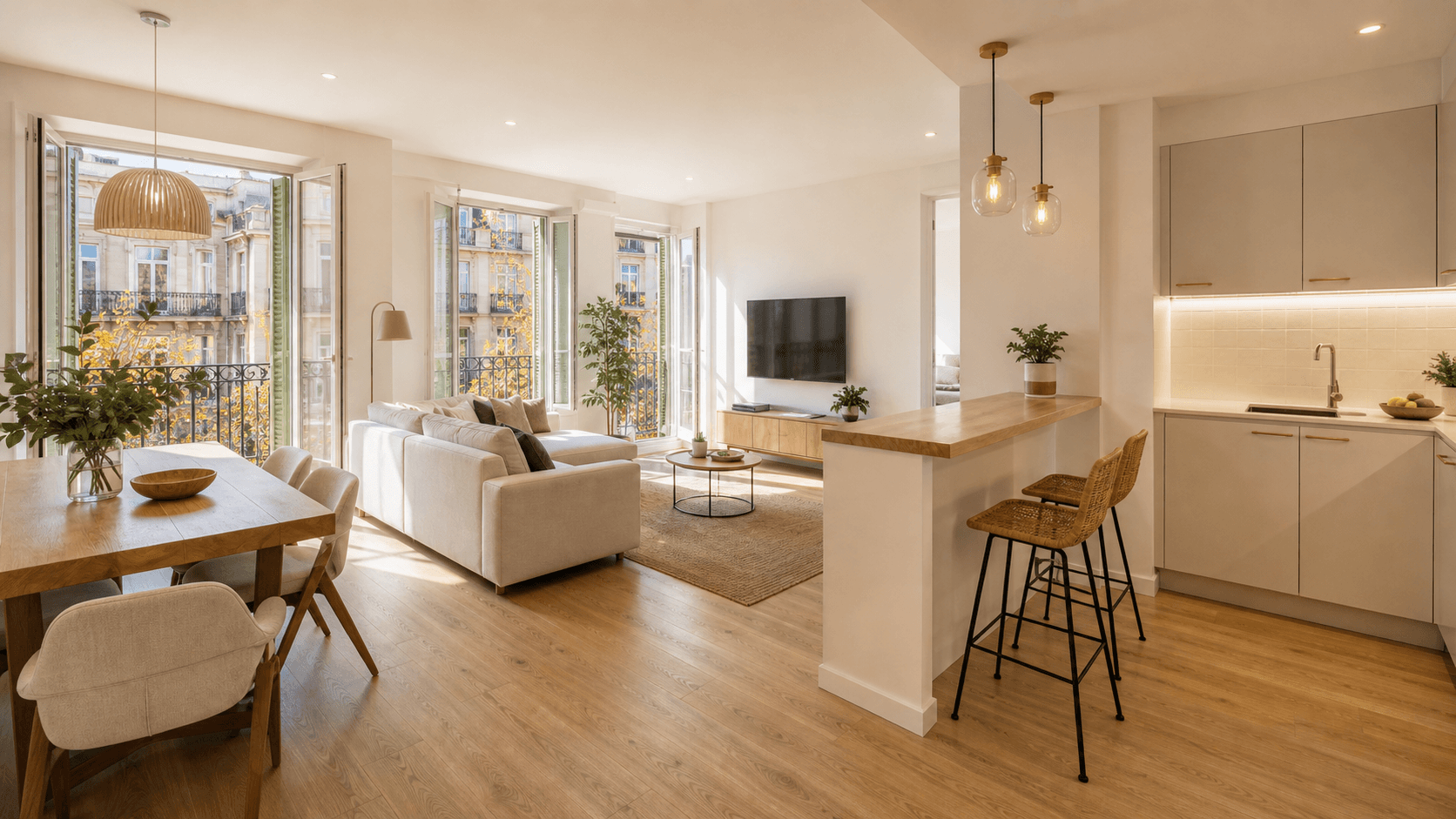
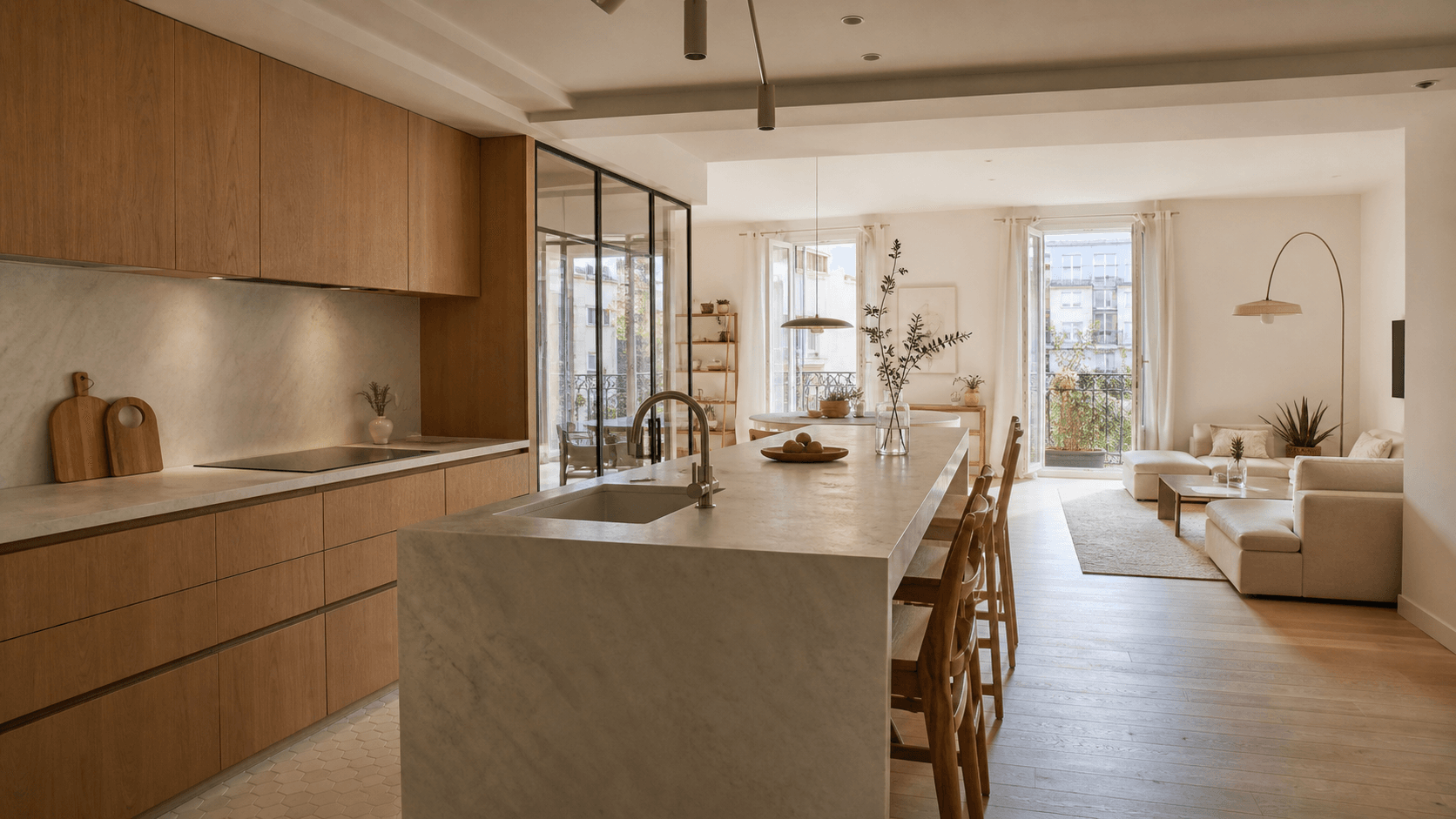
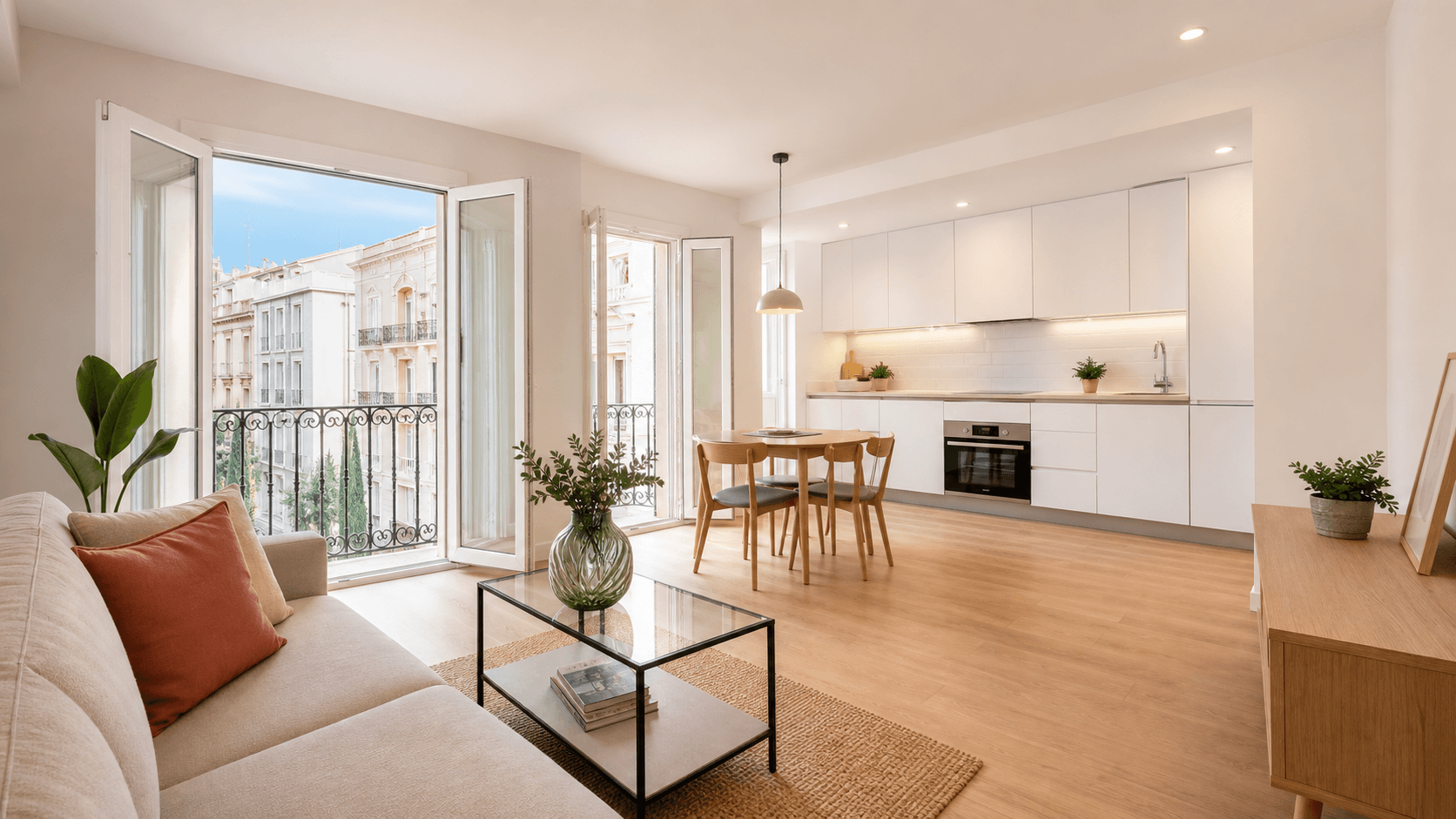
Kitchens renovated by Batecs
A run through the kind of room we hand back across the city and the towns around it.
← Drag across for the rest →
Coverage
Where we fit kitchens, around Valencia
We work out of La Eliana, which sits in the middle of the Camp de Túria and puts the villa towns and the international schools ten minutes from us rather than an hour. We work across the city of Valencia and l’Horta as well, and a kitchen is a job where being close by shows: it means the site manager can call in on the way past rather than book a visit for Thursday.
Where most of our kitchens go in
And the towns either side of us
Questions we get every week
Frequently asked questions about kitchen renovations
How much does a kitchen renovation cost in Valencia?
A medium-sized kitchen around here generally lands somewhere between €6,000–€10,000 for an entry-level job and €18,000–€30,000 or more at the top end, where the room is opened into the living area and there is an island in it. Four lines move that figure more than any others: the units, the worktop, whether the plumbing and the electrics have to be moved, and the appliances you choose. The costs that get forgotten until late in the day are the unglamorous ones — taking the old kitchen out and the rubble away, making good the walls and ceiling once the old units come off, the extractor duct, the sink and tap you upgrade after seeing the worktop, and the electrical work a modern kitchen needs that a 1980s one never did. All of it is priced before you sign, so none of it comes back as an extra.
How long does a kitchen renovation take, and how many days will I be without one?
Two to six weeks for most kitchens, depending on how much is being changed. The days genuinely without a kitchen are far fewer than that, because we do not strip anything out until the replacements are in our yard. Made-to-measure units and templated worktops have lead times of their own, and we confirm those with the supplier before we give you a date rather than guessing at one. Where a household needs it, we leave a working sink and a temporary hob for the middle stretch.
Can you open the kitchen up to the living room, and what if the wall is load-bearing?
Usually yes, but the wall decides it. If the wall is not load-bearing, taking it out is straightforward. If it is load-bearing, the idea is not dead: the load transfers to a beam or lintel, which needs a structural calculation by a technician and the corresponding permission before anybody starts. In a flat, the building’s own rules can have a say as well. We look at what the wall is doing during the site visit and tell you what opening it up would involve in your case — including the occasions when we would advise you to leave it standing.
Which worktop suits me best: quartz, Dekton, porcelain or granite?
It comes down to how you cook and how much upkeep you want. Quartz is even-toned and easy to live with; Dekton and porcelain take heat and scratching better than anything else on the list; granite is natural, and it will outlast the kitchen around it. We go through the samples with you in your own kitchen light and against what you want to spend, because the wrong worktop is the most expensive thing on this page to change later.
Island or peninsula?
The island gives you more worktop and becomes the centre of the room, but it needs clear floor on every side — 90–100 cm is the comfortable minimum — and, if it carries a sink or a hob, water, waste and power have to be run out to it under the floor. The peninsula delivers most of the same advantages in less space, and it is the better answer whenever the room is tight.
Do you take care of the units and the appliances as well?
Yes. We coordinate the cabinetry, the worktop and the appliances so that everything fits its opening to the millimetre and is handed over installed and running. If you would rather buy the appliances yourself, send us the specification sheets and we leave the openings, the water and the power ready for them.
Which floor is best for a kitchen?
The ones that hold up are porcelain, high-resistance vinyl and water-resistant laminate: they take water, stains and traffic, and they clean in one pass. Microcement also performs very well when it is applied and sealed properly. Worth asking for a non-slip grade, and worth choosing something that carries on comfortably into the rest of the house rather than stopping dead at the door.
Do I need a permit to renovate the kitchen?
Most kitchen renovations that leave the layout and the façade alone are covered by a responsible declaration (declaración responsable), which is a notification lodged at the town hall before work starts rather than a licence you wait for. Take a wall out, alter the gas installation or touch the façade and it can become a building licence (licencia de obra), which takes longer and needs drawings. Which one applies depends on your own town hall, so we confirm it for your address instead of quoting you a rule. Either way we prepare the file, submit it and tell you in English what it says and roughly how long it typically takes. You do not end up in a queue holding a form you cannot read.
How can I save money without giving up quality?
Leave the worktop and the hidden services alone — a saving made there is the one that comes back and bites. Splashbacks and appliances are where there is genuine room to flex, and keeping the sink and the waste on the wall they are already on avoids chasing floors and rerouting drainage. We are happy to tell you which lines on your own quote are worth the money and which are not.
What happens if something needs putting right after you have finished?
We answer for the work carried out and for the materials, under current Spanish law. On top of that, because the people who fitted your kitchen are our own, anything that needs adjusting afterwards is dealt with by us directly rather than passed along to somebody you have never met.
Do you only do the kitchen, or the rest of the house too?
Either. We are just as happy doing one room as folding the kitchen into a renovation of the whole house. A good number of clients do the kitchen and a bathroom in the same run, which saves paying twice for the same trades to turn up and makes the disruption a single episode instead of two.
Which areas do you fit kitchens in?
The city of Valencia, La Eliana — where we are based — and the towns across the Camp de Túria and l’Horta: Riba-roja de Túria, Llíria, Paterna, Bétera, Godella, Rocafort, San Antonio de Benagéber, La Cañada and the villages between them. Wherever you are on that list, you deal with the same English-speaking site manager from start to finish.
In short
A kitchen renovation in Valencia means the whole room done at once — layout, units, worktop, appliances, services, floor and lighting — by one team, under one site manager, at a price fixed in writing. We build it with our own people, open it into the living room where that is what you want, and hand it back ready to cook in, with the shortest run of kitchenless days we can honestly manage. Quotes, decisions and town hall paperwork all reach you in English.
As a market guide rather than a quote, a medium-sized kitchen tends to sit between €6,000–€10,000 at entry level and €18,000–€30,000 at the top, with a wall removed and an island in. The figure for your own room comes after the site visit, itemised, and it does not move afterwards.
Related projects
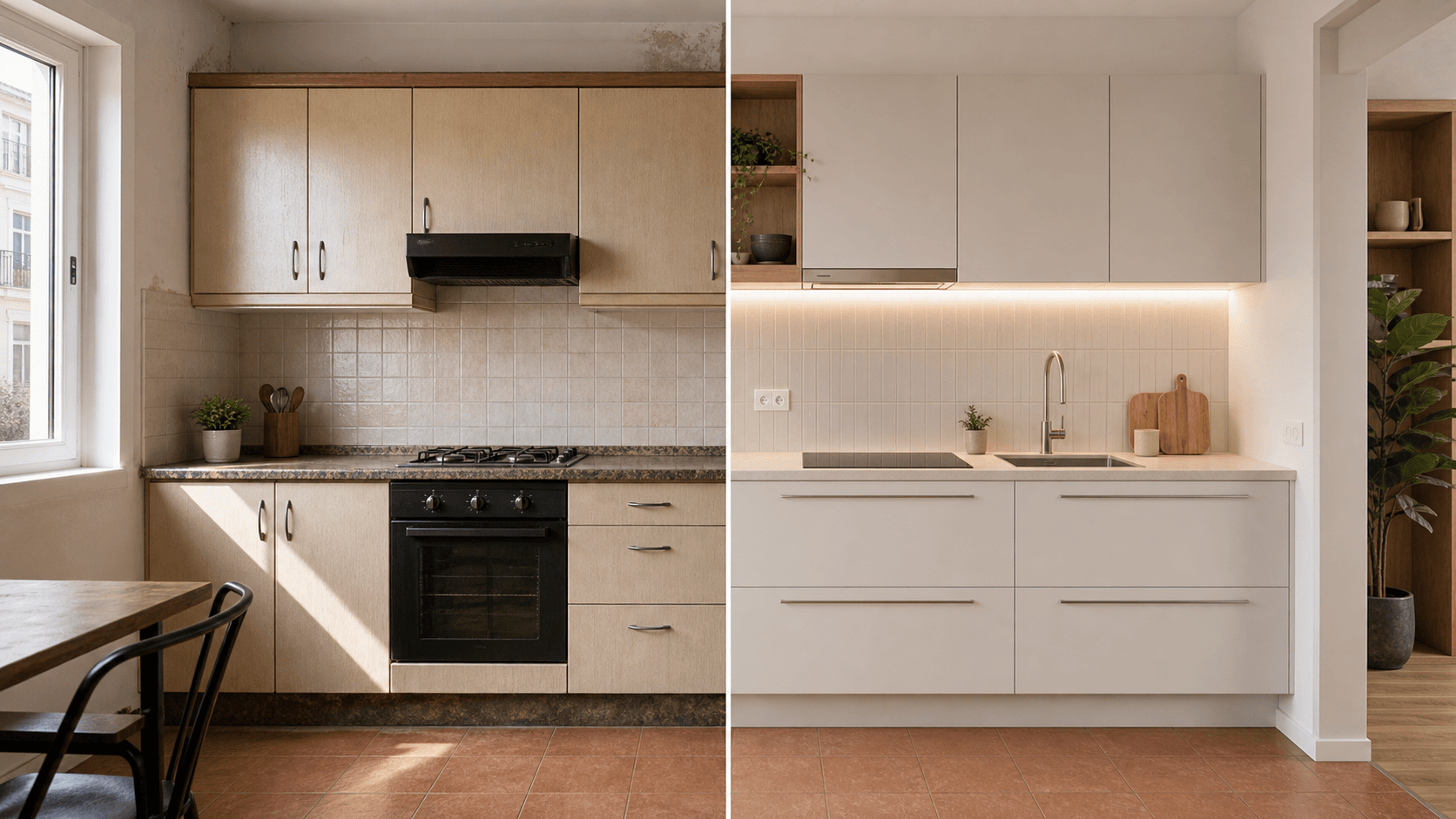
Kitchens we have rebuilt nearby
Open any of them for the detail: what the room was, what went in and how long it took.
Let’s talk about your kitchen
Book the visit and get a real number
A photograph, the measurements and a note of what you want changed is enough to get started. We come and see the room, and one itemised price comes back to you in English within 24–48 hours. You owe us nothing for looking.
+34 632 224 555+34 962 742 447info@batecs.es
Send me a fixed quoteA kitchen is one of the things we do. There are also full home renovations, bathrooms, villas and country houses, turnkey renovations and concrete pools. If your house is in one of the towns we know street by street, there is a page for La Eliana, one for Godella and one for Rocafort.